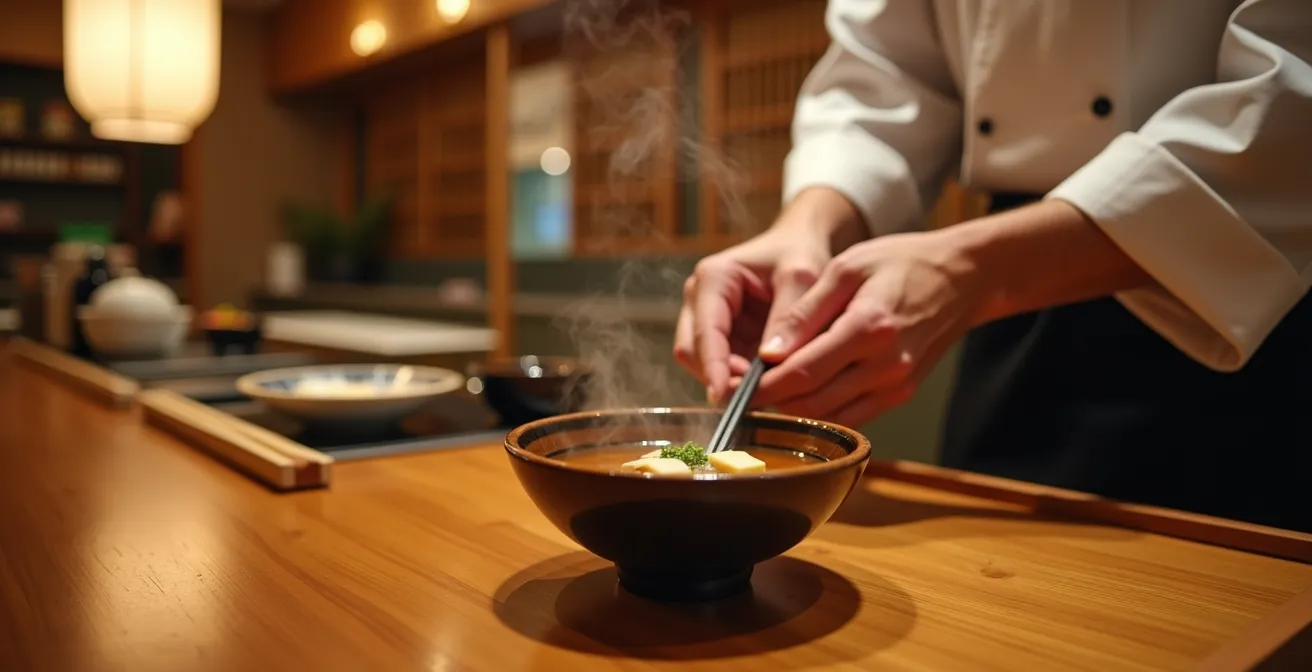
Serving miso soup last isn’t a quirky tradition; it’s a deliberate act of digestive science designed to properly conclude the meal.
- The warmth of the soup emulsifies residual fish oils from the palate, acting as a chemical and thermal reset for your taste buds.
- Enzymes derived from the koji fermentation process in miso actively aid in breaking down the proteins and fats from the raw fish you’ve just consumed.
Recommendation: Next time, wait to drink your miso soup until the end of the meal to experience its full digestive and sensory benefits, just as the sushi master intended.
For many Western diners, the arrival of miso soup at a Japanese restaurant is an expected opening act, a warm and savory appetizer to kickstart the meal. It feels natural, aligning with the Western culinary structure of “soup, then main course.” So, it can be a moment of genuine confusion when, at a traditional Edomae-style sushi counter, the small lacquer bowl of steaming soup appears not at the beginning, but at the very end, after the last piece of nigiri has been savored. The common explanation is simply, “it’s tradition,” a response that satisfies curiosity but fails to feed the intellect.
This practice, however, is far from an arbitrary cultural habit. It is a calculated, bio-culinary decision rooted in a deep understanding of digestion, sensory science, and the art of creating a complete gastronomic experience. The placement of miso soup is a functional tool, as essential to the meal’s structure as the quality of the fish or the texture of the rice. It serves a precise purpose: to reset the palate, aid the digestive process, and signal a satisfying conclusion to the brain. Understanding this principle is the key to appreciating the full depth of the sushi master’s craft.
This article will deconstruct the science and tradition behind this practice. We will explore the enzymatic power of miso, the thermal dynamics of palate cleansing, the cultural significance of the serving method, and how every element, from the type of dashi to the final cup of tea, plays a role in this carefully orchestrated digestive finale.
Summary: The Functional Role of Miso Soup in a Sushi Meal
- Red Miso or White Miso: Which Is Traditional for Edomae Sushi Endings?
- Why Are Small Clams Added to Miso Soup After Drinking Alcohol?
- How Does Warm Miso Soup Reset the Tongue After Fatty Fish Oils?
- Why You Should Drink Miso Soup Directly From the Bowl?
- Kombu or Bonito: Which Dashi Base Complements Sushi Without Overpowering?
- Why Does the Sweet Egg Omelet Signal the End of the Savory Courses?
- Why Is Shredded Daikon Served With Sashimi and Should You Eat It?
- Why Extremely Hot Powdered Tea Is Essential for Sushi Digestion?
Red Miso or White Miso: Which Is Traditional for Edomae Sushi Endings?
The choice of miso for the final soup is not arbitrary; it’s a decision that impacts the meal’s concluding flavor profile. While both red (akamiso) and white (shiromiso) miso are staples, traditional Edomae sushi often favors a blend or a carefully chosen red miso to provide a robust, satisfying endnote. The key difference lies in their fermentation process. White miso is fermented for a shorter period, resulting in a sweeter, milder taste. Red miso, in contrast, undergoes a much longer aging process, sometimes for years.
This extended fermentation is a transformative chemical journey. It allows the enzymes from the koji mold to more thoroughly break down the soybeans and grains, developing a deep, complex, and umami-rich flavor profile. In fact, some research on traditional miso fermentation reveals that barley miso, a type of red miso, can reach its peak flavor after three full years of aging. This depth is crucial at the end of a sushi meal. After experiencing a delicate progression of flavors from various fish, a mild white miso might feel anticlimactic. A well-aged red miso provides a conclusive and resonant umami flavor that stands up to the lingering oils of fatty tuna (toro) or mackerel (saba), offering a sense of finality and deep satisfaction.
Ultimately, the master chooses the miso that best balances the preceding courses, but the tendency towards a richer, more complex miso underscores its role as a definitive final statement, not a light introduction.
Why Are Small Clams Added to Miso Soup After Drinking Alcohol?
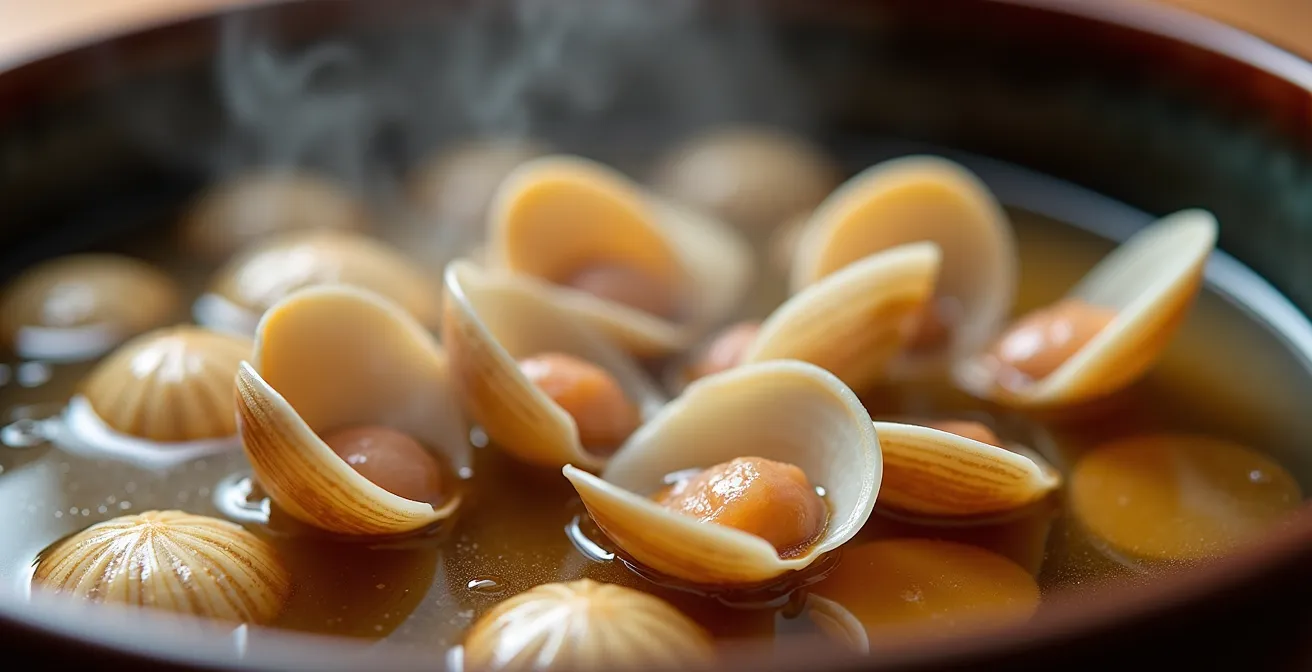
The inclusion of small, freshwater clams known as shijimi (Corbicula japonica) in the final miso soup is a classic practice, especially if the meal was accompanied by sake or beer. This is not just for flavor; it’s a traditional remedy rooted in a belief about digestive and liver support. Shijimi are famously rich in ornithine, an amino acid that plays a role in the urea cycle, the body’s process for converting ammonia (a toxic byproduct of protein metabolism) into urea for excretion. It is believed that ornithine helps support liver function, which is working to process both the meal and any alcohol consumed.
Beyond the specific benefits of the clams, the miso base itself contributes significantly to digestive health. Miso is a powerhouse of beneficial compounds derived from its fermentation. As noted by researchers Minamiyama & Okada in the PMC Journal of Food Science & Nutrition, the fermented paste contains active ingredients with notable health properties:
Isoflavones present in miso include genistein, having an inhibitory effect on tyrosine kinase and particularly exhibited a potent anti-H. pylori activity
– Minamiyama & Okada, PMC Journal – Food Science & Nutrition
While this anti-bacterial effect is a general health benefit, it adds to the overall perception of the final soup as a healthful, restorative course. The combination of the warm, enzyme-rich broth with the nutrient-dense clams creates a functional “digestif” that is both delicious and purposeful, perfectly embodying the Japanese philosophy of food as medicine.
Therefore, when you see these tiny clams in your bowl, you are witnessing a tradition that aims to comfort your stomach and support your body after indulgence.
How Does Warm Miso Soup Reset the Tongue After Fatty Fish Oils?
The single most important function of end-of-meal miso soup is to act as a palate reset. After consuming multiple pieces of nigiri, especially oily fish like tuna, mackerel, or salmon, the tongue and taste buds can become coated with a thin layer of residual lipids. This can dull the palate and leave a lingering, heavy sensation. The warm miso soup acts as a gentle, effective solvent, using a combination of thermal and chemical actions to cleanse the mouth and prepare it for the meal’s true conclusion.
The primary mechanism is heat. The warm liquid helps to emulsify and wash away the fish oils coating the taste buds, much like using warm water to clean a greasy dish. This thermal shock provides an immediate feeling of freshness. But the process is more complex than just heat. The miso itself is rich in enzymes produced during its fermentation. A scientific analysis shows that koji enzymes actively hydrolyze proteins and starches into smaller, more flavorful components like amino acids during fermentation. These compounds, particularly glutamic acid, deliver a powerful umami flavor that effectively “resets” taste receptors fatigued by the fats and salts of the sushi. It’s a final, satisfying savory note that signals closure.
The Palate Reset Protocol: A Step-by-Step Breakdown
- Thermal Emulsification: The soup’s heat (optimally served around 167°F/75°C) liquefies and washes away the lipid coating left on the taste buds by fatty fish.
- Umami Reset: Glutamic acid from the miso’s fermentation provides a powerful umami flavor, re-sensitizing taste receptors and creating a sense of savory satisfaction.
- pH Adjustment: The mild acidity from the fermentation process helps to cut through the richness of the fish, providing a clean finish.
- Salt Re-sensitization: The saltiness of the soup helps to reset receptors that may have become fatigued from the soy sauce used during the meal.
- Sensory Dénouement: The thermal contrast between the cool sushi and the warm soup creates a satisfying sensory conclusion, signaling to the brain that the savory portion of the meal is over.
This process is a perfect example of the bio-culinary wisdom inherent in Japanese cuisine: using natural properties of food to create a more complete and comfortable dining experience.
Why You Should Drink Miso Soup Directly From the Bowl?
Another point of divergence for Western diners is the conspicuous absence of a soup spoon. In Japan, miso soup is not eaten with a spoon; it is drunk directly from the bowl. This is not a casual shortcut but a deliberate practice designed to enhance the sensory experience. The solid ingredients, like tofu, wakame, and scallions, are eaten with chopsticks, while the broth is sipped.
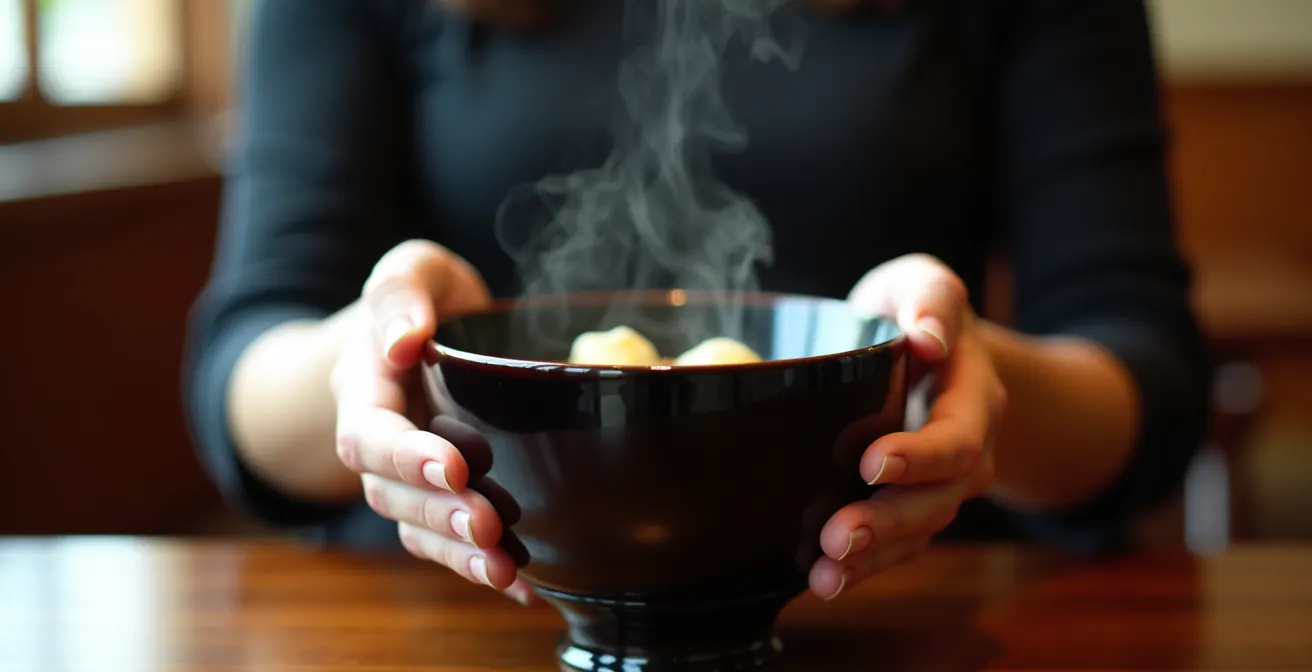
This method is deeply tied to the design of the traditional Japanese soup bowl, or owan. These lacquerware bowls are specifically crafted to be held. They are lightweight, and the lacquer provides excellent insulation, allowing you to hold a bowl of hot soup comfortably. The size and shape are engineered to be brought close to the face. As documented in Japan-guide.com’s etiquette guide, this practice serves a crucial purpose: maximizing the aromatic experience. When you lift the bowl to sip, the rising steam carries the delicate, savory aromas of the dashi and miso directly to your nose. This act of inhaling the fragrance before tasting is a key part of the experience, as aroma accounts for a huge portion of our perception of flavor. A spoon, held at a distance, would largely negate this intimate connection between scent and taste.
Holding the warm bowl in your hands also provides a tactile sense of comfort and conclusion. It is a grounding, multi-sensory ritual that is both practical and elegant, turning the simple act of finishing a soup into a mindful moment that completes the meal.
Kombu or Bonito: Which Dashi Base Complements Sushi Without Overpowering?
The soul of any miso soup is its dashi, the foundational soup stock that provides the deep, underlying umami flavor. The choice of dashi is critical, as it must complement the meal without overpowering the delicate memory of the sushi. The primary sources of umami in dashi are glutamate (from kombu, or dried kelp) and inosinate (from katsuobushi, or dried, smoked bonito flakes). The magic of a great dashi lies in the synergistic effect of combining these two, which amplifies the umami sensation far more than either could alone.
The umami itself is a product of complex biochemistry. For instance, the koji mold used to make miso is a genetic powerhouse for flavor. A deep genomic analysis reveals that 12 different glutaminase genes are present in the *Aspergillus oryzae* mold, all dedicated to producing the glutamic acid that our tongues perceive as umami. For the final soup of a sushi meal, a balanced but robust dashi is required. A dashi made only from kombu might be too subtle, while a first-brew dashi (ichiban dashi) might be too delicate and is typically reserved for clear soups. Often, chefs use a mixed stock (awase dashi) or a second-brew stock (niban dashi), which has a deeper, more rounded flavor that can stand up to the strong taste of red miso.
The following table breaks down the common dashi types and their ideal applications in the context of a sushi meal.
| Dashi Type | Primary Ingredients | Umami Source | Best Use Case | Flavor Profile |
|---|---|---|---|---|
| Awase Dashi | Kombu + Katsuobushi | Glutamate + Inosinate | Standard sushi endings | Deep, balanced umami |
| Kombu Dashi | Dried kelp only | Glutamate | After delicate white fish | Subtle, vegetal |
| Ichiban Dashi | First brew kombu/bonito | Light extraction | Clear soups (not typical for miso) | Delicate, aromatic |
| Niban Dashi | Second brew same ingredients | Deeper extraction | Miso soup at meal end | Robust, stands up to miso |
This choice ensures the final soup is a harmonious conclusion, providing a satisfying umami finish that cleanses the palate without erasing the experience of the fish that came before it.
Why Does the Sweet Egg Omelet Signal the End of the Savory Courses?
In a traditional omakase (chef’s choice) experience, the arrival of the tamagoyaki, a sweet, layered egg omelet, serves as a distinct structural marker. Its sweetness acts as a bridge, signaling the transition away from the savory, raw fish courses and toward the meal’s conclusion. It is, in essence, the “dessert” of the nigiri sequence. The tamagoyaki’s preparation is a point of pride for any sushi chef; its texture and flavor profile—often a delicate balance of sweet and savory from dashi, mirin, and sugar—reflect the chef’s skill and house style.
This sweet course provides a clear palate shift, preparing the diner for what comes next. Immediately following this, the miso soup is served. This sequence is critical. The tamagoyaki ends the savory *flavor* journey, while the miso soup provides the *digestive* conclusion. According to a Tasting Table analysis of traditional sushi dining, this final soup does more than just aid digestion with its warmth and enzymes; its potent umami flavor provides a powerful satiety signal to the brain. Umami is known to promote a feeling of fullness and satisfaction. By ending with this deep, savory flavor, the meal feels complete and fulfilling on a neurological level, preventing the desire to continue eating.
The sequence of tamagoyaki then miso soup is therefore a one-two punch of conclusion: the egg provides the sweet denouement for the taste buds, and the soup provides the warm, enzymatic, and umami-rich final act for the digestive system.
Why Is Shredded Daikon Served With Sashimi and Should You Eat It?
The small pile of shredded daikon radish (tsuma) that accompanies sashimi is not merely a decorative bed for the fish. Like the final miso soup, it serves a critical digestive function, but it acts at a different stage of the meal. You should absolutely eat it, preferably between bites of different types of fish. Daikon is rich in its own set of digestive enzymes, most notably diastase (a type of amylase) as well as proteases and lipases, which help break down starch, protein, and fat, respectively.
This creates a wonderfully synergistic system throughout the meal. The daikon acts as a *mid-meal* digestive aid. When you eat it with fatty fish, its enzymes begin the work of breaking down the complex proteins and oils immediately, making them easier for your body to process. It also has a crisp texture and a subtle, peppery flavor that effectively cleanses the palate between different fish varieties. This allows you to appreciate the unique flavor of each slice without the previous one lingering. The principle of using food-based enzymes for digestion is central to Japanese cuisine. This is the same logic that governs miso, where enzymatic analysis confirms that proteases, amylases, and lipases from koji are responsible for the breakdown of major food components.
So, while the daikon works to assist digestion *during* the savory courses, the miso soup arrives at the end to perform a final, comprehensive cleanse and provide a warm, soothing conclusion to the entire process. They are bookends of a thoughtful, functional culinary experience.
Key Takeaways
- Thermal & Chemical Palate Reset: The primary role of end-of-meal miso soup is to use its warmth to emulsify and wash away residual fish oils, while its umami flavor resets fatigued taste receptors.
- Enzymatic Digestive Aid: The soup is not just warm water; the fermented miso paste is rich in koji-derived enzymes (proteases, lipases) that actively assist in the digestion of the proteins and fats from the sushi.
- Signal of Satiety: The final, powerful umami hit from the soup, often preceded by the sweet tamago omelet, acts as a neurological signal to the brain, promoting a feeling of fullness and satisfaction to conclude the meal.
Why Extremely Hot Powdered Tea Is Essential for Sushi Digestion?
The final act of a traditional sushi meal is not the miso soup, but the cup of green tea that follows it, known as agari. This is typically a simple, robust powdered or loose-leaf green tea like konacha or bancha, served very hot. Its role is to perform one last, final cleansing of the palate and digestive tract. The extreme heat of the tea serves a similar purpose to the warm soup: it cuts through any remaining fats and oils, leaving the mouth feeling completely refreshed and clean. There is no lingering aftertaste, just the clean, slightly astringent flavor of the tea.
Precision in temperature is a recurring theme in Japanese cuisine. While the tea is served hot, the soup before it has an ideal temperature range. As the culinary experts at Just One Cookbook note, it’s a delicate balance: you heat the soup enough to release its aroma but not so much that you destroy its flavor. They advise to never boil miso soup but to serve it at an ideal drinking temperature of around 167°F (75°C). This same principle of controlled heat applies to the final tea, which provides a final thermal “rinse.” Beyond the heat, green tea contains catechins, antioxidant compounds that are also believed to have mild digestive benefits. This final cup is the ultimate punctuation mark on the meal.
The sequence is logical and complete: the tamago signals the end of flavors, the miso soup aids digestion and resets the palate, and the hot tea provides the final, definitive cleanse. The next time you are at an authentic sushi counter, embrace this culinary sequence. Experience for yourself how this final, warm bowl of soup and cup of tea transform the meal from a simple dinner into a complete digestive and sensory journey.
Frequently Asked Questions About Miso Soup and Digestion
What digestive enzymes are produced during miso fermentation?
During fermentation, the koji mold produces proteases for protein breakdown, amylases for starch digestion, and lipases for fat processing, all of which aid in digesting the sushi meal components.
How do fermented foods like miso support digestive health?
Fermented miso contains highly active enzymes and beneficial microorganisms that aid digestion. During this process, proteins are pre-hydrolyzed into easily absorbed amino acids and peptides, making it easier for the body to process.
Why is enzyme activity important in traditional Japanese dining?
The enzymes in both daikon (served with sashimi) and fermented miso (in the final soup) work synergistically. They help break down the proteins and fats from raw fish throughout the meal, making the entire experience more digestible and reducing potential post-meal discomfort.