
Contrary to common belief, the scalding tea at a sushi bar isn’t just for tradition or general digestion. It’s a functional tool, served at a precise temperature to extract catechins that dissolve the film of fish fat on your tongue, resetting your palate in a way cold drinks or even sake cannot. This guide unveils the science and ceremony behind this essential, and often misunderstood, element of the sushi experience.
The moment arrives. A piece of exquisitely prepared sushi is placed before you. But alongside it, a thick-walled ceramic cup, or yunomi, is filled with steaming, cloudy green tea. You take a tentative sip and the heat is surprising, almost scalding. The question immediately forms: why so hot? Many assume it’s simply a matter of tradition or a generic aid to digestion. Some believe it’s meant to sterilize the stomach after consuming raw fish, a common platitude that offers comfort but little substance. These explanations, however, miss the profound and precise purpose of this tea.
The truth is far more functional and elegant. This tea, known in the sushi world as agari, is not just any beverage; it is a carefully selected instrument. Its extreme temperature is not an oversight but a deliberate requirement for a specific biochemical reaction. The key is not in killing bacteria or simply “washing things down.” The true purpose lies in its remarkable ability to interact with the rich oils of the fish, a function that beer and sake are incapable of performing.
But if the secret isn’t tradition, what is it? The answer lies at the intersection of chemistry, temperature, and sensory science. The heat is a catalyst, unlocking compounds within the tea leaves that are specifically designed to dissolve the lipid film left on the tongue by fatty fish like toro or mackerel. This action is what truly “resets” the palate, ensuring that the subtle, complex flavors of the next piece of sushi can be experienced with absolute clarity. This guide will explore the specific type of tea used, the science behind its palate-cleansing power, and the etiquette that surrounds its service, transforming your understanding of this humble cup from a simple drink to an indispensable tool of the sushi experience.
To fully appreciate the role of tea in the sushi ritual, we will delve into its specific properties, its scientific function, and the etiquette that governs its consumption. This structured exploration will reveal the deep intentionality behind every element of a traditional sushi meal.
Summary: The Science and Etiquette of Sushi Tea
- Konacha vs. Sencha: Why Do Sushi Shops Use Cloudy Powdered Tea?
- How Does 80°C Tea Help Dissolve Fish Fat on the Tongue?
- Does Green Tea Actually Kill Bacteria from Raw Fish in Your Stomach?
- High Caffeine or Low: Should You Drink Agari at a Late Dinner?
- How to Signal for More Tea Without Shouting Across the Counter?
- How Does Warm Miso Soup Reset the Tongue After Fatty Fish Oils?
- Why You Must Eat Nigiri Within 3 Seconds of It Being Served?
- What Dining Etiquette Mistakes Offend Traditional Sushi Chefs?
Konacha vs. Sencha: Why Do Sushi Shops Use Cloudy Powdered Tea?
The cloudy, potent tea served in sushi restaurants is typically not the refined Sencha or Gyokuro you might buy for home brewing. It is most often konacha, which translates to “powdered tea.” This is not to be confused with matcha, which is made from stone-ground, shade-grown leaves. Konacha is composed of the small buds, tea dust, and tiny leaf fragments that are left over after processing higher-grade teas. This might sound like a lesser-quality product, but its use in sushi is a masterful example of Japanese practicality and an understanding of resources, a philosophy often described as upcycling.
According to a deep dive into Japanese tea, Konacha is a byproduct from the manufacturing of premium teas like sencha. Rather than being discarded, these potent fragments are valued for their specific properties. Because the pieces are so small, they release their flavor, color, and components almost instantly upon contact with hot water. This allows the sushi chef, or itamae, to prepare a strong, flavorful cup of tea in seconds, a crucial efficiency in a busy restaurant environment. While it is a byproduct, it is not without its own hierarchy; one analysis notes that high-quality konacha accounts for only 10% of the total production of premium teas, making it a specifically sought-after grade.
The resulting brew is bold and astringent, with a strong umami profile and a higher concentration of catechins released quickly. This robustness is not a flaw; it is its primary asset. A delicate, nuanced sencha would be overwhelmed by the flavors of soy sauce, wasabi, and rich fish. Konacha, however, has the strength to stand up to these flavors and perform its essential function: resetting the palate with potent efficiency.
This pragmatic choice of konacha over more ceremonially prized teas is the first clue that the role of agari in a sushi meal is intensely functional, not merely decorative.
How Does 80°C Tea Help Dissolve Fish Fat on the Tongue?
The surprisingly high temperature of agari is the most critical element of its function. It is served hot not just for comfort, but because heat is the catalyst for a chemical reaction on your tongue. After eating a piece of fatty fish, such as toro (tuna belly) or salmon, a thin, almost imperceptible film of lipid oil coats your taste buds. As the Sushi University Editorial team explains, this film dulls your palate, preventing you from fully appreciating the delicate nuances of the next piece.
Hot tea helps dissolve the residual fat left on your tongue after eating fatty sushi. This thin layer of fat coats your taste buds like a film, dulling your ability to fully enjoy the flavors of the next bite. Beer and sake are ineffective at removing this film. But hot tea melts the fat and washes it away, essentially resetting your palate.
– Sushi University Editorial, Sushi University Blog
The process is twofold. First, the simple thermal energy from the hot liquid helps to melt and loosen the solidified fats. Second, and more importantly, the temperature is specifically calibrated for optimal chemical extraction from the tea leaves. Research from sushi experts shows that brewing tea at 80°C (176°F) maximizes catechin extraction. Catechins are a type of antioxidant polyphenol abundant in green tea, known for their astringent (puckering) quality. These compounds have a remarkable ability to bind to and emulsify fats, breaking down the oily film and allowing it to be washed away completely.

As the illustration suggests, the interaction is on a microscopic level. The combination of heat and activated catechins effectively “scrubs” the palate clean. Cold drinks, beer, or even sake lack both the thermal energy and the specific chemical compounds to achieve this effect. They may rinse the mouth, but they cannot dissolve the lipid film. Therefore, each sip of hot agari is a deliberate act of sensory preparation, ensuring your palate is a clean slate, ready to receive and appreciate the next masterpiece from the itamae.
This is why the tea is not just warm, but hot; it is a precision instrument for palate recalibration.
Does Green Tea Actually Kill Bacteria from Raw Fish in Your Stomach?
One of the most persistent beliefs about drinking hot tea with sushi is that it has a potent antibacterial effect, sterilizing the raw fish consumed and preventing foodborne illness. While green tea does possess certain antimicrobial properties, the idea that a cup of agari acts as a powerful disinfectant for your digestive system is a significant overstatement. The reality, supported by scientific inquiry, is far more nuanced.
The primary bioactive components in green tea responsible for this effect are the catechins, the same compounds that help dissolve fat. In a laboratory setting (in vitro), high concentrations of catechins can inhibit the growth of certain bacteria, including those sometimes associated with food poisoning. However, translating this to a real-world dining situation (in vivo) is problematic. The concentration of catechins in a standard cup of tea, and the short time it spends in the stomach, are simply not sufficient to have a meaningful antibacterial impact.
A comprehensive review published by the National Center for Biotechnology Information highlights this distinction clearly. The study notes that for most bacteria, the effect of tea catechins is “extremely weak” and that “it is difficult to envisage that this information could be put to practical use.” The researchers conclude that while these compounds may have some utility in topical applications (like mouthwash), they are not effective as conventional antibacterial agents when ingested. The high concentrations needed to show even marginal effects in the lab are not achievable through normal consumption.
Therefore, you should not rely on agari as a safeguard against improperly handled fish. The safety of your sushi meal depends entirely on the quality of the ingredients and the stringent hygiene practices of the sushi chef. The primary health-related role of the tea is to aid in the digestion of fats and to reset the palate, not to act as an internal sanitizer. Enjoying the tea for its true purpose is part of the experience, but food safety remains paramount and is the sole responsibility of the restaurant.
While the tea contributes to a feeling of well-being, its power lies in flavor enhancement, not in sterilization.
High Caffeine or Low: Should You Drink Agari at a Late Dinner?
A practical concern for many diners, especially during an evening meal, is the caffeine content of the tea. Green tea is known to contain caffeine, and the idea of consuming multiple cups during a late dinner can be worrying for those sensitive to its stimulating effects. However, the world of Japanese tea offers a wide spectrum of caffeine levels, and the choice of konacha in sushi restaurants is, once again, a functional one that takes this into account.
The caffeine content in tea leaves is highest in the youngest, most tender buds and leaves. This is why premium, shade-grown teas like Gyokuro have the highest caffeine levels. Conversely, teas made from more mature, larger leaves and stems, such as Bancha, have significantly less caffeine. Since konacha is often a byproduct of Sencha or Bancha production, its caffeine level is generally moderate to low. It provides a gentle lift without the intense buzz of a high-grade tea or coffee.
For diners who are particularly sensitive to caffeine, many establishments offer excellent, nearly caffeine-free alternatives. The most common is Hojicha, a roasted green tea. The high-temperature roasting process eliminates most of the caffeine, resulting in a nutty, toasty flavor that is both comforting and suitable for any time of day. The following table, based on data from Japanese tea specialists, provides a clear guide to the suitability of different teas for evening dining.
This table compares various Japanese teas, highlighting their ideal brewing temperatures and caffeine levels to help you choose the best option for an evening meal, based on an analysis of water temperature’s role in tea brewing.
| Tea Type | Optimal Temperature | Caffeine Level | Evening Suitability |
|---|---|---|---|
| Hojicha | 100°C | Very Low | Excellent |
| Genmaicha | 95-100°C | Low | Good |
| Konacha | 80-85°C | Moderate-Low | Good |
| Sencha | 70-80°C | Moderate | Fair |
| Gyokuro | 50-60°C | High | Poor |
Ultimately, while the standard agari is perfectly suitable for most, do not hesitate to ask for Hojicha if you desire the palate-cleansing warmth without the caffeine.
How to Signal for More Tea Without Shouting Across the Counter?
The etiquette of a traditional sushi bar, or sushi-ya, is built on subtlety, respect, and non-verbal communication. Shouting an order across the counter is disruptive and considered poor form. This is especially true when it comes to the terminology used. Words like agari (tea), murasaki (soy sauce), and oaiso (the check) are part of an internal jargon used by the chefs and staff. As a customer, using these terms can be seen as presumptuous or out of place. The correct and polite way to request tea is to simply say, “Ocha, onegaishimasu” (Tea, please).
The term ‘agari’ itself has a fascinating history unrelated to sushi, originating in the Edo period’s Hanamachi (geisha district). As historical tea resources explain, it was an elegant term used for the final tea of an engagement, and its auspicious connection was later adopted by sushi restaurants. While its origin is elegant, its modern use is reserved for staff.
However, an even more refined method of requesting a refill exists, one that requires no words at all. The staff at a high-quality sushi restaurant are trained to be highly observant. The most graceful way to signal that you would like more tea is to simply pick up your empty yunomi and place it slightly forward on the counter in the staff’s line of sight. This subtle gesture is universally understood as a polite request for a refill.
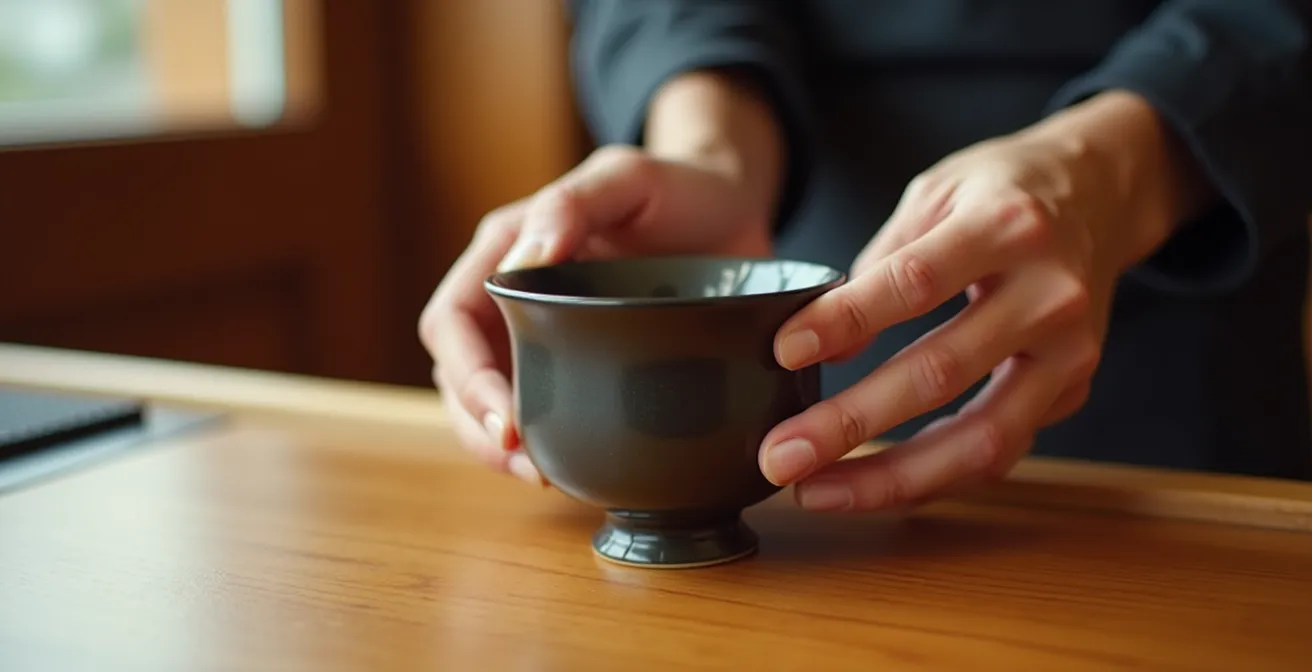
This quiet, respectful gesture maintains the tranquil atmosphere of the restaurant and shows your understanding of its customs. The itamae and staff are focused on creating a seamless and harmonious experience for all diners. By using these subtle cues, you participate in that harmony, showing respect for the environment, the staff, and the craft. It transforms the simple act of getting more tea into a moment of graceful communication.
This non-verbal dialogue is a beautiful aspect of the dining culture, elevating it beyond a mere transaction.
How Does Warm Miso Soup Reset the Tongue After Fatty Fish Oils?
While hot green tea is the primary tool for cleansing the palate of oils, it is not the only warm element at the sushi counter with a restorative function. Miso soup, often served at the beginning or end of a meal, plays a similar but distinct role in resetting the senses. Where tea cleanses through astringency and fat emulsification, miso soup works by providing a powerful, contrasting flavor profile.
The key to miso soup’s effectiveness is its profound and complex umami flavor. Umami, the fifth basic taste, is savory and deep, derived from the fermented soybean paste (miso) and often enhanced by dashi, a stock typically made from kombu (kelp) and bonito flakes. When your palate is coated with the richness of fatty fish, introducing the intense, salty, and savory umami of the miso soup effectively floods the taste buds with a new, dominant sensation. As food writer George Ruan notes in an interview, “While tea cleanses with astringency, miso soup resets the palate by flooding it with a different, complex umami profile.”
Like tea, temperature is also a factor. The warmth of the soup helps to loosen and wash away some of the residual oils, complementing its flavor-resetting function. It provides a comforting, grounding counterpoint to the clean, sharp flavors of the sushi. Some chefs serve it at the end of the meal to aid digestion and provide a sense of satisfying closure. Others may offer it mid-meal to break up a sequence of particularly rich items.
Ultimately, tea and miso soup are two sides of the same coin. Tea is a precision instrument for a quick, sharp reset between individual pieces of nigiri, using astringent catechins to scrub the palate clean. Miso soup is a more holistic reset, using its powerful umami and warmth to wash over the palate and prepare it for a new sequence of flavors or to conclude the meal. Both are essential warm components that showcase the deep thought given to every aspect of the sushi dining experience.
Together, they ensure the palate remains sensitive and receptive throughout the entire meal.
Why You Must Eat Nigiri Within 3 Seconds of It Being Served?
The principle of temperature as a functional element extends far beyond the tea. It is at the very heart of the sushi experience, most critically in the timing of eating nigiri. An itamae may tell you to eat a piece “immediately,” and this is not a suggestion—it is an instruction vital to experiencing the sushi as the chef intended. While a 3-second rule is an extreme expression of this urgency, the consensus among experts is to eat it within 30 seconds. Why such urgency?
The answer lies in the perfect, fleeting harmony of contrasting temperatures. As explained by sushi authorities, the ideal nigiri is a balance between three temperatures: the fish (neta) at cool room temperature, the rice (shari) at human body temperature, and the diner’s own mouth. This concept is a pillar of traditional Edomae-style sushi.
Sushi-meshi (shari or sushi rice) is best when served at body temperature. Most neta (tane, or sushi topping) taste best when served at room temperature. Subtle flavors are too muted when cold, and the texture of the neta will be affected as well.
– The Sushi Geek, The Sushi Geek Blog
The moment the chef places the nigiri on your plate, a countdown begins. The warm, slightly acidic shari begins to cool down, and its texture starts to change. The neta, which has been brought to the perfect temperature to release its delicate flavors and fats, begins to warm up from contact with the rice. The point of perfect harmony—where the rice is still warm and fluffy, and the fish is at its most flavorful—is incredibly brief. Waiting even a minute can cause the rice to become dense, the fish’s fat to change texture, and the nori (if present) to lose its crispness. Eating it immediately is the only way to experience that perfect, intended contrast of temperature and texture. It is a sign of respect for the chef’s meticulous preparation and timing.
Delay is not just a breach of etiquette; it is a degradation of the art form itself.
Key Takeaways
- The hot tea served with sushi, ‘agari’, is typically Konacha, a potent byproduct of tea production chosen for its functional strength, not its prestige.
- The tea is served at a precise 80°C to maximize the extraction of catechins, which chemically dissolve the film of fish fat on the tongue to reset the palate.
- The belief that agari has a strong antibacterial effect is a myth; its primary role is palate cleansing and aiding fat digestion, not sterilization.
What Dining Etiquette Mistakes Offend Traditional Sushi Chefs?
Understanding the function of tea and the timing of nigiri are pillars of appreciating a sushi meal. These are part of a larger system of etiquette designed to show respect for the chef, the ingredients, and the dining experience. A traditional sushi-ya is not just a restaurant; it is a stage for a master craftsman. Avoiding common mistakes is crucial for a harmonious experience and is a sign of a knowledgeable diner. These go beyond just how you use your chopsticks.
One of the most common faux pas involves soy sauce. Many diners dip the rice (shari) side into the soy sauce, which is incorrect. The rice absorbs too much liquid, overpowering the delicate flavor of the fish and causing the nigiri to fall apart. The proper technique is to turn the nigiri on its side and lightly dip a corner of the fish (neta) into the sauce. Furthermore, strong fragrances are a major offense. Wearing perfume or cologne is highly discouraged as it interferes with the subtle aromas of the fish, which are an integral part of the tasting experience for you and for those around you.
Respect for the chef’s pacing and presentation is also paramount. In an omakase (chef’s choice) meal, the sequence of dishes is carefully planned to build in flavor and texture. Eating each piece as it is served is essential. Beyond the functional reasons of temperature, it shows you are engaged and respectful of the chef’s curated journey. By following these customs, you are not just a customer, but an active and appreciative participant in a centuries-old culinary art form.
Action Plan: Your Sushi Counter Etiquette Checklist
- Avoid Fragrance: Arrive without any perfume or cologne to respect the delicate aromas of the fish.
- Respect Terminology: Use “Ocha, onegaishimasu” to request tea. Avoid using staff jargon like “Agari.”
- Consume Immediately: Eat each piece of sushi within 30 seconds of it being served to experience the intended temperature and texture.
- Proper Soy Sauce Technique: Lightly dip the fish side (neta), never the rice side (shari), into the soy sauce.
- Eat in One Bite: Nigiri is designed to be eaten in a single bite to achieve the perfect balance of flavors and textures.
By embracing these practices, you transform a simple meal into a profound cultural exchange, demonstrating deep respect for the itamae’s artistry and dedication.
Frequently Asked Questions About Why Extremely Hot Powdered Tea Is Essential for Sushi Digestion?
Why shouldn’t customers use the word ‘agari’ when ordering tea?
Soy sauce is called ‘murasaki,’ tea is called ‘agari,’ and the check is called ‘oaiso,’ but these are words that are used only among sushi chefs and are not used by customers. Using them can be seen as presumptuous. The polite way to ask for tea is “Ocha, onegaishimasu.”
How much soy sauce should be used on sushi?
Many foreigners put too much soy sauce on their sushi. The reason is that they dip the shari (vinegared rice) side into the soy sauce. If you dip the shari side into the soy sauce, not only will the shari absorb too much soy sauce, but the shari will also become easier to crumble. When putting soy sauce on sushi, try to put the soy sauce on the neta side, and use it sparingly.
When should sushi be eaten after being served?
Sushi is at its best when served fresh. The longer it sits, the more its flavor diminishes. At high-end sushi restaurants, the order in which sushi is served is carefully planned as part of the course. Therefore, it’s important to eat the sushi as soon as it’s served to experience it at its peak temperature and texture.