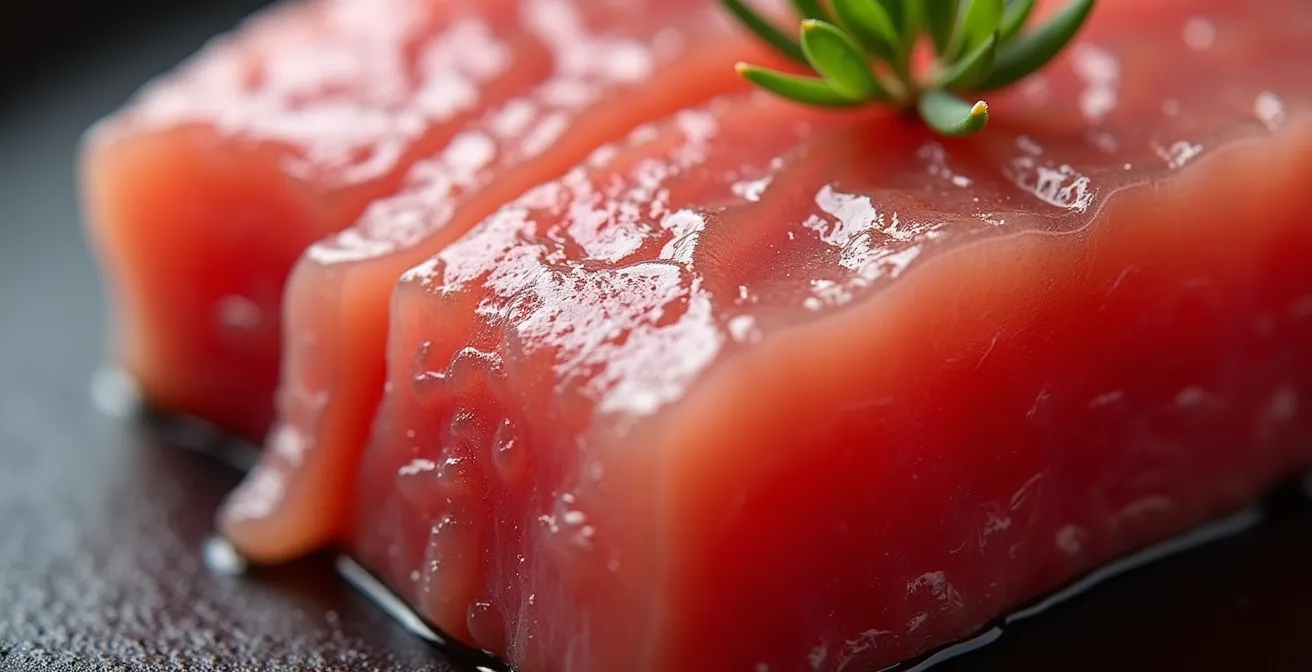
That unpleasant metallic taste in fatty fish is not a sign of bacterial spoilage but the result of rapid chemical breakdown. The highly reactive omega-3 fatty acids are undergoing a process called lipid autoxidation, reacting with air to create volatile compounds that our palate detects as ‘fishy’ or metallic. This reaction begins within minutes at room temperature, fundamentally altering the flavor profile long before the fish is actually ‘old’.
There is a deeply disappointing culinary experience familiar to many: a piece of rich, fatty fish like tuna or mackerel, seemingly fresh, develops a sharp, metallic, or “fishy” taste mere minutes after being served. The common assumption is that the fish must have been old or improperly handled. While freshness is paramount, the truth is often rooted not in microbiology, but in pure chemistry. The culprit is an incredibly fast process that begins the moment the delicate fats within the fish are exposed to a single, ubiquitous element: oxygen.
Many discussions about fishy flavors center on trimethylamine (TMA), a compound associated with spoilage in saltwater fish. However, the distinct metallic tang that emerges so quickly in fatty species is different. It stems from the very compounds that make the fish so healthy—its polyunsaturated fatty acids (PUFAs), particularly omega-3s like EPA and DHA. These molecules are structurally fragile and highly susceptible to a reaction called lipid autoxidation. This is not rot; it’s a chemical transformation of the fat itself, producing new molecules with undesirable flavors.
This article will delve into the lipid chemistry behind this phenomenon. We will explore how quickly these fats oxidize, why certain fish are more prone to it, and how culinary techniques are, in essence, chemical interventions to either control or accelerate these reactions. Understanding this process moves the conversation beyond simply “fresh vs. old” and into the fascinating science of flavor creation and degradation at a molecular level.
To fully grasp the science behind your seafood, this guide breaks down the key chemical processes. The following sections will walk you through the speed of oxidation, the role of fat content, and how cooking and condiments act as chemical modulators of flavor.
Summary: Why Fatty Fish Tastes Metallic
- How Fast Do Omega-3 Fatty Acids Oxidize at Room Temperature?
- Why Is Yellowtail (Buri) So Much Fattier in Winter?
- Why Searing (Aburi) Changes the Flavor of Fish Fat So Drastically?
- Raw vs. Cooked: Which Form of Fish Oil Is Better Absorbed by the Body?
- Why Is Vinegar Essential to Cut Through the Richness of Toro?
- Why Temperature Contrast Between Fish and Rice Enhances Umami?
- Clear Eyes and Red Gills: Which Signs Matter for Cut Fillets?
- At What Point Does Aging Fish Stop Increasing Umami and Start Rotting?
How Fast Do Omega-3 Fatty Acids Oxidize at Room Temperature?
The transformation from delicious to metallic is not a slow decay but a rapid cascade of chemical reactions. Polyunsaturated fatty acids (PUFAs), the molecular backbone of omega-3s, are defined by their multiple double bonds. These bonds are unstable and represent reactive sites, readily attacked by atmospheric oxygen in a process called autoxidation. This process does not require microbial action and begins almost immediately upon exposure to air, especially at room temperature.
The reaction occurs in stages. First, oxygen attacks the double bonds, creating lipid peroxides. These are primary oxidation products, which are themselves unstable and quickly break down into a complex mixture of secondary oxidation products. This secondary group includes volatile aldehydes and ketones, which are the primary sources of the rancid, metallic, and “fishy” off-flavors. Because these compounds are volatile, they easily travel from the fish to our olfactory receptors, creating a strong sensory impression even at low concentrations.
The speed is startling. A controlled study where oxygen was bubbled through fish oil showed significant oxidation well within days, but the initial reactions that create perceptible off-notes happen in minutes. For instance, a controlled oxidation study demonstrated a TOTOX value of 45 after intermittent exposure over time, a figure well above industry standards for acceptable quality. This illustrates how quickly the chemical state of the oil degrades.
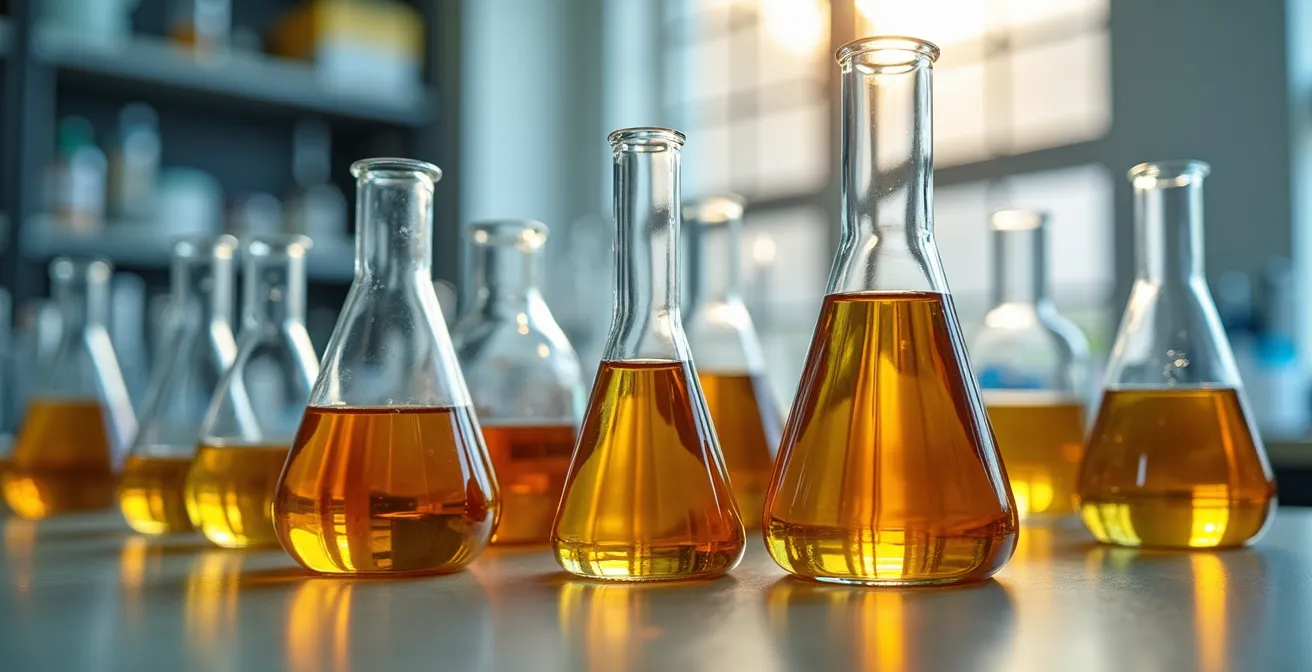
The visual metaphor above shows oil in different stages, shifting from clear gold to darker amber, representing this oxidative timeline. For a diner, this means a slice of toro or saba left on a plate at room temperature is a ticking chemical clock. Within 20-30 minutes, enough volatile compounds can be generated to cross the sensory threshold from rich and buttery to acrid and metallic. Factors like light and trace metals on surfaces can further catalyze and accelerate this process.
Why Is Yellowtail (Buri) So Much Fattier in Winter?
Not all fish are created equal when it comes to the risk of oxidation. The primary determining factor is the concentration of fat, especially PUFAs. This is why leaner fish like cod or flounder are far more stable in flavor than oily fish like mackerel, sardines, or yellowtail (buri). Yellowtail, in particular, is a prime example of how seasonality dictates fat content and, consequently, flavor stability.
During the colder months, yellowtail prepares for spawning by building up significant fat reserves. This winter yellowtail, known as “kan-buri,” is highly prized for its rich, buttery texture. Its high-fat content is scientifically documented; natural yellowtail contains 12.71g of total fatty acids per 100g, a substantial amount that is even higher in farmed varieties and during the peak winter season. This fat is packed with the very omega-3s that are so prone to oxidation.
This seasonal richness is a double-edged sword. While the fat provides a luxurious mouthfeel and carries desirable fat-soluble flavor compounds, it also provides an abundant fuel source for rapid oxidation. As experts note, the quality of kan-buri is about more than just fat.
The winter yellowtail before spawning season is called ‘kan-buri,’ and it contains elevated levels of fat and histidine (this is an amino acid, one of the key elements for composing excellent flavor)
– Experience Kanazawa Tourism Guide, Yellowtail or ‘buri’ is a must-eat in the Hokuriku region
The presence of histidine, a precursor to the umami flavor component, combined with the high fat, creates an exceptional taste experience when the fish is perfectly fresh. However, it also means that when kan-buri is mishandled or left out, its decline is precipitous. The vast reservoir of PUFAs provides ample material for the chemical reaction that leads directly to the metallic off-flavors, making the window for perfect enjoyment of this seasonal delicacy incredibly narrow.
Why Searing (Aburi) Changes the Flavor of Fish Fat So Drastically?
The technique of *aburi*, or lightly searing the surface of fish with a torch, is a powerful tool for flavor transformation. It introduces two major chemical processes that occur simultaneously: the Maillard reaction and accelerated lipid oxidation. The resulting flavor is a complex interplay between the desirable notes from the first and the often-intense notes from the second.
The Maillard reaction is the browning process that occurs between amino acids and reducing sugars under heat, creating hundreds of new aroma compounds responsible for the savory, roasted, and nutty flavors we love in cooked food. When the torch hits the surface of a slice of toro or salmon, this is the primary reaction that chefs are trying to initiate. It creates a delightful contrast in texture and a layer of complex, savory flavor that complements the raw fish underneath.
However, heat is also a potent catalyst for lipid oxidation. The high temperature from the torch dramatically increases the rate at which PUFAs react with oxygen. This rapidly creates a burst of the same volatile aldehydes and ketones responsible for metallic notes. In the context of aburi, this is not always a negative. A small amount of these oxidized compounds can add a “toasted” or “smoky” complexity that enhances the overall flavor. The goal is to apply heat just long enough to trigger the Maillard reaction without pushing the oxidation so far that it becomes rancid. Research on different cooking methods for trout confirms that controlled heat application directly influences lipid oxidation patterns, showing how the method dictates the final chemical profile.
The final flavor of an aburi-style piece of fish is therefore a delicate balance. It is the sum of the raw fish’s original flavor, the savory notes from the Maillard reaction, and the smoky, intense notes from accelerated fat oxidation. A masterfully done aburi has a harmonious blend; a poorly executed one, where heat is applied for too long, can taste overwhelmingly metallic as the byproducts of oxidation dominate the flavor profile.
Raw vs. Cooked: Which Form of Fish Oil Is Better Absorbed by the Body?
From a purely chemical and quality standpoint, the “best” form of fish oil is its least oxidized state. When discussing absorption, the conversation is often conflated with quality. While the body can process fats from both raw and cooked fish, the integrity of the fatty acids is highest before they have been exposed to significant heat or oxygen. The industry standard for high-quality omega-3 supplements provides a clear benchmark for what constitutes “good” oil.
The quality of fish oil is measured using a system that assesses both primary and secondary oxidation. The Peroxide Value (PV) measures the initial peroxides formed, while the para-Anisidine Value (p-AV) measures the secondary aldehydes. Together, they are used to calculate a Total Oxidation (TOTOX) value. For an oil to be considered high quality and stable, these values must be very low.
For instance, the Global Organization for EPA and DHA Omega-3s (GOED) has strict standards for its members. A publication on oxidation standards highlights these limits: oils must have a PV below 5 meq O2/kg, a p-AV below 20, and a combined TOTOX score below 26. These numbers represent an oil with minimal oxidation, ensuring it is free from the rancid flavors and degraded compounds that come with exposure to heat, light, and air.
When you consume a piece of perfectly fresh, raw fatty fish, you are consuming its oils in a state that would meet these stringent criteria—low in peroxides and aldehydes. Cooking, by its very nature, introduces heat that inevitably initiates and accelerates oxidation, raising these values. While cooking can make some nutrients more bioavailable, in the specific case of delicate PUFAs, the raw form represents the most chemically pristine version. Any metallic or fishy taste is a direct sensory indicator that the TOTOX value is rising and the quality of the oil is degrading.
Why Is Vinegar Essential to Cut Through the Richness of Toro?
The pairing of rich, fatty fish with acidic elements like vinegar or citrus is a cornerstone of Japanese cuisine, and it is rooted in sound chemical principles. Acidity serves a dual purpose: it acts as an antioxidant to slow down the formation of off-flavors, and it provides a sensory contrast that “cuts through” the richness of the fat on the palate.
Chemically, acids function as antioxidants. They can inhibit the oxidation process by donating hydrogen atoms, which stabilizes the reactive free radicals formed during the initial stages of lipid autoxidation. By neutralizing these radicals, the acid effectively short-circuits the chain reaction that leads to the formation of volatile aldehydes and ketones. This is why sushi rice is seasoned with vinegar; it’s not just for flavor, but also to help preserve the chemical integrity of the raw fish it supports. This principle is why ponzu, a sauce containing citrus and vinegar, is often recommended for oily fish.
As noted by experts in the seafood industry, this pairing is a deliberate choice to manage the high-fat content. A commentary on yellowtail consumption points out that its rich oils make ponzu a more suitable complement than just soy sauce. This same article reveals how deep this principle runs in Japanese aquaculture, where antioxidants are added directly to the fish feed to prevent oxidation from within, with some producers using yuzu, kabosu, or even green tea catechin to protect the fat quality and color.
While ‘kanburi’ can be served as sushi or sashimi, its oils make ‘ponzu’ (a mixture of soy sauce, citrus and vinegar), a better compliment than the usual soy sauce and wasabi
– SeafoodSource, Japan eating and exporting more yellowtail
On a sensory level, acidity provides a bright, sharp contrast to the heavy, coating sensation of fat on the tongue. This contrast cleanses the palate, making each bite feel fresh and preventing the richness from becoming overwhelming or cloying. The acid helps to lift the flavors, allowing the desirable nuances of the fish to shine through while suppressing the emergence of any metallic notes.
Why Temperature Contrast Between Fish and Rice Enhances Umami?
The experience of high-quality sushi is a symphony of sensory inputs, and one of the most crucial is temperature contrast. The classic ideal is a piece of fish served cool, placed atop a bed of rice that is noticeably warm, close to body temperature. This contrast is not merely a stylistic choice; it directly impacts the perception of both texture and flavor, particularly umami, by altering the physical state of the fish’s fats.
Fish fats, especially the PUFAs in species like tuna and salmon, have a low melting point. When the cool fish makes contact with the warm rice and then the warmth of the diner’s mouth, these fats begin to melt almost instantly. This phase transition from solid to liquid is critical. In their liquid state, the fats can more effectively coat the tongue, providing a luxurious, buttery mouthfeel. More importantly, this melting releases fat-soluble volatile aroma compounds that were trapped within the solid fat matrix.
These newly released aromatic molecules travel up to the olfactory receptors at the back of the throat (retronasal olfaction), profoundly influencing our perception of flavor. Umami, while technically a taste detected by receptors on the tongue (triggered by compounds like inosinate in fish), is greatly enhanced by this aromatic release. The brain integrates the signals from the taste buds with the rich, savory aromas, creating a more complex and intense overall flavor experience. A cold, firm piece of fish on cold rice would keep these fats solid, muting the flavor release.
The temperature contrast also creates a dynamic textural experience. The slight firmness of the cool fish gives way to the soft, melting texture as it warms, which contrasts with the gentle chew of the individual rice grains. This multi-layered sensory input keeps the palate engaged and heightens the diner’s focus on the nuances of each bite, making the umami and rich fatty notes seem more prominent and satisfying.
Clear Eyes and Red Gills: Which Signs Matter for Cut Fillets?
The traditional advice for assessing fish freshness—look for clear, bulging eyes and bright red gills—is excellent for whole fish. However, when faced with a pre-cut fillet or a block of tuna at a sushi bar, different indicators are needed to judge its quality and, specifically, the extent of lipid oxidation. For cut fish, the focus shifts to the appearance of the flesh, fat, and its overall sheen.
The first sign is the color of the fat. In a fresh, unoxidized piece of fatty fish, the intramuscular fat and the fat cap should be a pure, creamy white or ivory. As oxidation progresses, the fats can begin to take on a yellow or brownish cast. This discoloration is a direct visual sign that the PUFAs are breaking down. This is particularly noticeable in the fat lines of tuna or the belly portion of salmon.
The second indicator is the surface texture and moisture. Freshly cut fish has a vibrant, almost translucent sheen. Its surface should look moist and taut. As oxidation and dehydration occur, the surface can become dull, sticky, or develop a dry-looking film. The flesh may also lose its structural integrity and start to look soft or “gaping,” where the muscle fibers begin to separate. This indicates that both proteins and fats are beginning to degrade.
Finally, the most direct sense is smell. A truly fresh fillet should smell clean, oceanic, and slightly briny. It should not smell “fishy.” The moment a distinct metallic or rancid odor is detectable, it is a clear sign that a significant amount of volatile aldehydes and ketones have already formed. This is the olfactory confirmation of the visual cues of degradation.
Action Plan: Auditing a Fillet for Oxidation
- Fat Color: Examine all visible fat lines and layers. Are they pure white/ivory, or do they show any signs of yellowing or browning?
- Flesh Sheen: Look at the surface under a good light. Is it vibrant, moist, and reflective, or is it dull, sticky, or dried out?
- Muscle Integrity: Check the structure of the flesh. Are the muscle flakes tightly packed, or are they beginning to separate and “gape”?
- Bloodline Check: Inspect the dark muscle line (bloodline). It should be a vibrant red or deep maroon. A brown or black color indicates advanced oxidation.
- Odor Test: If possible, smell the fillet. It should have a clean, neutral, or oceanic scent. Any hint of metallic, sour, or ammonia-like odors is a red flag.
By using these targeted indicators, one can make a much more informed judgment about the state of a fillet, specifically looking for the early warning signs of the chemical reactions that ruin flavor.
Key takeaways
- The metallic taste in fatty fish is caused by the rapid oxidation of unstable omega-3 fatty acids (PUFAs), not bacterial spoilage.
- This chemical reaction, called autoxidation, begins within minutes of exposure to air at room temperature, producing volatile compounds like aldehydes.
- Culinary techniques are chemical interventions: searing (aburi) accelerates oxidation for flavor complexity, while acids (vinegar, citrus) act as antioxidants to slow it down.
At What Point Does Aging Fish Stop Increasing Umami and Start Rotting?
The practice of aging fish, much like aging beef, is a controlled process designed to enhance flavor and texture. It involves two competing chemical pathways: the desirable enzymatic development of umami and the undesirable chemical degradation from lipid oxidation. The “sweet spot” for aged fish is the point where umami has peaked, just before the negative flavors from oxidation become overwhelmingly prominent.
Umami development is an enzymatic process. After a fish dies, natural enzymes within the muscle begin to break down adenosine triphosphate (ATP). A key byproduct of this breakdown is inosinic acid (IMP), a potent umami compound. This process can take several hours to a few days, depending on the fish species and storage temperature. During this time, the fish’s flavor becomes more complex and savory as IMP concentrations rise. The texture also changes as proteins begin to break down, resulting in a softer, more tender mouthfeel.
Simultaneously, however, the process of lipid autoxidation is occurring. As discussed throughout this analysis, the fish’s PUFAs are constantly reacting with any available oxygen. While the low temperatures of aging (just above freezing) slow this reaction down significantly compared to room temperature, they do not stop it. Over days, the concentration of volatile aldehydes and ketones slowly but surely builds up.
The art of aging fish is therefore a race against the chemical clock. The goal is to hold the fish in a controlled, low-oxygen, low-temperature environment for long enough to maximize IMP concentration. The process must be stopped and the fish served before the TOTOX value of its fat crosses a sensory threshold where rancid, metallic notes overwhelm the rich, savory notes of umami. For a lean fish like flounder, this window can be long. For an extremely fatty fish like winter yellowtail or high-grade toro, the window is much, much shorter. The process is not about rot; it is the fine balance between enzymatic enhancement and oxidative decay.
To put these principles into practice, the next logical step is to consciously apply them when selecting and consuming fatty fish, paying close attention to the subtle cues of both freshness and preparation.