
The daily sanding of a hinoki wood counter is far more than simple cleaning. It is a foundational design ritual that intentionally tunes the entire sensory environment of a high-end sushi bar. This single act orchestrates scent, sight, sound, and touch, transforming a meal into a meticulously staged performance and revealing a profound philosophy of material honesty and psychological comfort.
Observing a sushi master at the end of a long service, you might witness a quiet, meditative ritual: the careful, rhythmic sanding of the expansive wooden counter. To the casual observer, this appears as simple, albeit meticulous, cleaning. It’s a logical assumption; after all, a pristine workspace is paramount in any kitchen. But this explanation only scratches the surface, missing the profound intentionality that fascinates design enthusiasts and gourmands alike. The real reason is a masterclass in sensory interior design, where the chef acts as both artisan and architect of the dining experience.
The common understanding is that this tradition ensures hygiene and removes stains. While true, it overlooks a much deeper purpose. This daily act is not a chore; it is the foundational note in a carefully composed sensory symphony. What if the key to the sublime nature of a high-end sushi experience wasn’t just the quality of the fish, but the meticulously engineered environment in which it is served? The sanding of the hinoki is the genesis of this environment, a deliberate act of “atmospheric tuning” that prepares the space for a performance.
This article deconstructs the psychology behind this ritual and the design choices it represents. We will explore how this single action influences everything from the scent that calms your mind to the light that focuses your attention and the quiet that enhances your palate. By understanding the “why” behind the sanding, you unlock a new appreciation for the sensory choreography at play in the world’s finest sushi bars.
For those who prefer a visual format, the following video offers an immersive look into the daily life and dedicated craft of a sushi master, perfectly complementing the design principles we are about to explore.
In the sections that follow, we will break down the experience layer by layer. This guide dissects the deliberate design choices—from olfaction to acoustics—that turn a simple counter into the stage for an unforgettable sensory performance.
Summary: Deconstructing the Art of the Sushi Counter Experience
- How Does the Smell of Cypress Wood Affect the Tasting Experience?
- High Counter vs. Flat Counter: How Barrier Height Changes Chef Interaction?
- How to Remove Soy Sauce Stains From Raw Wood Without Chemicals?
- Why Is Lighting Focused Only on the Cutting Board and the Plate?
- How to Apply the Shokunin Spirit to Your Daily Cooking Routine?
- How to Become a Regular (Joren) at an Exclusive Sushi Shop?
- How to Elevate Your Sensory Dining Experience at a High-End Sushi Counter?
How Does the Smell of Cypress Wood Affect the Tasting Experience?
The first and most immediate result of sanding a hinoki counter is not visual, but olfactory. A delicate, resinous, and clean aroma fills the air. This is not an accidental byproduct; it is a deliberate act of atmospheric tuning. The scent of hinoki (Japanese cypress) is rich in organic compounds called phytoncides, which woods release to protect themselves from rot and insects. For the diner, these compounds have a demonstrably calming effect, creating a serene state of mind that is receptive to subtle flavors.
This isn’t mere folklore. Scientific research confirms the powerful psychological impact of this aroma. A study on the effects of vaporized hinoki oil found that exposure to its phytoncides can significantly decrease stress hormones like adrenaline. The research showed that phytoncide exposure significantly increased NK activity, a marker of immune function, while lowering stress indicators. By sanding the counter, the chef is essentially performing aromatherapy, purifying the air and preparing the diner’s mind and palate for the nuanced experience to come. The scent acts as a primer, cleansing the sensory slate of outside-world distractions and focusing the mind on the present moment.
This initial sensory input sets the stage. It communicates a sense of purity, nature, and tranquility before a single piece of fish is served. The smell of hinoki becomes inextricably linked to the taste of the sushi, creating a powerful synesthetic memory. It’s a foundational layer in the sensory choreography, signaling to the brain that this is a space of calm, focus, and exceptional quality.
High Counter vs. Flat Counter: How Barrier Height Changes Chef Interaction?
The traditional high sushi counter is another critical piece of psychological staging. Its height is not arbitrary; it is a meticulously calibrated design choice that defines the relationship between the chef (itamae) and the diner. The counter functions as both a stage and a respectful barrier, creating a proscenium arch through which an intimate performance unfolds. The height—typically between 42 and 46 inches—is ergonomically sound for a standing chef, but for the seated diner, it elevates the chef’s hands to eye level, turning them into the focal point of the entire room.
This elevated platform transforms the preparation of sushi into a display of mastery. Every precise knife cut, every gentle press of rice, becomes a visible, almost choreographed movement. The barrier is high enough to obscure the less “poetic” aspects of kitchen work—bins, cleaning cloths, excess ingredients—maintaining a pristine and focused view. This curated perspective fosters a sense of reverence and anticipation. The chef is not just a cook but a master artisan, and the diner is a privileged spectator at their workbench.
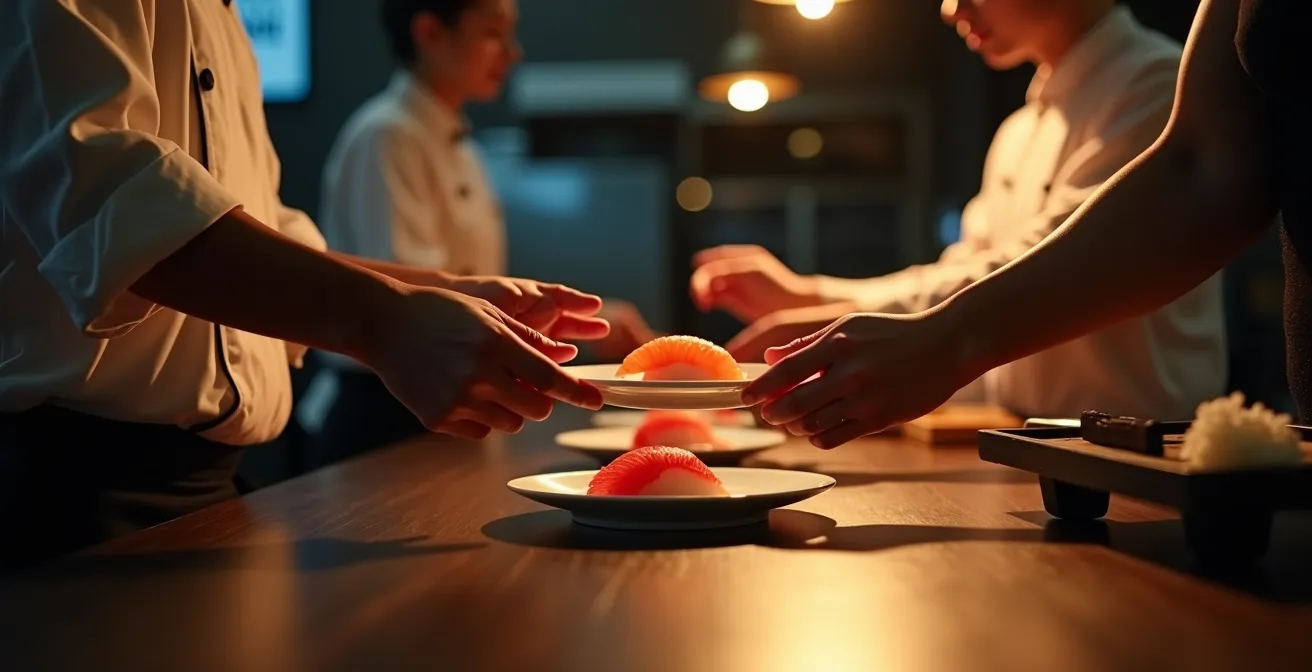
In contrast, a flat or low counter creates a more casual, communal dynamic. It breaks down the barrier, making the interaction feel more like sharing a table with a friend. While this has its own appeal, the high counter is essential to the traditional, high-end omakase experience. It establishes a clear dynamic of performer and audience, focusing all sensory and emotional energy on the act of creation and the moment of presentation. This deliberate separation and elevation are key to the theatricality of the sushi bar, transforming a meal into a formal, respected event.
How to Remove Soy Sauce Stains From Raw Wood Without Chemicals?
The answer is beautifully simple and deeply connected to our core question: you sand them away. The use of an unfinished, raw hinoki counter is a profound statement of material honesty. Unlike a sealed or varnished surface that masks the wood’s nature, raw hinoki is vulnerable. It stains, it absorbs, it ages. Its pristine condition is not a given; it is earned through daily, dedicated ritual. This daily maintenance is the only way to remove discolorations from soy sauce, fish oils, or wasabi without resorting to harsh chemicals that would taint the wood and the food.
This ritual is not aggressive scrubbing but a meditative, skillful process. It requires an understanding of the wood’s grain and the nature of the blemish. The chef selects the right grit of sandpaper and works with gentle, consistent strokes, removing the thinnest possible layer of wood to reveal a fresh, unblemished surface beneath. This act respects the material, preserving its life while restoring its purity. The famed restaurant Sushi Noz, known for its 200-year-old hinoki counter, exemplifies this philosophy. Their daily care is a testament to how this ritual can preserve a precious material for centuries, making the counter itself a living artifact.
This commitment to non-chemical maintenance is crucial. It ensures that no foreign flavors or aromas interfere with the delicate taste of the sushi. The counter remains a pure, natural surface, its scent and texture an integral part of the meal. The following checklist outlines the fundamental steps of this essential practice.
Action Plan: The Daily Hinoki Counter Maintenance Ritual
- Inspection: Begin by carefully inspecting the entire counter surface for any new stains, scratches, or imperfections from the day’s service.
- Grit Selection: Select the appropriate grit of sandpaper based on the depth and nature of the stain, typically starting with a medium grit (220-320) for specific spots.
- Directional Sanding: Sand with light, even pressure, always following the direction of the wood grain. Never sand against the grain, as this will scratch and damage the surface.
- Meditative Motion: Use consistent, deliberate strokes, focusing on removing only the stained layer without creating dips or unevenness in the wood.
- Final Polish: Finish with a very fine grit sandpaper (400 or higher) over the entire surface to achieve a velvety-smooth finish and release the fresh, clean aroma of the cypress.
Why Is Lighting Focused Only on the Cutting Board and the Plate?
Walk into a high-end sushi bar, and you’ll often find the room is surprisingly dim. The ambient light is low, but brilliant, focused pools of light illuminate two key areas: the chef’s cutting board and the spot on the counter where your plate will rest. This is not a mistake or a cost-saving measure; it’s a highly effective form of psychological staging known as the “attentional spotlight effect.” The high-contrast lighting theatrically directs the diner’s focus, eliminating visual distractions and commanding attention exactly where the chef wants it.
The surrounding darkness allows the details within the spotlight to become hyper-visible. The glistening texture of the fish, the individual grains of perfectly cooked rice, the subtle sheen of nikiri glaze—all are rendered in sharp, dramatic relief. As one expert in restaurant design psychology notes, this technique is powerfully effective at guiding the diner’s experience.
The attentional spotlight effect in dining creates a focused sensory experience where high-contrast lighting literally ‘hijacks’ the diner’s brain, forcing attention onto the food and minimizing distractions.
– Restaurant Design Psychology Research, The Psychology of Restaurant Design: How Space Influences Social Interaction
This technique, borrowed from theater, creates a “black box” environment. The world outside the pool of light fades away, and the only thing that matters is the art being created and presented. The focused beam creates an intimate, personal stage for you and the chef, even in a full restaurant. It elevates the plate of sushi from mere food to a precious object, a culinary work of art presented for your exclusive contemplation.
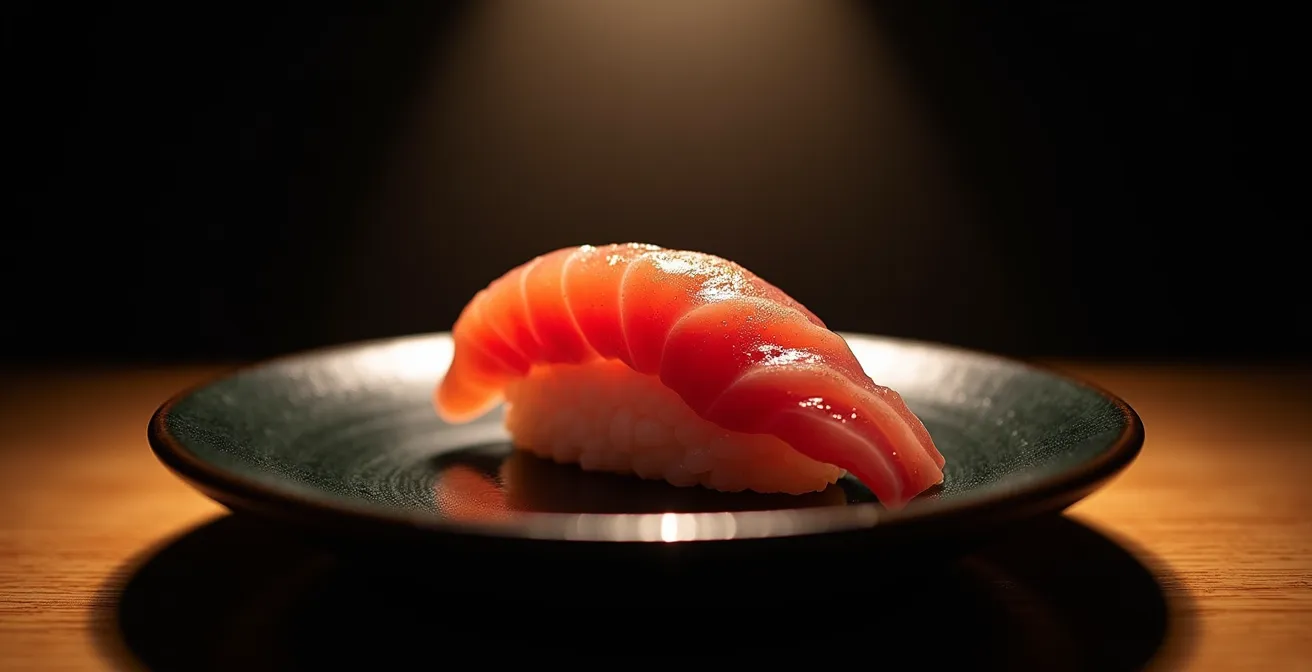
This use of chiaroscuro—the interplay of light and shadow—is a masterstroke of sensory design. It tells you what is important, enhances the visual beauty of the food, and fosters a deep, almost reverential connection between the diner and the dish.
Why Are Traditional Sushi Bars Designed to Be Quiet?
Beyond scent and sight, the sonic environment of a sushi bar is the third pillar of its sensory design. Traditional high-end sushi-ya are conspicuously quiet spaces. There is no loud music, no clattering from an open kitchen, no boisterous chatter. This quiet is not a lack of atmosphere; it *is* the atmosphere. It is a deliberately crafted acoustic environment designed to do one thing: make the food taste better. This concept, known as sonic seasoning, is backed by fascinating scientific research.
Our perception of taste is not isolated to our tongues; it is a multi-sensory process heavily influenced by what we hear. A quiet environment allows the subtle sounds associated with eating—the gentle chew, the faint crispness of nori—to become more prominent, enhancing our perception of texture and freshness. Groundbreaking work in this field has demonstrated this effect empirically. For instance, Professor Charles Spence’s research at Oxford University showed that by simply altering the sound of a potato chip’s crunch, he could make subjects perceive it as up to 15% crunchier or fresher.
In a sushi bar, this principle is applied with masterful subtlety. The quiet allows the diner to focus on the delicate textures of the fish and rice. It fosters a sense of intimacy and respect, encouraging hushed conversation and mindful attention to the chef’s work. The ambient sounds are limited to the soft sounds of the chef’s movements—the slice of a knife, the pat of rice—which become part of the experience itself. This controlled soundscape, free of distraction, creates the optimal conditions for the palate to perceive the most nuanced flavors, turning a meal into a deep, contemplative tasting session.
How to Apply the Shokunin Spirit to Your Daily Cooking Routine?
The meticulous rituals of the sushi bar—the sanding, the precise lighting, the controlled quiet—are all outward expressions of a deeper philosophy: shokunin. This Japanese concept describes an artisan’s relentless pursuit of perfection in their craft, not for external validation, but for its own sake. It is a profound dedication to process and incremental improvement. The sushi master sands the counter every day not just to clean it, but because it is the right way to do it, and doing it right, every single time, is the essence of shokunin.
While you may not have a 200-year-old hinoki counter, you can absolutely apply this spirit to your own cooking. Shokunin is a mindset, not a set of tools. It’s about choosing to elevate a routine task into a meditative practice. It means focusing on one small thing and striving to do it perfectly. It’s about developing a deep respect for your tools, your ingredients, and your process. This transforms cooking from a daily chore into a source of pride and quiet satisfaction.
Adopting this philosophy can be as simple as dedicating yourself to mastering a single skill or truly understanding a single ingredient. Here are a few ways to bring the shokunin spirit into your home kitchen:
- Master a Single Tool: Select one primary knife as your focus. Learn to sharpen it correctly, clean it meticulously after every single use, and become so familiar with its weight and balance that it feels like an extension of your hand.
- Establish a Ritual: Create a non-negotiable cleaning ritual for your primary workspace, like your cutting board. Whether it’s oiling it weekly or sanitizing it before and after every use, turn the maintenance into a mindful practice.
- Deep Dive on an Ingredient: Choose one ingredient per week or month—an onion, a carrot, a specific type of fish—and explore it exhaustively. Prepare it in every way you can imagine: raw, roasted, pickled, braised. Document the results to build a deep, intuitive understanding of its potential.
- Practice a Fundamental Cut: Dedicate five minutes each day to practicing a single knife cut, like a perfect julienne or brunoise. Focus on consistency and rhythm until the motion becomes fluid and meditative.
How to Become a Regular (Joren) at an Exclusive Sushi Shop?
In the world of high-end sushi, becoming a joren—a trusted regular—is the ultimate goal for any enthusiast. It is a status that cannot be bought; it must be earned through respect, knowledge, and an appreciation for the sensory choreography we’ve discussed. The itamae is not just a service provider; they are a master artisan curating an experience. To become a joren, you must prove you are a worthy audience for their art. This means moving beyond being a passive customer and becoming an active, respectful participant.
The journey to becoming a joren is a subtle dance of communication. It’s about showing your genuine interest without being disruptive or arrogant. It’s about demonstrating you understand the unwritten rules of the space: the quiet, the focus on the food, and the respect for the chef’s pacing. Small gestures—putting your phone away, paying attention to the chef’s hands, acknowledging each piece with a slight nod—go a long way. This focused presence communicates that you are there for the right reasons.
Over time, through consistent visits and respectful behavior, you build a rapport. The chef begins to learn your preferences and may start offering you special items not on the menu. The final milestone is reaching a level of trust where you can confidently say “Omakase” (“I leave it up to you”), ceding all control to the chef. This is the ultimate sign of respect and the true mark of a joren. Here is a practical path to follow:
- Demonstrate Knowledge: On your first few visits, order a few specific items you know and appreciate. This shows you have a baseline knowledge and are not just a tourist.
- Comment with Specificity: Offer quiet, sincere compliments on specific details. Comment on the perfect temperature of the rice, the unique texture of a fish, or the beautiful balance of the seasoning. Avoid generic praise.
- Maintain a Focused Presence: Keep your phone away and your voice low. Your attention should be on the counter, the chef, and the food. This shows respect for the environment and the other diners.
- Build Trust Gradually: Don’t expect to be treated like a regular on your first or second visit. Be consistent, be patient, and show genuine appreciation for the craft each time.
- The Omakase Milestone: When you feel a rapport has been built over several visits, confidently entrusting your entire meal to the chef with “Omakase” signals your complete trust and solidifies your status.
Key Takeaways
- The Environment Is a Tool: The sensory elements of a sushi bar—scent from hinoki, focused light, and intentional quiet—are not accidental. They are deliberately engineered to heighten taste and focus the mind.
- Ritual Is Part of the Design: The chef’s daily maintenance, especially the sanding of the counter, is not just cleaning. It is the first act of the dining performance, a ritual that attunes the space and expresses a philosophy of material honesty.
- The Diner Is a Participant: A high-end sushi experience is a two-way interaction. By being present, observant, and respectful, the diner moves from a mere customer to an appreciative audience, unlocking a deeper level of engagement.
How to Elevate Your Sensory Dining Experience at a High-End Sushi Counter?
You now understand the intricate sensory choreography at play: the calming scent of sanded hinoki, the theatrical spotlighting, the taste-enhancing quiet, and the underlying philosophy of shokunin. The entire environment is a meticulously crafted instrument designed to deliver a peak sensory experience. The final element, however, is you. As a design-conscious diner, you can actively participate in this performance rather than just consuming it. By preparing your own senses and adopting a mindful approach, you can elevate the experience from a great meal to an unforgettable one.
This means consciously engaging with the elements the chef has so carefully prepared. It begins before you even arrive, by readying your own palate and mind. Once seated, it’s about paying attention to the details—the texture of the wood under your fingertips, the way the light catches the moisture on a piece of tuna, the subtle shift in aroma as a new ingredient is prepared. This active awareness allows you to perceive the full richness of the chef’s art. You are no longer just eating sushi; you are reading a story told through materials, light, and flavor.
This conscious engagement is the ultimate show of respect for the chef’s craft. It completes the circle of the performance. The chef sets the stage, and by being a fully present and aware audience, you receive the full impact of their work. This is how you transform your role from a simple customer into a true connoisseur, capable of appreciating every nuance of the carefully orchestrated experience.
Your next visit to a fine dining restaurant is an opportunity to practice this new awareness. Consciously tune into the sensory details of the space, and you will discover a layer of artistry you may never have noticed before.
Frequently Asked Questions on Why Do Chefs Sand Their Hinoki Counters Every Single Day?
Should I wear perfume to a high-end sushi bar?
It is best to limit or avoid perfume use entirely. Strong artificial scents can interfere with your own perception of the delicate flavors and, more importantly, can disrupt the carefully curated olfactory environment for all other diners. The subtle, clean aroma of hinoki wood and fresh fish should be the dominant scents.
What’s the ideal mindset before arriving?
Consider performing a ‘sensory fast’ for about an hour before your reservation. This means avoiding strong smells (like coffee or smoke), loud music, or intense screen time. Arriving with a clean and calm mental and sensory palate will make you far more receptive to the subtle details of the experience.
How should I eat each piece of nigiri?
For the full experience, follow the one-bite, three-chew rule. Consume each piece of nigiri in a single bite to enjoy the complete, balanced composition as the chef intended. Then, consciously focus on the three stages of flavor with each chew: the initial taste, the evolving texture, and the lingering finish (known as yo-in).