Types of sushi and recipes
Sushi represents far more than raw fish on rice. This refined culinary tradition encompasses a remarkable diversity of preparations, each with distinct techniques, cultural significance, and sensory experiences. From the precise hand-molded elegance of nigiri to the playful accessibility of hand-rolled cones, understanding these variations transforms sushi from an occasional restaurant treat into an approachable home cooking adventure.
Whether you’re drawn to the meticulous traditions of Edo-mae craftsmanship or seeking casual styles perfect for family gatherings, each sushi type offers unique rewards and challenges. This exploration covers the fundamental categories that define sushi, providing practical insights into techniques, common pitfalls, and the reasoning behind centuries-old methods that continue to shape how we prepare and enjoy these iconic dishes today.
Understanding the Main Categories of Sushi
Sushi divides into several distinct families, each defined by its structural approach rather than specific ingredients. Nigiri features hand-pressed rice topped with fish or seafood, representing the pinnacle of sushi artistry. Maki encompasses all rolled varieties, where nori seaweed encases rice and fillings. Uramaki reverses this structure with rice on the outside, creating the foundation for contemporary fusion rolls. Beyond these, temaki (hand rolls) offer cone-shaped informality, while chirashi and related bowl styles scatter toppings over seasoned rice beds.
Each category demands different skill sets. Nigiri requires confident rice shaping and fish handling, while maki tests your ability to maintain even pressure and clean cuts. Uramaki introduces the challenge of managing sticky exterior rice, and bowl styles emphasize composition and temperature management. Beginners often assume maki represents the easiest entry point, but many find temari (ball sushi) or chirashi more forgiving starting places, as these styles accommodate slight imperfections in shaping while still delivering authentic flavors.
Understanding these distinctions helps you match techniques to occasions. A formal dinner might call for pristine nigiri showcasing premium fish, while a casual gathering thrives with a temaki bar where guests customize their own rolls. Recognizing that sushi encompasses this breadth liberates home cooks from the misconception that perfection requires professional training.
Nigiri: The Pinnacle of Sushi Craftsmanship
Nigiri sushi stands as the ultimate expression of sushi mastery, where minimal components demand maximum precision. This apparently simple combination of shaped rice and draped topping reveals a chef’s skill more transparently than any elaborate roll. The rice must hold together without compression that makes it dense, while the fish should feel like a natural extension rather than a separate component.
Preparing the Fish
Professional preparation begins long before assembly. Salt curing transforms texture and intensifies flavor, particularly for silver-skinned fish that might otherwise taste flat. A light salting followed by brief resting draws out excess moisture, firming the flesh while concentrating its natural character. This technique proves essential for traditional toppings like kohada (gizzard shad), where the curing process defines the entire eating experience.
Cutting technique matters equally. Working with saku blocks (rectangular fish portions), precise knife angles create slices that drape gracefully over rice. Cutting against the grain shortens muscle fibers, producing a more tender bite. The thickness varies by fish type: lean varieties like tai (sea bream) are sliced thinner than fatty tuna, which can support a more substantial cut. Each slice should measure approximately the length of the rice bed it will crown, creating visual harmony.
Achieving Perfect Balance
The rice-to-fish ratio determines whether nigiri feels balanced or lopsided. A common error involves creating oversized rice beds that dwarf the topping, producing a starchy, unbalanced bite. The rice should be just slightly smaller than the fish slice, allowing the topping to extend marginally beyond the edges. This proportion ensures every bite captures both elements in proper balance.
Temperature presents another critical consideration. Serving cold fish directly from refrigeration onto warm rice creates an unpleasant thermal contrast that mutes flavors. Fish should rest at cool room temperature—not warm, but not refrigerator-cold—allowing its natural flavors to open. This practice, standard in traditional sushi restaurants, makes an immediately noticeable difference in taste and texture. Finally, glazing certain cooked toppings like anago (conger eel) with tsume (sweet reduction) adds visual appeal while providing moisture and complementary sweetness that balances richer preparations.
Edo-mae Sushi: Honoring Tokyo’s Traditional Methods
Edo-mae sushi, the style that emerged in Tokyo during the 19th century, emphasizes cooked and cured preparations rather than pristine raw fish. This approach developed partly from necessity—refrigeration didn’t exist, so preservation techniques were essential—but evolved into a sophisticated culinary philosophy where the chef’s intervention enhances rather than masks natural flavors.
Characteristic Toppings and Techniques
Classic Edo-mae showcases preparations like simmered anago brushed with sweet tsume glaze, vinegar-cured kohada with its distinctive silvery appearance, and lightly cooked kuruma ebi (tiger prawn). Each topping receives specific treatment: the anago is butterflied, deboned, and simmered until tender; kohada undergoes sequential salt and vinegar curing; shrimp are skewered before cooking to maintain straightness. These techniques require time and attention but produce distinctive flavors impossible to achieve with raw preparations alone.
The regional contrast with Hokkaido style illustrates different philosophical approaches. Hokkaido’s colder waters and fishing culture favor pristine raw presentations of salmon, uni (sea urchin), and ikura (salmon roe), celebrating the ingredient’s natural state. Edo-mae instead views the chef as collaborator, using traditional techniques to bring forth complexity and extend preservation—a reflection of Tokyo’s historical urban context where fish traveled from coastal markets.
Common Misconceptions
A frequent mistake involves incorporating salmon into Edo-mae presentations. While salmon has become globally synonymous with sushi, it plays no role in traditional Tokyo-style preparations. Salmon wasn’t historically consumed raw in Japan due to parasite concerns, and its introduction as sushi topping is a modern, largely Western-influenced development. Authentic Edo-mae focuses on species from Tokyo Bay and nearby Pacific waters: various tuna cuts, sea bream, horse mackerel, and the shellfish and mollusks that thrived in these environments. Understanding this distinction helps home cooks make informed choices when planning traditional versus contemporary menus.
Rolled Sushi: Mastering Maki Techniques
Rolled sushi offers tremendous creative flexibility while teaching fundamental skills applicable across sushi types. The basic principle remains constant—rice and fillings encased in nori—but execution varies significantly between thick futomaki and slender hosomaki rolls.
Essential Tools and Rice Spreading
The bamboo rolling mat, or makisu, serves as the primary tool, but correct usage isn’t intuitive. The mat should be positioned with bamboo strips running horizontally, allowing the roll to form perpendicular to the strips. Wrapping the mat in plastic film prevents rice from lodging between bamboo pieces, though traditional practitioners often work without this modern convenience.
Rice spreading represents the most common stumbling point. The goal is even distribution across the nori, leaving a small margin at the top edge to create a seal. Many beginners pile rice thickly in the center, creating bulges that prevent tight rolling. Instead, think of creating a thin, uniform blanket—you should see faint impressions of the nori’s texture through the rice layer. Wet hands prevent sticking, though excessive water makes rice mushy. The proper amount feels like lightly dampened fingertips, refreshed between each spreading session.
Futomaki vs. Hosomaki
Futomaki (thick rolls) typically contain multiple ingredients and span the full width of a nori sheet, creating substantial portions that showcase colorful filling combinations. Hosomaki (thin rolls) use half-sheets and feature single fillings—cucumber, tuna, or pickled radish—emphasizing simplicity and clean flavors. Paradoxically, hosomaki often proves more challenging despite fewer components, as there’s less room to hide imperfect technique.
The cardinal error in both styles is overfilling. Ambitious cooks pile in ingredients until the roll won’t close, leading to burst seams and filling that squeezes out during slicing. A properly filled roll uses restraint: futomaki ingredients should occupy roughly the center third of the rice bed, while hosomaki fillings stay pencil-thin. This discipline ensures clean slicing and balanced bites where rice and filling maintain proper proportion. When slicing, a sharp knife drawn through in one smooth motion—rather than sawing—prevents compression that squashes the roll’s structure. A damp cloth to clean the blade between cuts keeps rice from building up and tearing the nori.
Uramaki: Inside-Out Roll Challenges
Inside-out rolls, where rice forms the exterior surface, present unique structural challenges that explain why these Western-influenced styles emerged later in sushi’s evolution. Without nori’s binding strength on the outside, the roll depends entirely on rice cohesion and careful handling.
Success begins with plastic wrap management. The makisu must be fully wrapped in plastic film to prevent rice adhesion—unlike traditional maki where some practitioners work directly on bamboo. After spreading rice on nori’s exterior, the sheet gets flipped so rice faces down on the plastic-covered mat. This inversion requires confidence; hesitant flipping leads to rice displacement.
Rice density control becomes critical. The exterior rice layer should be thinner than interior rice in traditional maki, just thick enough to hold together without creating a starchy, heavy roll. Many home cooks, worried about structural integrity, apply too much rice, resulting in rolls where rice overwhelms every other flavor. A proper uramaki exterior shows individual rice grains distinctly rather than appearing as a compressed mass.
The topping adhesion technique—sprinkling sesame seeds, tobiko (flying fish roe), or furikake on the exterior rice before rolling—serves both aesthetic and practical purposes. These coatings add flavor complexity while providing slight texture that prevents fingers from sliding on smooth rice when handling finished rolls. During slicing, even greater knife care is required, as there’s no nori sheath to help maintain shape. Very sharp blades and single confident strokes prevent the exterior rice from smearing or separating. California rolls and dragon rolls both use this foundation, varying primarily in fillings and garnishes rather than fundamental technique.
Casual Styles for Home Cooks
Beyond the technical demands of nigiri and precision rolling, several sushi styles offer accessibility without sacrificing authenticity—perfect for building confidence and feeding groups.
Temari and Gunkan
Temari (ball sushi) wraps toppings around rice spheres using plastic film, eliminating hand-shaping anxiety. Simply place a topping piece in plastic, add seasoned rice, twist the wrap closed, and compress gently to form a sphere. The result looks polished and appears on restaurant menus, yet requires no advanced technique. Gunkan (battleship sushi) uses nori strips wrapped around rice beds to create walls that contain loose toppings like ikura, uni, or chopped fish. A small rice oval gets encircled by a nori band, with the topping spooned into the created well. These styles work beautifully on variety platters, adding visual interest alongside nigiri and maki.
Temaki for Gatherings
Hand-rolled sushi transforms sushi-making into interactive entertainment. Guests assemble their own cone-shaped rolls from prepared components, choosing fillings according to preference. Success depends on proper nori cutting—sheets should be quartered into squares that, when rolled diagonally, form cones of appropriate size. Arranging a logical buffet flow matters: rice first, then nori, followed by proteins, vegetables, and condiments. This sequence ensures guests build structurally sound cones.
For crowds nervous about raw fish, cooked alternatives like shrimp tempura, imitation crab, grilled chicken, or vegetables maintain the interactive fun while broadening appeal. The crucial error to avoid is pre-rolling cones before guests arrive. Nori softens rapidly when in contact with rice moisture; pre-rolled temaki becomes limp and unpleasant within twenty minutes. Instead, provide a brief demonstration and let guests roll immediately before eating. Rice quantity estimation typically assumes three to four hand rolls per person for a meal setting, with each roll using approximately two tablespoons of rice.
Sushi Bowl Variations: Chirashi and Donburi
Bowl-style presentations offer elegant solutions for utilizing premium ingredients without technical rolling or shaping stress. Chirashi, meaning “scattered,” artfully arranges sashimi-style fish and garnishes over seasoned sushi rice, creating a deconstructed experience that highlights ingredient quality. Traditional donburi places specific toppings over rice in a more unified composition, often featuring cooked elements.
The rice base requires proper seasoning and cooling. The same vinegar mixture used for sushi—rice vinegar, sugar, and salt—gets folded into hot rice, which then must cool to room temperature before receiving toppings. This cooling proves essential; the thermal transfer error of placing cold fish on hot rice creates unpleasant temperature gradients and partially “cooks” delicate fish through residual heat. Spreading rice in a wide, shallow container and fanning while folding speeds cooling while creating the slightly glossy, separated grain texture desired.
Incorporating cooked ingredients—seasoned shiitake mushrooms, sweet tamagoyaki (egg), simmered vegetables—adds color and flavor complexity while making these styles suitable for family portions where not everyone may want raw fish. The art lies in thoughtful composition: contrasting colors, varied textures, and strategic garnishing with shredded nori, pickled ginger, or microgreens create visual appeal. Portioning for families becomes straightforward, as bowls scale easily compared to precisely counted nigiri pieces.
Preventing soggy rice requires avoiding excess moisture from toppings. Pat fish dry before arranging, ensure cooked components aren’t dripping with sauce, and consider a subtle barrier like shredded daikon radish or shiso leaves between particularly wet toppings and rice. Matching vinegar intensity to topping richness—using slightly more seasoning for assertive flavors, less for delicate fish—creates balance. These bowl styles also excel at utilizing leftover rice and odd pieces of fish that aren’t perfect enough for nigiri, transforming what might seem like scraps into a luxury presentation through thoughtful arrangement and fresh garnishes.
The breadth of sushi styles ensures there’s an appropriate technique for every skill level, occasion, and ingredient availability. Starting with approachable formats like temari or chirashi builds confidence and familiarity with seasoned rice and fish handling, while gradual progression toward nigiri and precise rolling develops skills over time. The common thread connecting all these variations remains respect for quality ingredients, attention to temperature and texture, and the understanding that sushi’s refinement comes not from complexity but from thoughtful execution of fundamental principles.
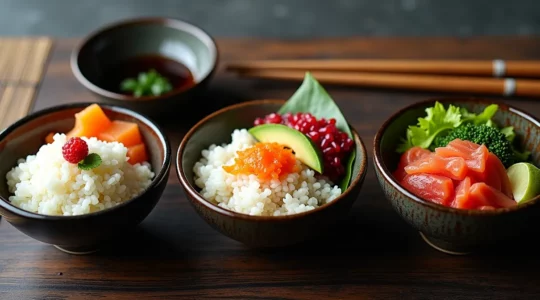
Why Using Sushi Rice for Donburi Bowls Is a Flavor Mistake?
Many home cooks believe all Japanese rice bowls start with the same base, often reaching for vinegared sushi rice. This is a fundamental flavor error. The art of the perfect bowl lies in understanding the rice’s role: a neutral, absorbent…
Read more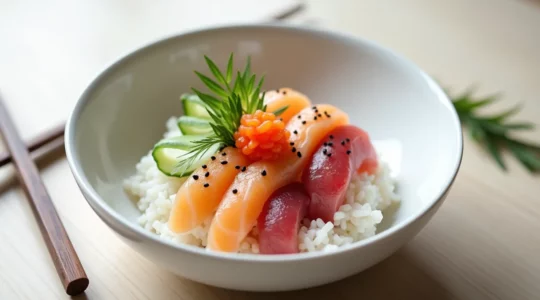
How to Turn Sashimi Scraps Into a Luxury Chirashi Bowl?
In summary: Transform chaotic scraps into art by applying Japanese arrangement principles (moritsuke) for visual harmony. Create a flavor foundation with more heavily seasoned sushi rice, designed to stand alone in every bite. Balance the savory fish with sweet, cooked…
Read more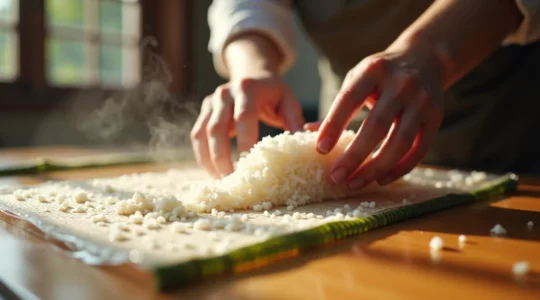
How to Roll Uramaki Without Rice Sticking to Your Mat or Hands?
The secret to a perfect uramaki roll isn’t just technique, but understanding the physics of adhesion and structure. Master the non-stick surface by properly wrapping your bamboo mat in heavy-duty plastic wrap. Control structural integrity with the precise rice-to-nori ratio,…
Read more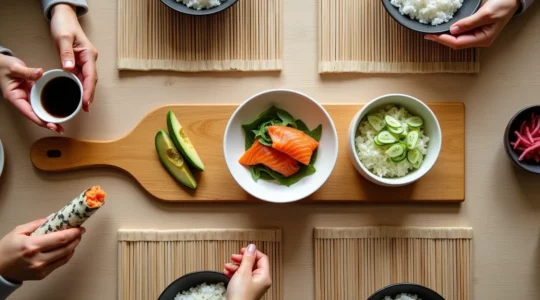
How to Host a DIY Temaki Cone Party for 10 Guests on a Budget?
Hosting an impressive temaki party on a budget isn’t about expensive ingredients; it’s about mastering the flow of your setup and the physics of your food to prevent chaos and guarantee fun. Engineer your temaki bar like an assembly line…
Read more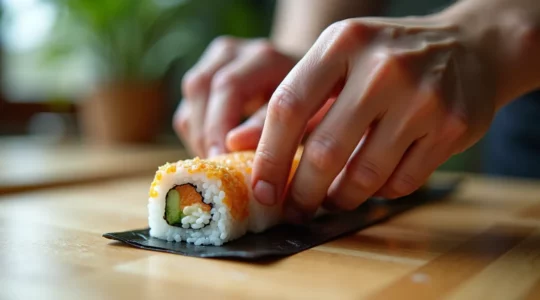
How to Roll Tight Maki Rolls That Don’t Fall Apart When Sliced?
In summary: The secret to a stable roll is not force, but understanding the physics of pressure and starch chemistry. Wrapping your bamboo mat in plastic is a non-negotiable step for achieving a smooth, tight roll. The way you spread…
Read more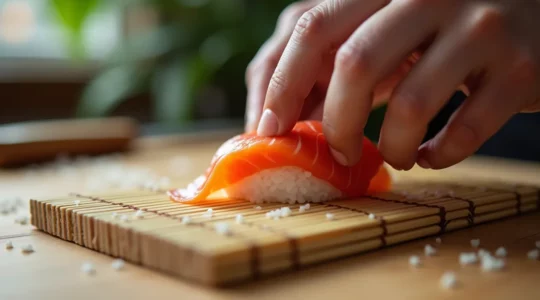
Nigiri Excellence with Supermarket Fish? It’s All in the Technique
Contrary to popular belief, you don’t need access to a high-end Japanese fish market to create spectacular nigiri at home. The texture and flavor of standard supermarket salmon can be dramatically improved with a simple, 10-minute salt cure. The secret…
Read more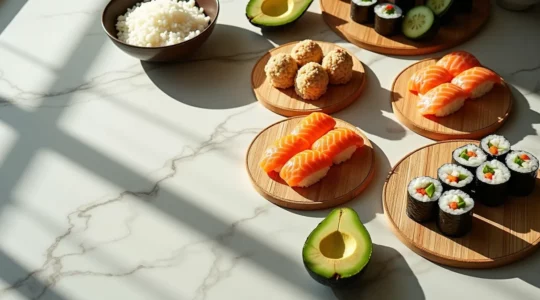
Beyond the Roll: What Are the Best Sushi Styles for a First-Time Home Chef?
Making impressive sushi at home is far easier when you skip the difficult rolls and focus on simple, ‘forgiving forms’ first. Temari sushi requires no special tools or rolling skills, just simple shaping with plastic wrap. Gunkan “battleship” sushi neatly…
Read more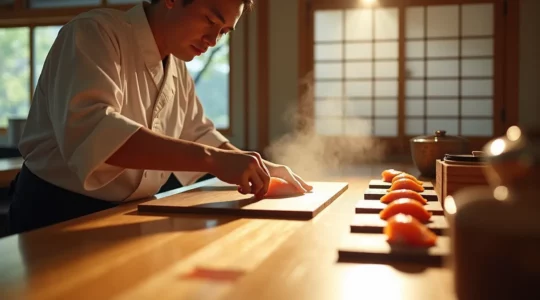
Edo-mae Style Fish: Why Cured Toppings Taste Better Than Fresh Catch?
Contrary to the popular belief that “fresher is better,” the true essence of Edo-mae sushi lies in the masterful transformation of fish through curing and cooking to unlock its ultimate potential. Curing and simmering are not preservation compromises; they are…
Read more