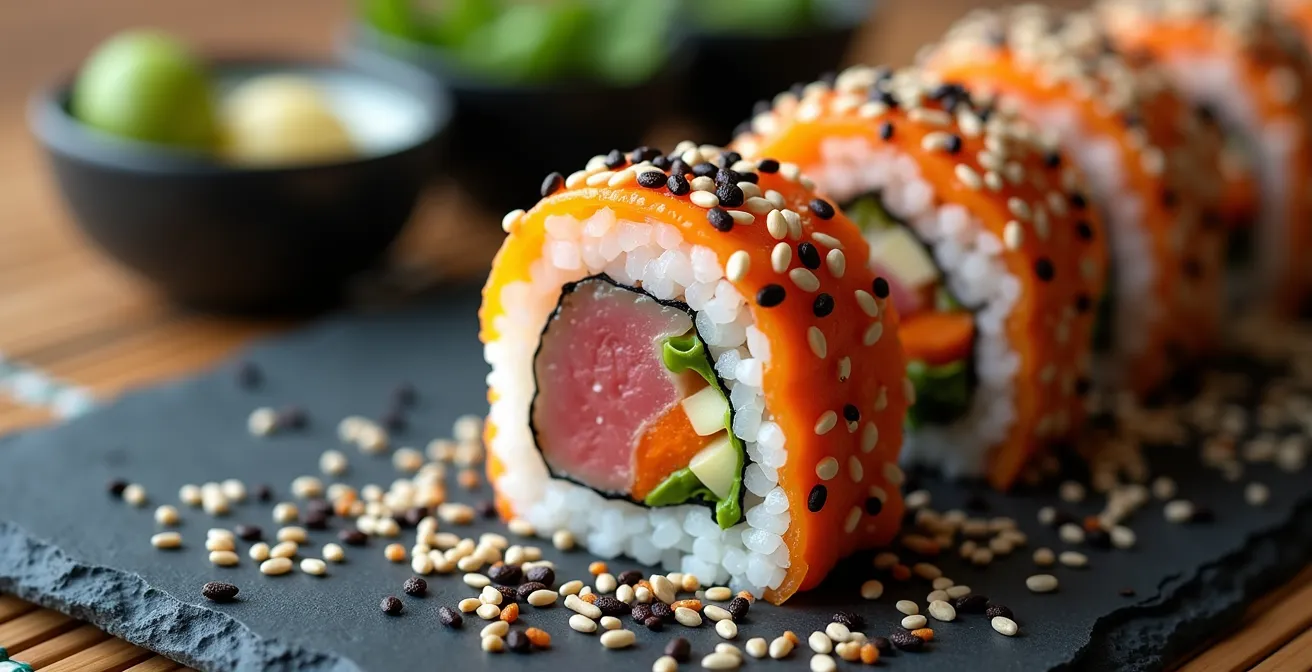
The difference between a good and a great spicy tuna roll isn’t the fish—it’s how you master the sesame seeds.
- Roasting is a chemical transformation that unlocks crucial flavor compounds that raw seeds lack.
- Black sesame offers an earthy, bold contrast to spicy tuna, while white sesame provides a nutty, gentle complement.
Recommendation: Always toast seeds in small batches right before use and store them in an airtight, opaque container away from heat to prevent rancidity.
The final touch on a homemade spicy tuna roll is often an afterthought: a quick sprinkle of sesame seeds. For many, this step is purely for visual appeal, a nod to tradition. But what if this simple ingredient holds the key to transforming your roll from merely tasty to truly exceptional? Most advice stops at “toast them for crunch,” but this barely scratches the surface of their potential. The real craft lies in understanding sesame not as a garnish, but as a strategic flavor component capable of modulating heat, adding aromatic depth, and providing essential textural contrast.
The secret that separates amateur from professional-level sushi is this deep understanding of each ingredient’s role. Instead of viewing sesame as a single entity, we must consider the distinct personalities of black and white seeds, the chemical magic of roasting, and the impact of texture, from whole seeds to finely ground powder. This is where the perspective of a spice roaster becomes invaluable, focusing on how heat and preparation unlock a spectrum of volatile compounds that can either complement the creaminess of the tuna or stand in bold contrast to its spice.
This guide moves beyond the basics. We will deconstruct the science of why roasting is non-negotiable, explore the precise techniques for achieving a perfect coating, and delve into the nuanced decision of when to deploy the nutty sweetness of white sesame versus the earthy depth of black. By mastering the seed, you master the final, critical layer of flavor and texture in your spicy tuna roll.
To guide you through this process, this article breaks down the essential techniques and flavor theories. Explore the sections below to master every aspect of using sesame seeds like a professional.
Summary: A Deep Dive into Sesame for Perfect Sushi
- Why Pre-Roasting Sesame Seeds Releases Oils That Raw Seeds Lack?
- How to Coat an Inside-Out Roll With Sesame Seeds Without Bald Spots?
- Nutty vs. Earthy: When to Use Black Sesame Instead of White?
- The Pantry Mistake That Makes Your Sesame Seeds Taste Rancid
- Whole or Ground: Which Texture Maximizes Aroma on Rice Bowls?
- Why You Always Need a Crunchy Element in a Soft Avocado Roll?
- How to Make Avocado Slices Stick to the Outside of the Roll?
- Which Fresh Fillings Pair Best With Nori Sheets for Balanced Flavor?
Why Pre-Roasting Sesame Seeds Releases Oils That Raw Seeds Lack?
The difference in aroma between raw and toasted sesame seeds is not subtle; it’s a fundamental transformation. Raw seeds possess a mild, almost green flavor, but applying heat initiates a cascade of chemical reactions that unlock their true aromatic potential. The primary process at play is the Maillard reaction, a complex browning reaction between amino acids and reducing sugars. This isn’t just about color change; it’s about creating hundreds of new flavor compounds that give toasted seeds their characteristic nutty, rich, and deeply savory profile. While this happens, the cell walls within the seeds begin to break down.
This structural change allows the natural oils, rich in flavor, to be “expressed” or released to the surface. This is why properly toasted seeds take on a noticeable glisten and begin to pop. These oils carry the fat-soluble volatile compounds generated during roasting, delivering a much more intense and lasting flavor experience. In fact, research from the Journal of Agricultural and Food Chemistry reveals that the formation of key flavor compounds like pyrazines is a direct result of the roasting process. Without heat, these oils and their aromatic passengers remain locked inside the seed, delivering minimal impact to the final dish.
To achieve this transformation perfectly, follow these precise steps:
- Heat a dry, heavy-bottomed frying pan over medium-low heat. Do not add any oil.
- Add a single layer of seeds and stir or toss them constantly for 2-3 minutes. This ensures even heating and prevents scorching.
- Listen for the occasional popping sound and watch for the seeds to turn a light golden-brown and develop a shine. This is the signal that oils are being released.
- Remove the pan from the heat immediately. The residual heat will continue to toast them.
- Pour the seeds onto a cool, flat plate to spread them out and halt the roasting process instantly. Skipping this step can lead to bitter, burnt seeds.
This controlled application of heat is the single most important step in preparing sesame seeds for any culinary use, especially for a dish like a spicy tuna roll where its flavor must stand up to other bold ingredients.
How to Coat an Inside-Out Roll With Sesame Seeds Without Bald Spots?
Achieving a flawless, jewel-box coating of sesame seeds on an inside-out (uramaki) roll is a hallmark of skilled sushi preparation. The common struggle is ending up with patchy, uneven coverage, with seeds clinging more to the board than the rice. The secret lies in a systematic approach that prioritizes adhesion at every stage. It begins with creating the right surface: perfectly cooked and seasoned sushi rice spread with intention. The rice should be slightly sticky but not wet, providing a receptive canvas for the seeds.
Professionals don’t just sprinkle seeds randomly. They create a dedicated “coating tray” to ensure the entire surface of the roll makes contact with the seeds under even pressure. This method guarantees a uniform layer without compressing or misshaping the delicate roll.
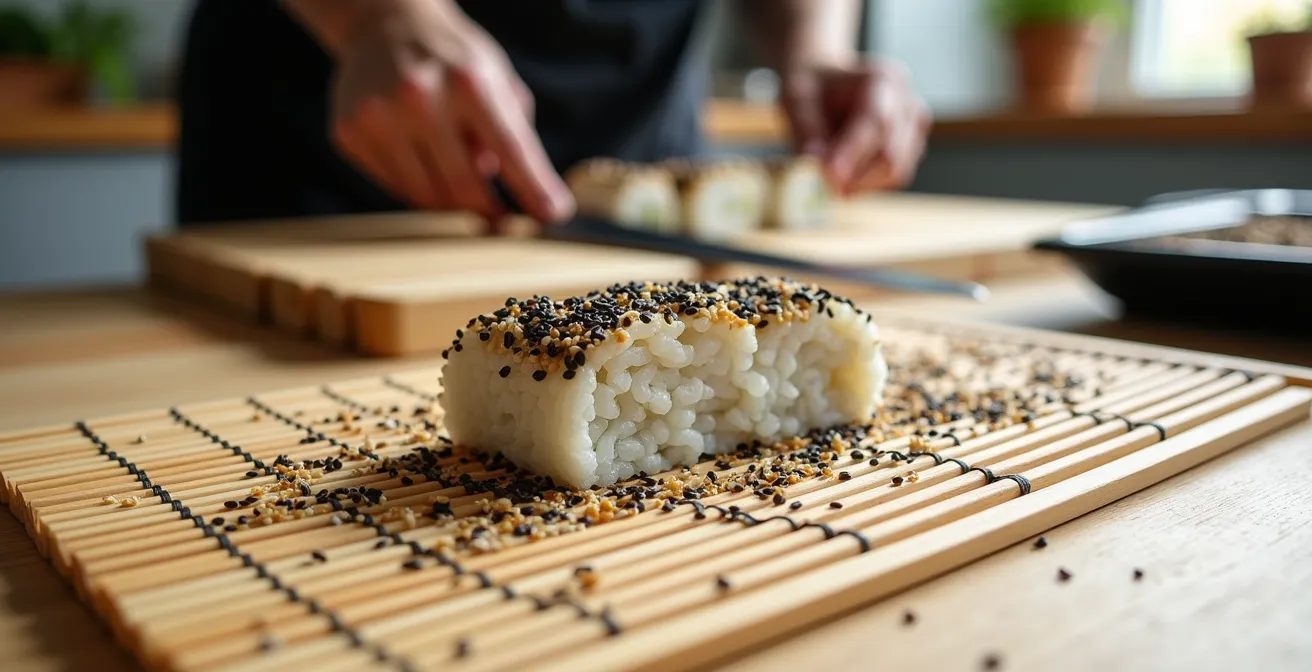
The visual appeal of a perfectly coated roll, as seen in a professional setting, is undeniable. But the technique is accessible to any home cook who follows a few key steps. It’s about building layers of adhesion—from the initial sprinkle to the final roll.
Case Study: The Professional Sushi Chef Coating Technique
Professional sushi chefs use a dedicated shallow tray (like a quarter sheet pan) filled with seeds for the final rolling stage. After spreading the rice over the nori, they apply an initial light sprinkle of seeds. Then, they flip the sheet, add the fillings, and form the roll. The crucial final step involves gently rolling the entire log in the seed tray with even pressure, ensuring the sticky rice picks up a complete and even coating without any gaps or bald spots.
To replicate this professional finish, follow this sequence:
- Fill a quarter sheet pan or a similar shallow tray with an even layer of your toasted sesame seeds.
- Moisten your hands with tezu (vinegar water) to prevent the rice from sticking to your fingers.
- Spread the sushi rice in a thin, even layer over the entire nori sheet, ensuring it reaches every edge.
- Lightly sprinkle sesame seeds over the surface of the rice. This is your “primer” coat.
- Carefully flip the nori sheet over so the rice side is facing down on your bamboo mat.
- Add your fillings, roll the sushi into a log, and then transfer the entire log into your seed tray.
- Using the bamboo mat for support, roll the log with firm, even pressure to embed the seeds into the rice surface completely.
Nutty vs. Earthy: When to Use Black Sesame Instead of White?
The choice between black and white sesame seeds is far more than an aesthetic one; it is a critical decision that dictates the final flavor profile of your spicy tuna roll. While both come from the same plant family, their flavors are distinct. White sesame seeds, especially when toasted, offer a mild, gentle nuttiness with a hint of sweetness. They are the versatile workhorse, complementing the creamy mayonnaise and delicate fish without overpowering them. They enhance the existing flavors, adding a subtle warmth and a pleasant crunch.
Black sesame seeds, on the other hand, are an entirely different beast. Their hulls are left intact, contributing to a stronger, earthier, and slightly more bitter flavor profile. When toasted, their aroma is more potent and robust. Using black sesame with spicy tuna is a deliberate choice to create contrast. The earthy notes stand up against the richness of the mayo and the heat of the sriracha, adding a layer of complexity and a bold, savory depth that white seeds cannot provide. The visual impact is also more dramatic, creating a striking black-and-white pattern against the rice.
Ultimately, the decision comes down to your desired outcome: are you seeking harmony or contrast? For a classic, crowd-pleasing roll where the spicy tuna is the star, white sesame is the safe and delicious choice. If you want to create a more complex, modern, and memorable flavor experience with a striking visual, black sesame is the superior option.
This table breaks down the key differences to guide your decision, based on a comparative analysis of their characteristics.
| Characteristic | White Sesame | Black Sesame |
|---|---|---|
| Flavor Profile | Mild, slightly sweet, gentle nuttiness | Stronger, earthy, slightly bitter |
| Best With | Delicate fish, chicken, vegetables | Eel, grilled meats, rich soy sauces |
| Spicy Tuna Pairing | Complements mayo creaminess, mellows heat | Creates bold contrast, adds complexity |
| Visual Impact | Subtle, traditional appearance | Dramatic contrast on white rice |
The Pantry Mistake That Makes Your Sesame Seeds Taste Rancid
There is nothing more disappointing than preparing a beautiful dish only to have it ruined by the stale, bitter taste of rancid seeds. The most common pantry mistake leading to this flavor tragedy is improper storage. Sesame seeds are rich in natural oils, and it is these oils that make them both delicious and highly susceptible to spoilage. When exposed to their three main enemies—light, heat, and air—these oils undergo a process called oxidation.
Oxidation chemically alters the fatty acids in the oil, creating new compounds that produce a distinctive “off” flavor, often described as waxy, soapy, or reminiscent of old paint or crayons. This process is irreversible. A clear glass jar stored on a spice rack above the stove is a recipe for disaster, as it exposes the seeds to all three degrading elements. Roasted sesame seeds are even more vulnerable, as the heating process has already made their oils more reactive. While unroasted seeds might last up to a year in ideal conditions, roasted seeds should be used within 1 to 3 months for peak flavor.
To prevent this, the storage solution is simple and absolute: store your sesame seeds as you would a fine cooking oil. Keep them in an airtight, opaque container in a cool, dark place like a pantry or cupboard, far away from any heat sources. For long-term storage, especially if you buy in bulk, the freezer is your best friend. Freezing dramatically slows the oxidation process without harming the texture or flavor of the seeds. Buying smaller quantities more frequently is always better than letting a large bag languish in the back of your cupboard.
Your 5-Point Sesame Seed Freshness Audit
- Visual Inspection: Check for uniform color. White seeds should be pale cream, not yellowed. Black seeds should be deep black, not faded. Look for clumping, which indicates moisture has gotten in.
- Aromatic Test: Crush a few seeds between your fingers. A fresh, clean, nutty aroma is what you want. Any hint of a stale, waxy, or crayon-like smell is a clear sign of rancidity.
- Taste Test: Chew a small amount. The flavor should be clean and nutty. If you detect any bitterness, sourness, or a lingering “off” taste, the seeds have turned and should be discarded.
- Storage Review: Assess their current home. Are they in an airtight, opaque container in a cool, dark place? Or are they in a clear jar on a sunny windowsill? The location tells you a lot about their likely condition.
- Purchase Date Check: Unroasted seeds last 6-12 months when stored properly, but roasted seeds only last 1-3 months. If you can’t remember when you bought them, it’s safer to invest in a fresh batch.
Whole or Ground: Which Texture Maximizes Aroma on Rice Bowls?
The question of whether to use whole or ground sesame seeds is a debate about the primary role of the ingredient: is it for texture or for aroma? The answer, as is often the case in Japanese cuisine, is both. Whole toasted sesame seeds provide a delightful, nutty textural pop. Each seed is a tiny capsule of flavor that bursts when chewed, offering a pleasant crunch and a slow, lingering release of its toasted notes. This is excellent for providing contrast in a soft dish.
However, for maximum aromatic impact, ground sesame is unequivocally superior. Grinding the seeds dramatically increases their surface area, allowing the volatile aromatic compounds to be released into the air almost instantly. This is the principle behind *surigoma*, the Japanese term for ground sesame seeds. The immediate, powerful wave of nutty fragrance that arises from freshly ground seeds can elevate a simple bowl of rice into an immersive sensory experience. The aroma hits you before the first bite, priming your palate for the flavor to come.
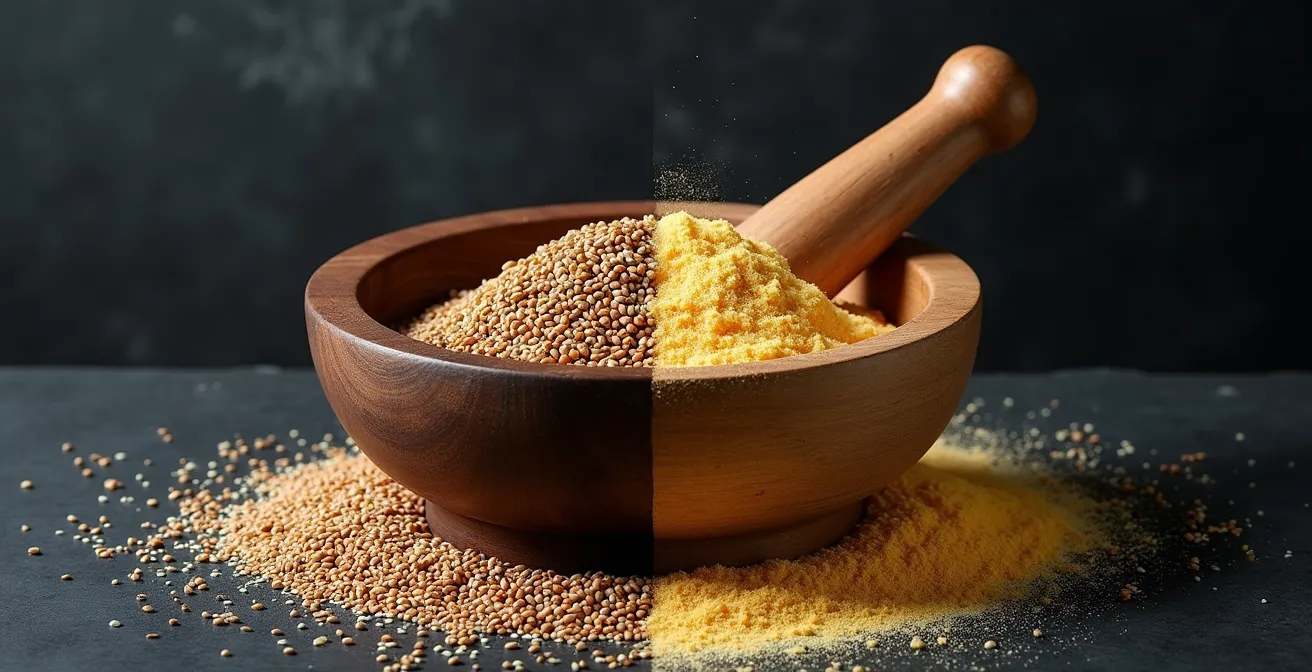
The ideal approach, therefore, is not to choose one over the other but to use them in tandem. This layered technique provides the best of both worlds: the immediate aromatic hit from the ground seeds and the lasting textural crunch and flavor release from the whole seeds.
Case Study: The Japanese Surigoma Technique for Maximum Aroma
Japanese chefs often grind toasted sesame seeds (surigoma) immediately before serving using a traditional grooved mortar and pestle called a *suribachi*. This practice is specifically designed to maximize the release of volatile aromatic compounds at the last possible moment, ensuring the diner receives the freshest, most intense aroma. A common professional technique is to incorporate whole toasted seeds into a dish for textural contrast, and then finish with a final dusting of freshly ground *surigoma* for an immediate and powerful aromatic impact.
Why You Always Need a Crunchy Element in a Soft Avocado Roll?
A roll filled with nothing but soft avocado, creamy fish, and fluffy rice might sound decadent, but in reality, it quickly becomes texturally monotonous and uninteresting. The human palate craves complexity and contrast. A dish composed entirely of soft textures can feel flat, heavy, and even cloying after a few bites. This is why the inclusion of a crunchy element is not merely a suggestion but a fundamental principle of balanced roll construction.
The crunch serves a critical function: it acts as a textural “reset” button. The crisp snap of a cucumber strip or the popping sensation of tobiko cleanses the palate, breaking up the richness of the fatty components and keeping each bite as engaging as the first. This sensory variation keeps the brain interested and makes the overall experience more satisfying. As culinary science research suggests, this isn’t just a matter of preference; it’s rooted in our psychology.
The human brain is wired to seek sensory complexity; a single, monotonous texture (all soft) is often perceived as boring or texturally unappealing.
– Culinary Science Research, Food Texture and Consumer Psychology Studies
Beyond simply adding “crunch,” different ingredients can be used to introduce specific qualities. Cucumber provides a fresh, hydrating crispness. Tempura flakes (tenkasu) add a rich, fried, and airy crunch. Toasted sesame seeds offer a nutty, subtle crunch that is distributed throughout the roll. The key is to choose an element that not only provides textural contrast but also complements the other flavors in the roll.
Here are several expert-approved options for introducing that vital crunch:
- Cucumber strips: Offer a fresh, clean, and hydrating crunch that cuts through richness.
- Tempura flakes (tenkasu): Provide a rich, savory, and airy fried texture.
- Tobiko (flying fish roe): Delivers a unique, salty “popping” sensation with each bite.
- Thinly sliced pickled daikon (takuan): Adds a crisp, sharp, and slightly acidic bite.
- Toasted sesame seeds: Distribute a subtle, nutty crunch throughout the filling.
How to Make Avocado Slices Stick to the Outside of the Roll?
Draping a sushi roll with a perfect, seamless blanket of avocado is an impressive technique that elevates both the look and taste of uramaki. However, getting the delicate slices to adhere uniformly without tearing or slipping off is a common challenge. The solution involves a combination of three factors: the quality of the rice, the thinness of the avocado slices, and the pressing technique. The foundation of it all is perfectly sticky sushi rice; if the rice is too dry, nothing will stick to it, and if it’s too wet, the avocado will slide right off.
The next critical element is slicing the avocado. You need a very sharp knife to cut the avocado into paper-thin, almost translucent slices. These thin slices are flexible and can be overlapped to form a cohesive “sheet.” Trying to use thick, chunky slices will result in a clunky, unstable exterior that falls apart. By arranging the thin slices with a slight overlap on a piece of plastic wrap, you create a single, manageable avocado blanket that can be laid over the roll.
Finally, the magic happens with the final press. Once the avocado sheet is covering the roll, you must re-wrap the entire log in plastic wrap and use your bamboo mat to apply firm, even pressure. This step gently “glues” the avocado to the sticky rice surface, creating a secure seal that will hold together even when sliced.
Case Study: The Professional Sushi Mat Pressing Technique
Professional sushi chefs emphasize that the foundation is perfectly seasoned sticky rice. After covering the roll with thinly sliced and overlapped avocado, they always re-wrap it tightly in plastic wrap. Then, using the bamboo mat (makisu), they press firmly and evenly around the entire circumference of the roll. This action molds the avocado to the rice, creating a strong, seamless bond between the creamy fruit and the sticky grain surface, ensuring a beautiful and stable final product.
To achieve this at home, follow this precise method:
- Using a very sharp knife, slice a ripe avocado as thinly as possible.
- On a piece of plastic wrap, arrange the slices in a row, overlapping them slightly like shingles on a roof.
- Create a cohesive “sheet” of avocado that is slightly longer than your sushi roll.
- Place your completed sushi roll at one end of the avocado sheet.
- Using the plastic wrap to help, lift and cover the roll with the avocado sheet.
- Re-wrap the entire avocado-covered roll tightly in the plastic wrap.
- Place the wrapped roll back onto your bamboo mat and press firmly and evenly to seal the avocado to the rice.
Key Takeaways
- Roasting sesame seeds is a chemical process (the Maillard reaction) that creates new flavor compounds; it is not just about browning.
- The choice between black and white sesame is a strategic decision: black provides a bold, earthy contrast, while white offers a gentle, nutty complement.
- Texture is just as important as flavor. A crunchy element is essential to break up the monotony of soft ingredients in a roll.
Which Fresh Fillings Pair Best With Nori Sheets for Balanced Flavor?
The seaweed wrapper, or nori, is not just a structural element in a sushi roll; it is an active flavor contributor. Nori has a distinct taste profile—salty, savory, and with a characteristic oceanic umami. To create a well-balanced roll, the fillings should be chosen specifically to complement or contrast these notes. A roll filled only with savory ingredients, for example, can become overwhelmingly salty when combined with nori and soy sauce. The art of pairing lies in creating a harmonious interplay of different flavor elements.
A successful pairing framework involves balancing four key elements. Creamy or fatty ingredients like avocado, rich salmon, or cream cheese are essential. Their fat coats the palate, softening the strong iodine notes of the nori and mellowing its oceanic intensity. To counter this richness, a fresh or acidic component is needed. The clean crispness of cucumber or the sharp bite of pickled ginger (gari) acts to “cleanse” the palate, providing brightness and preventing the roll from feeling heavy.
As the Japanese culinary expert from a leading sushi flavor guide notes, “The fat in salmon or avocado coats the palate, mellowing the strong iodine notes, while the crispness of cucumber ‘cleanses’ the palate between bites.” This highlights the dynamic relationship between ingredients. Beyond these, a touch of sweetness from ingredients like mango or even tamago (sweet omelet) can beautifully balance the inherent saltiness of the nori. Finally, the main savory protein, like tuna or shrimp, anchors the roll and complements the nori’s natural umami.
This flavor balance framework, sourced from a comprehensive guide to sushi pairings, provides a clear structure for building a delicious and balanced roll every time.
| Element Type | Function | Examples |
|---|---|---|
| Creamy/Fatty | Softens oceanic umami | Avocado, cream cheese, salmon |
| Fresh/Acidic | Lifts and brightens | Cucumber, pickled ginger, yuzu |
| Sweet Elements | Balances saltiness | Mango, strawberry, pear |
| Savory Proteins | Complements umami | Shrimp, prosciutto, tuna |
By understanding sesame not just as a topping but as a crucial tool for flavor and texture modulation, you unlock a new level of control over your culinary creations. Elevate your next sushi night by applying these principles of roasting, selection, and balance.