Contrary to the belief that an omakase is just a long list of fish, it’s a meticulously designed sensory narrative. The feeling of being overwhelmed is a sign of losing the narrative thread, not a lack of appetite. This guide decodes the psychological and rhythmic structure—the ‘why’ behind the sequence—transforming your role from a passive eater into an active participant who can fully appreciate the chef’s story from the first course to the last, without fatigue.
There is a specific, sinking feeling that can strike halfway through a high-end omakase tasting. It’s not just fullness; it’s a sense of sensory overload. The flavors, once distinct and thrilling, begin to blur. Your palate feels muddled, your appetite wanes, and you find yourself merely enduring the remaining courses rather than anticipating them. For diners who feel overwhelmed by course eight of a twelve-course journey, this experience can turn a luxurious treat into a test of endurance.
The common advice is a simple mantra: “The meal progresses from light to heavy.” While true, this observation barely scratches the surface. It’s like describing a symphony as “starting quiet and getting louder.” It misses the point entirely. The real artistry lies not just in the sequence of ingredients, but in the deliberate, psychological pacing of the experience. An Itamae (sushi chef) is more than a cook; they are a menu designer, a storyteller, and a conductor of sensations.
But what if the key to enjoying the entire meal wasn’t just about eating less rice, but about understanding the narrative structure the chef has laid out for you? The secret isn’t in fighting the meal, but in synchronizing with its intended rhythm. An omakase is a carefully constructed arc, complete with an introduction to calibrate your senses, a rising action of increasing complexity, a stunning climax, and a gentle, satisfying resolution.
This article will deconstruct that narrative. We will move beyond the superficial rules and explore the deep, rhythmic, and psychological intent behind each phase of a traditional omakase. By understanding the ‘why’ behind the order, the temperature shifts, and the ingredient choices, you can learn to navigate the experience not as a series of dishes, but as a cohesive story, ensuring your palate remains engaged and delighted until the final bow.
To fully grasp this culinary journey, this guide breaks down the underlying structure and rhythm that chefs use to craft an unforgettable omakase experience. Explore the sections below to understand each act of this performance.
Summary: The Secret Rhythm of Omakase: How to Navigate a 12-Course Sushi Meal Without Palate Fatigue
- Why Do Chefs Start With White Fish and End With Eel?
- Why Is a Cooked Dish Served in the Middle of a Raw Menu?
- How to Eat Rice-Heavy Meals Without Feeling Bloated by Course 8?
- Why Is the Uni or Toro Serving Considered the ‘Main Event’ of the Journey?
- Why Does the Sweet Egg Omelet Signal the End of the Savory Courses?
- Kaiseki or Omakase: Which Fine Dining Style Offers More Variety?
- In What Order Should You Eat Nigiri to Maximize Flavor Perception?
- Why Traditional Sushi Shops Serve Miso Soup at the End, Not the Start?
Why Do Chefs Start With White Fish and End With Eel?
The progression from light-bodied white fish to rich, savory eel is the foundational grammar of the omakase narrative. It’s not an arbitrary rule but a deliberate technique of palate calibration. The meal begins with delicate, clean-flavored Shiromi (white fish) like flounder (hirame) or sea bream (madai) for a specific reason: they establish a neutral baseline. These initial pieces are low in oil and have a subtle sweetness, allowing your taste buds to awaken without being overwhelmed. It’s the equivalent of a composer starting a piece with a single, clear note before introducing harmony.
As the meal progresses, the chef systematically builds complexity and intensity. This follows a deliberate, three-act structure. After the introductory white fish, the “rising action” begins with medium-bodied fish that have more oil content and bolder flavors, such as salmon or mackerel. This is where the narrative gains momentum. The final savory act, the climax before the conclusion, is often rich, fatty cuts like toro, leading into the sweet and savory finale of eel (anago or unagi). The eel, glazed with a sweet and savory tare sauce, serves as a narrative bridge, transitioning the palate from the world of pure umami towards the sweetness of dessert.
The Traditional Progression at Michelin-Starred Omakase Restaurants
The structured journey is a hallmark of high-end sushi dining. MasterClass reports that omakase chefs meticulously plan this progression, starting with the lightest fare to properly attune the diner’s palate. They then gradually introduce more intricate and robust dishes. This pattern is not just about a sequence of light to heavy; it’s about highlighting a developing complexity, culminating in a powerful finish like glazed eel that acts as a satisfying bookend to the savory courses.
This arc is the chef’s primary tool for managing your sensory experience. By starting clean and gradually layering richness and complexity, the chef guides your palate on a journey, ensuring each new flavor is perceived clearly against the backdrop of the last, preventing the muddle that leads to fatigue.
Why Is a Cooked Dish Served in the Middle of a Raw Menu?
Just as you are settling into the rhythm of cool, silky, raw fish, the chef presents a steaming, hot, and often grilled course. This is not a mistake or a random inclusion; it is a deliberate and brilliant theatrical device known as a pattern interrupt. In a narrative, this is the plot twist. A cooked dish, like yakimono (grilled item) or mushimono (steamed item), is introduced midway through the omakase to reset your palate and re-engage your senses. It shatters the established pattern of temperature and texture, preventing sensory adaptation—the phenomenon where your brain starts to tune out repetitive stimuli.
This interruption works on multiple sensory levels. The sudden shift from the cool, delicate textures of raw fish to the hot, often caramelized and flaky texture of a cooked course provides a dramatic contrast. As noted by Wikipedia contributors regarding omakase methodology, the progression moves from simple to “more intricate dishes that highlight the depth of flavors.” This cooked interlude is the epitome of that intricacy, showcasing a different set of the chef’s skills while jolting your palate back to full attention. It ensures the second half of the meal is perceived with the same freshness and excitement as the first.
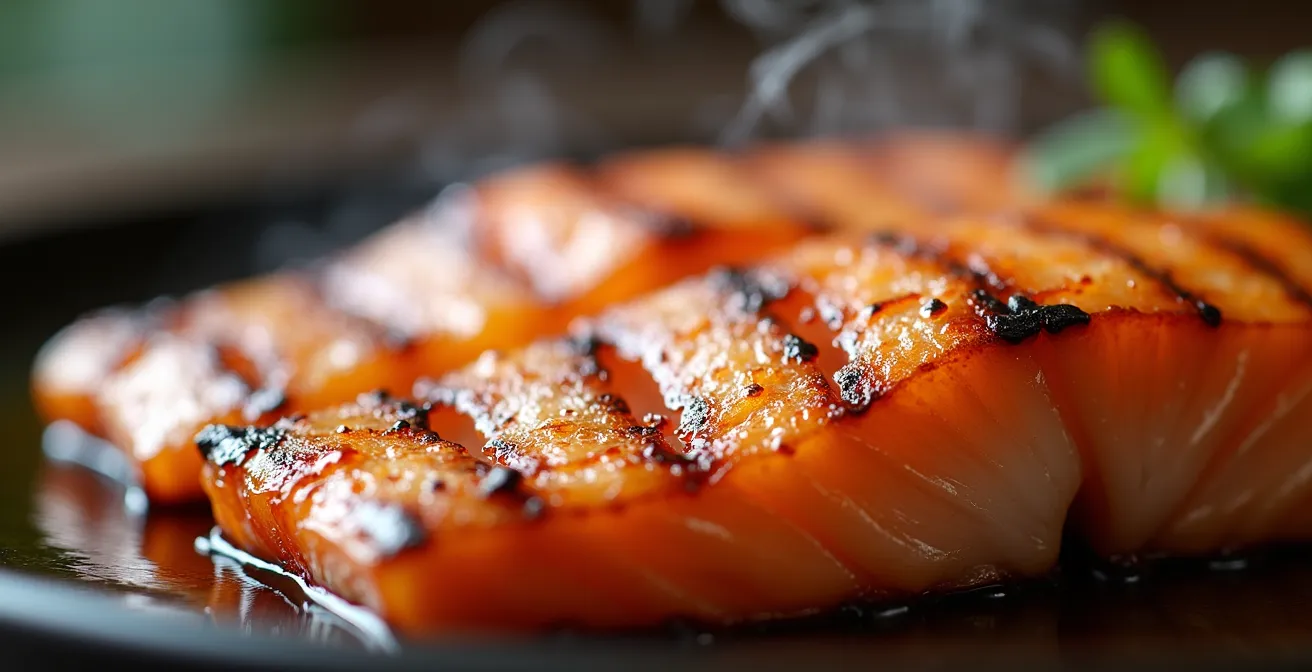
This intermezzo is more than a break; it’s a strategic reset. It clears the stage, wipes the sensory slate clean, and prepares you for the richer, more powerful flavors that are typically to come in the meal’s climax. It’s the chef’s way of saying, “Pay attention, the next act is about to begin.”
This table from The Chopping Block breaks down the stark sensory contrast that makes this technique so effective.
| Course Type | Temperature | Texture | Palate Effect |
|---|---|---|---|
| Raw Sashimi/Nigiri | Cool (40-50°F) | Silky, firm | Clean, pure flavors |
| Yakimono (Grilled) | Hot (140-160°F) | Caramelized, flaky | Umami amplification |
| Mushimono (Steamed) | Warm (120-140°F) | Tender, moist | Palate reset |
How to Eat Rice-Heavy Meals Without Feeling Bloated by Course 8?
The feeling of being “too full” during an omakase is often a matter of pacing and rice (shari) management, not a lack of appetite. A typical meal can be a long affair; according to omakase etiquette experts, a typical meal should last anywhere from 90 minutes to three hours. This is a marathon, not a sprint, and you must pace yourself accordingly. The single most powerful tool at your disposal is communication with the chef. You are not a passive recipient; you are a collaborator in your own dining experience. Feeling overwhelmed by the volume of rice is a common issue that chefs are well-prepared to handle.
The most direct strategy is to politely request smaller portions of rice at the beginning of your meal. The simple phrase, “shari-shō onegaishimasu” (less rice, please), is a universally understood and respected request in the sushi world. This small adjustment allows you to enjoy the full sequence of fish without filling up on carbohydrates prematurely. Beyond this, mindful eating is crucial. Savor each piece, allowing a minute or two between courses. This not only shows respect for the chef’s work but also gives your body time to register satiety, preventing the sudden onset of uncomfortable fullness.
Hydration also plays a strategic role. Sipping green tea between courses is more effective than water; its natural catechins help cleanse the palate and can aid in digestion. Conversely, carbonated beverages like beer or soda are the enemy of the long-form meal, as they can introduce gas and accelerate bloating. By actively managing these variables, you take control of your experience and ensure you have the stamina to reach the meal’s stunning conclusion with your appetite and enthusiasm intact.
Your Action Plan for Managing Omakase Pacing
- Communicate with the Chef: At the start of the meal, politely make your request for “shari-shō” (less rice) to manage volume from the outset.
- Choose Strategic Hydration: Opt for green tea between courses to cleanse the palate and aid digestion, actively avoiding carbonated drinks that cause bloating.
- Align with the Chef’s Rhythm: Eat each piece slowly and mindfully as it is served, allowing natural pauses of 1-2 minutes between courses for digestion.
- Respect the Composition: Consume each piece of nigiri in one bite to experience the intended fish-to-rice ratio and flavor balance designed by the chef.
- Avoid External Accelerants: Steer clear of beer, soda, or excessive water, which can interfere with digestion and create a premature feeling of fullness.
Why Is the Uni or Toro Serving Considered the ‘Main Event’ of the Journey?
If the omakase is a symphony, the serving of uni (sea urchin) or ōtoro (the fattiest tuna belly) is the resounding crescendo. This is the narrative climax of the meal, the point toward which the entire first act has been building. These ingredients are not placed arbitrarily; they are strategically positioned at the peak of the flavor curve, just after your palate has been calibrated by lighter fish and reset by any cooked interludes. By this point, you are primed to perceive the full depth of their extraordinary richness and complexity. As food critic Jeffrey Steingarten famously wrote for Vogue, high-end omakase is about being served “the most perfect seafood available…fish that will be handled as carefully as a kidney awaiting transplantation.”
The status of these ingredients as the “main event” is rooted in their intense, luxurious, and fleeting sensory properties. Uni delivers a briny, sweet, and custardy wave that coats the entire palate, while ōtoro dissolves on the tongue with a buttery richness that is unparalleled. These are not subtle flavors; they are powerful, declarative statements. Placing them too early in the meal would obliterate the palate, making it impossible to appreciate the more delicate fish that follow. Placing them too late might find the diner too fatigued to fully appreciate their nuance.
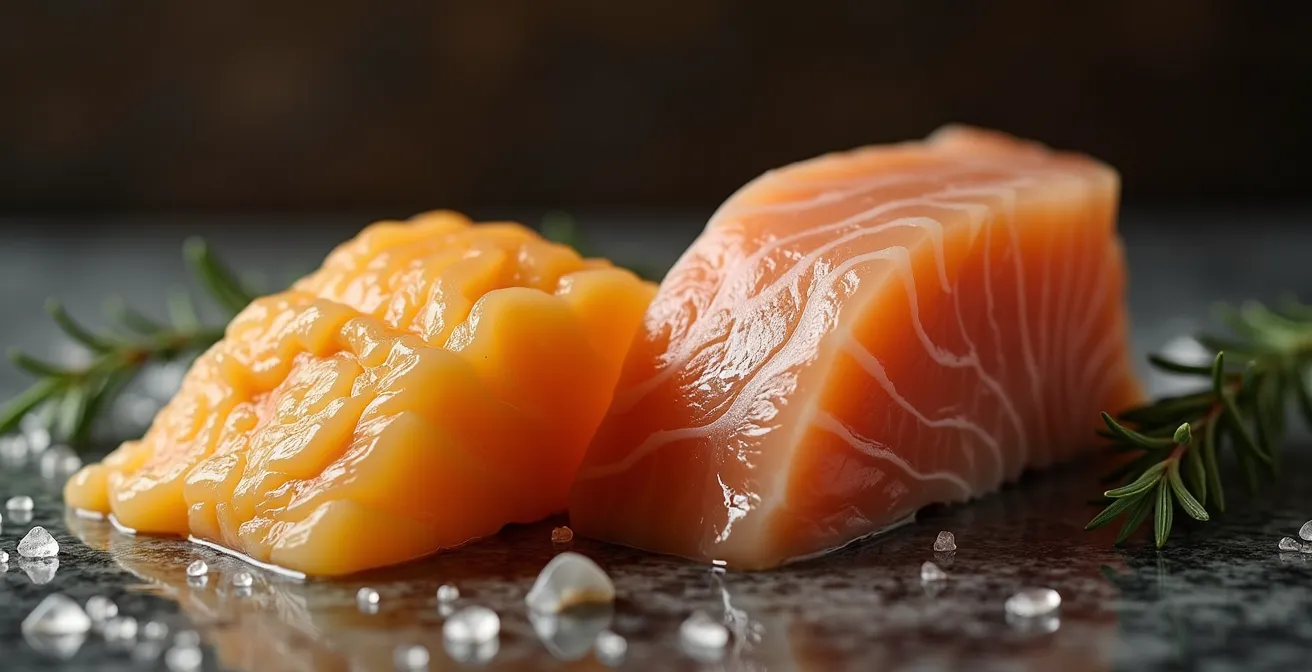
This strategic placement is also an economic decision. According to a case study by the Michelin Guide on premium ingredient positioning, chefs at top-tier restaurants use this climax point to showcase their most expensive ingredients. With prices often reaching $30-50 per piece, these items are deployed when the diner’s attention and sensory acuity are at their peak, ensuring the value and luxury of the ingredient are fully experienced and justified. It’s a moment of pure, unadulterated indulgence, the peak of the mountain before the gentle journey down.
Why Does the Sweet Egg Omelet Signal the End of the Savory Courses?
The arrival of the tamago (sweet egg omelet) is the omakase’s denouement. It’s a culinary signal, a gentle coda that announces the savory portion of the narrative has concluded. Its role is far more significant than being merely “the egg course.” In the world of sushi, there’s a traditional saying: “A chef is known by his tamago.” This single piece is considered a benchmark of a chef’s skill, a deceptively simple item that requires immense technique to perfect. Its placement at the end is a final flourish, a signature on the masterpiece the chef has just presented.
Functionally, the tamago serves as the ultimate palate transition. Its characteristic sweetness acts as a bridge between the savory, umami-rich world of fish and the purely sweet realm of dessert. It cleanses the palate of any lingering fishiness and recalibrates your taste buds for what comes next. As one chef’s perspective in “What is Omakase at Sushi Restaurants” notes, “After rolled sushi and egg sushi, when tea or a small bowl of soup is served, it signals the end of the course.” The tamago is the definitive punctuation mark.
The Two Schools of Tamago: Edo vs. Kansai Style
The style of tamago can also tell a story. Japanese tradition recognizes two main approaches that signal different narrative endings. The Tokyo or Edo-style tamagoyaki is sweet, dense, and almost cake-like, often incorporating ground shrimp or fish paste, serving as a true proto-dessert. In contrast, the Kansai-style (from Osaka) features a lighter, savory, dashi-forward rolled omelet, providing one last, gentle umami note. Regardless of style, its appearance confirms the savory journey is complete, setting the stage for the final act of tea or miso soup.
This final savory bite is a moment of reflection. Its slightly sweet, clean flavor profile provides a sense of closure, a harmonious resolution to the complex flavor journey that preceded it. It’s the culinary equivalent of the final chords of a symphony fading to silence, leaving the audience in a state of satisfied contemplation.
Kaiseki or Omakase: Which Fine Dining Style Offers More Variety?
While both kaiseki and omakase represent the pinnacle of Japanese fine dining, they offer “variety” in fundamentally different ways. The choice between them depends on whether you seek breadth or depth. Omakase, as we’ve explored, is a deep, focused dive into a single category: primarily raw, seasonal seafood. The variety comes from the chef’s day-to-day selections from the market and the nuanced progression of textures and flavors within that category. In contrast, kaiseki offers variety through a breadth of cooking techniques. It is a highly structured, multi-course meal where each dish showcases a different cooking method: a steamed course, a grilled course, a fried course, a simmered course, and so on.
As the Michelin Guide notes, “Kaiseki is a highly ritualized meal with a specific ebb and flow, omakase changes with each occasion, with the chef making decisions about what to cook mid-course.” Kaiseki is a pre-written play, celebrating seasonal ingredients through a formal sequence of acts. The menu is set, and the journey is one of appreciating the harmony of different preparations. Omakase is improvisational jazz. While it follows a narrative structure, the specific notes are chosen by the chef in the moment, often in response to the diner’s reactions. The variety in omakase is about the subtle differences between half a dozen different cuts of tuna, while the variety in kaiseki is about the contrast between a delicately steamed fish and a perfectly crispy tempura vegetable.
If “variety” means exploring the widest range of cooking methods and ingredients in a single meal, kaiseki is the clear winner. If it means experiencing the deepest, most nuanced exploration of premium seafood, then omakase offers an unmatched journey.
This table, based on information from the Michelin Guide, clearly illustrates the philosophical differences in how each style approaches variety.
| Aspect | Kaiseki | Omakase |
|---|---|---|
| Structure | Fixed ritualized sequence | Flexible, chef-driven |
| Variety Focus | Multiple cooking methods (boiling, grilling, steaming) | Deep exploration within seafood category |
| Courses | 9-15 dishes, various ingredients | 10-20 pieces, primarily sushi/sashimi |
| Diner Input | None – predetermined menu | Interactive, influences progression |
| Seasonality | Strictly seasonal ingredients | Daily market availability |
In What Order Should You Eat Nigiri to Maximize Flavor Perception?
When faced with a platter of nigiri without a chef guiding you piece by piece, the principles of omakase can still be your guide. The goal is to create your own miniature flavor narrative to maximize perception and avoid overwhelming your palate. Think of it as conducting your own three-act symphony. The guiding principle remains the same: progress from light and clean to rich and powerful. A comprehensive omakase experience typically includes anywhere from 10 to 20 courses, but even with a smaller selection, this structure holds true.
Your “Act 1” should be the introduction, featuring lean, clean-flavored shiromi (white fish like flounder or sea bream) and subtle hikari-mono (silver-skinned fish like horse mackerel). These pieces prime the palate without staining it with heavy flavors. “Act 2” is the rising action, where you move to richer, oilier fish. This is the domain of sake (salmon), chu-toro (medium-fatty tuna), and saba (mackerel). These pieces have more pronounced flavors and a higher fat content that begins to build intensity on the tongue.
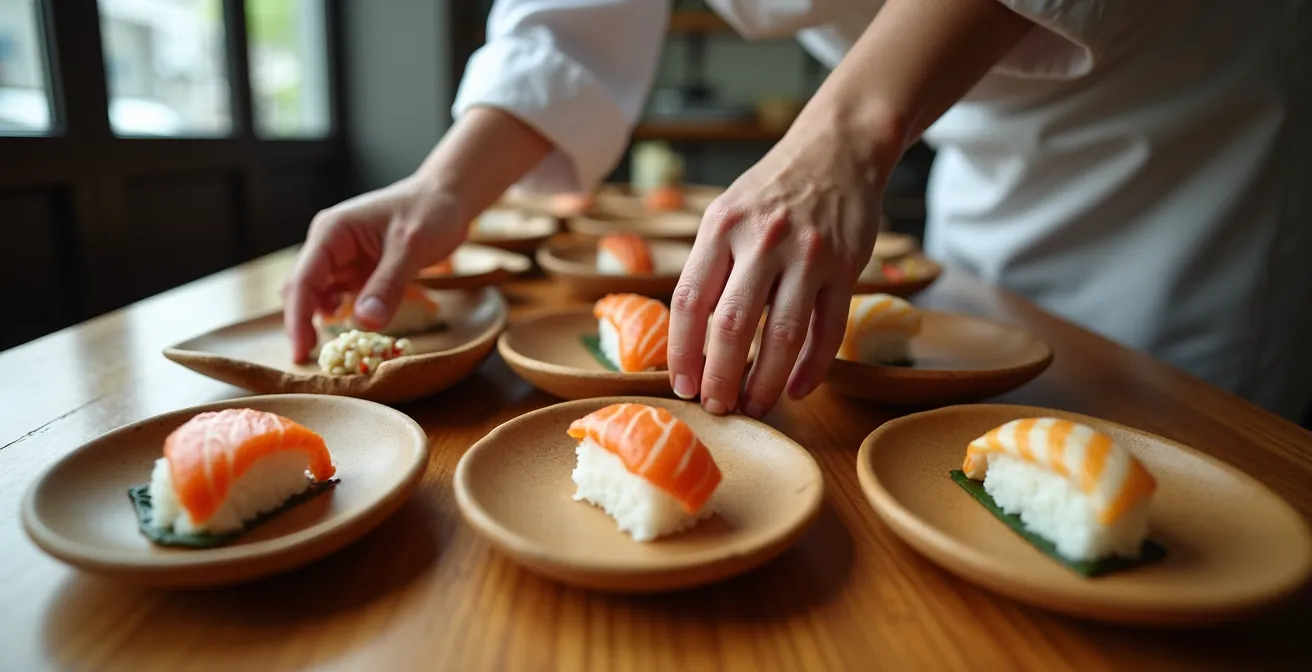
“Act 3” is the climax, reserved for the most powerful and unique flavors. This is where you should enjoy pieces like unctuous uni (sea urchin), bursting-with-brine ikura (salmon roe), and the rich, savory anago (sea eel). There is an intelligent deviation to this rule: if you have any pieces with nori (seaweed), such as a hand roll or gunkan-maki, eat them first. The nori will lose its crucial crispness within minutes, and its texture is a key part of the experience. By applying this narrative structure, you are not just eating fish; you are curating an experience, ensuring each piece is enjoyed to its fullest potential.
Key Takeaways
- An omakase is a sensory narrative with a distinct three-act structure: palate calibration, rising complexity, and a harmonious resolution.
- Cooked dishes serve as a “pattern interrupt,” a strategic palate reset designed to re-engage your senses for the meal’s second half.
- You can manage fullness by communicating with the chef (requesting “shari-shō” or less rice) and by pacing your meal over its full duration.
Why Traditional Sushi Shops Serve Miso Soup at the End, Not the Start?
For many Western diners accustomed to soup as an appetizer, the appearance of miso soup at the end of a sushi meal can be perplexing. However, in the context of the traditional sushi narrative, its placement is both deliberate and brilliant. Serving a hot, salty soup at the beginning would dull the palate, overwhelming the delicate, nuanced flavors of the initial light fish. The soup’s role is not to stimulate the appetite, but to bring the entire sensory journey to a harmonious and physiological close. It is the epilogue to the story.
The primary function of end-of-meal miso soup is digestive. As a case study on the physiological role of omakase courses explains, the warm liquid and salt content serve a specific purpose. They help to emulsify the rich fats consumed from oily fish like toro and salmon, providing a sense of digestive comfort and gentle satiation. It’s a comforting, warm wash that signals to the body that the meal is complete. This practice is a perfect embodiment of washoku, the Japanese principle of the harmony of food, where every element has a purpose that contributes to the balance of the whole meal.
This final, warming course is the last act of care from the chef. It’s a gesture of hospitality that goes beyond flavor, addressing the diner’s physical comfort and well-being. It soothes the stomach, cleanses the palate one final time, and leaves you with a feeling of deep, serene satisfaction. It doesn’t just end the meal; it completes it, transforming a series of delicious bites into a holistic and restorative experience.
By understanding the intricate narrative the chef is weaving, you transform from a passive consumer into an appreciative audience. You learn to recognize the acts, anticipate the shifts in tone, and ultimately, savor the performance from overture to finale. The next time you sit at a sushi counter, listen to the rhythm, follow the story, and you will find the experience is not fatiguing, but utterly transportive.