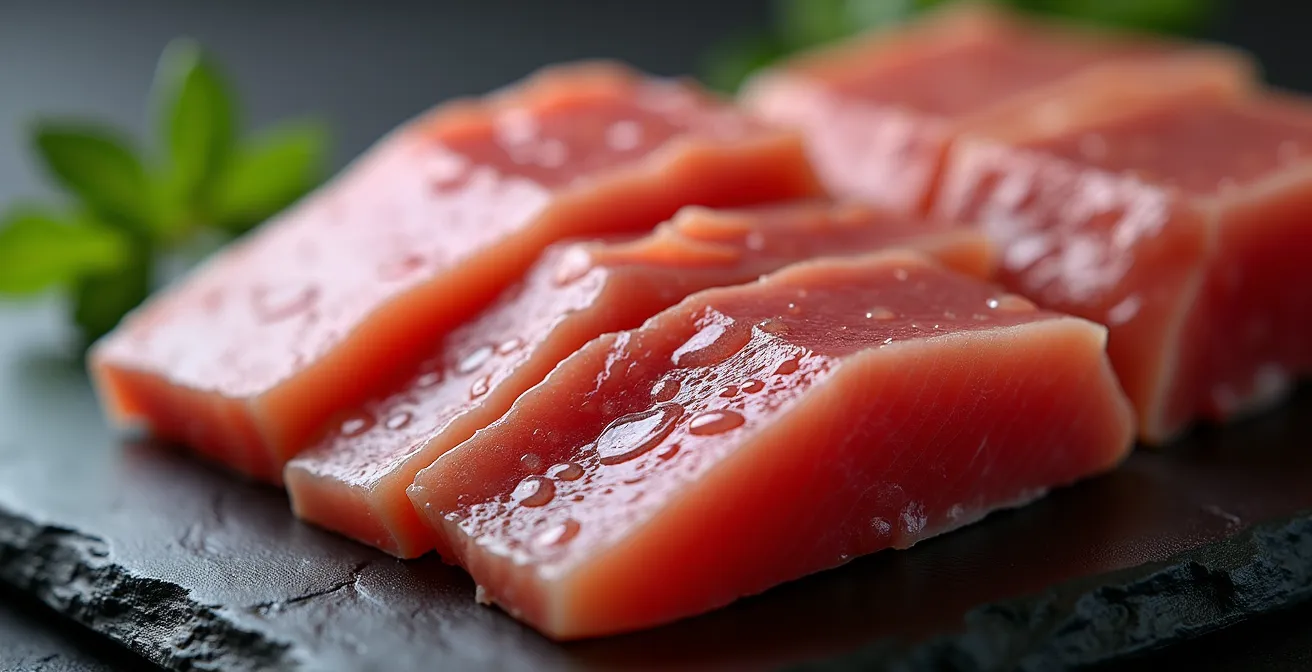
Contrary to the popular belief that the freshest fish makes the best sushi, the opposite is often true. True flavor depth, or umami, is not present at the moment of catch but is developed through a controlled biochemical process of aging and curing. This guide unpacks the science of enzymatic transformation, showing how to safely break down proteins into savory compounds, resulting in superior texture and taste that fresh fish cannot match.
For most culinary endeavors, “fresh” is a non-negotiable standard of quality. Many aspiring sushi chefs and advanced home cooks operate under the same assumption: that fish served moments after being caught represents the pinnacle of flavor. However, high-end sushi masters understand a counter-intuitive truth: for many species, freshly killed fish is tough, bland, and texturally inferior. The rich, savory depth known as umami, and the meltingly tender texture prized in premium sushi, are not inherent qualities but are meticulously cultivated after the fish has been dispatched.
This cultivation is a science, a form of controlled decomposition known as aging, or jukusei. It involves precise temperature and humidity control to encourage the fish’s own enzymes to break down complex molecules into simpler, more flavorful ones. This process is often paired with curing techniques using salt, vinegar, or kombu, which not only enhance safety by inhibiting harmful bacteria but also actively denature proteins and draw out excess moisture, further concentrating the flavor. It is a delicate balance between transformation and spoilage, a skill that separates the novice from the expert.
This article demystifies the preservation and aging process. We will explore the biochemical changes that occur within the fish, detail specific curing methodologies for different types of fish, and provide the critical sensory cues needed to distinguish a perfectly aged product from one that has spoiled. By understanding the “why” behind these traditional techniques, you can move beyond simply handling fish to actively crafting its flavor profile.
text
This guide provides a structured path to understanding these advanced techniques. Below is a summary of the key stages and considerations we will cover, from the initial science of rigor mortis to the final assessment of a perfectly aged piece of fish.
Summary: Mastering the Art and Science of Fish Aging
- Why Freshly Caught Fish Is Often Too Tough for Sushi?
- How to Cure Mackerel With Salt and Vinegar in 3 Simple Steps?
- Kombu Curing or Soy Marination: Which Technique Best Suits White Fish?
- The Smell Test: How to Distinguish Aged Fish From Spoiled Fish?
- How Many Days Should You Age Tuna to Reach Peak Tenderness?
- How a 10-Minute Salt Cure Can Transform Supermarket Salmon?
- Why Must Fish for Oshizushi Be Cured More Heavily Than for Nigiri?
- At What Point Does Aging Fish Stop Increasing Umami and Start Rotting?
Why Freshly Caught Fish Is Often Too Tough for Sushi?
The concept that freshly caught fish is not ideal for sushi seems counter-intuitive, but it is rooted in a fundamental biochemical process: rigor mortis. Immediately after a fish dies, its muscles are relaxed and pliable. However, within hours, the remaining adenosine triphosphate (ATP) in the muscle cells is depleted. This triggers a state of muscle contraction and stiffness, rendering the flesh tough and rubbery. Preparing and eating fish during this phase results in a chewy, unpleasant texture that lacks the desired tenderness for high-quality sushi.
The magic happens after rigor mortis subsides. The fish enters a phase known as enzymatic autolysis, where its own enzymes begin to break down the complex proteins and connective tissues that caused the stiffness. This process is the foundation of aging. As proteins decompose, they release amino acids, including glutamic acid, a primary source of umami. Concurrently, ATP breaks down into inosinic acid (IMP), another powerful umami compound.
This transformation is not instantaneous. According to research from The Japanese Food Lab, the production of inosinic acid peaks after several days of aging under controlled conditions. Therefore, serving fish too fresh means missing this crucial window of peak umami development. The goal of a sushi chef is to serve the fish not at its freshest, but at its peak of flavor and texture, a state achieved only after rigor mortis has passed and enzymatic activity has worked its transformative magic.
How to Cure Mackerel With Salt and Vinegar in 3 Simple Steps?
Mackerel (saba) is an oily, robustly flavored fish that is almost always cured before being served as sushi. This process, known as shime saba, serves a dual purpose: it firms the flesh, reduces its “fishy” aroma, and ensures it is safe to eat raw. The cure involves a precise application of salt followed by a vinegar marinade, which denatures the proteins in the fish. The result is a piece of sushi with a complex, savory, and slightly pickled flavor that balances its natural richness.
The process is straightforward but requires attention to detail, particularly regarding timing, which can be adjusted based on the fat content and size of the fillets. Here are the essential steps:
- Salt Cure: Liberally coat the mackerel fillets (skin-on) with a high-quality salt, ensuring an even layer on all surfaces. The goal is to use a salt concentration of 3-5% of the fish’s weight. This salt cure draws out excess moisture and trimethylamine (TMA), the compound responsible for fishy odors, through osmosis. Let the fish cure for 20 to 60 minutes. Fattier fish can handle a longer cure time.
- Rinse and Dry: After the salting period, rinse the fillets thoroughly under cold running water to remove all the salt from the surface. Pat them completely dry with paper towels. This step is critical; any remaining surface salt will make the final product overly saline.
- Vinegar Marinade: Submerge the dried fillets in unseasoned rice vinegar for 15 to 30 minutes. The acidity of the vinegar continues the curing process by denaturing the proteins, effectively “cooking” the flesh without heat. This step also contributes to preservation and adds the signature tangy flavor of shime saba.
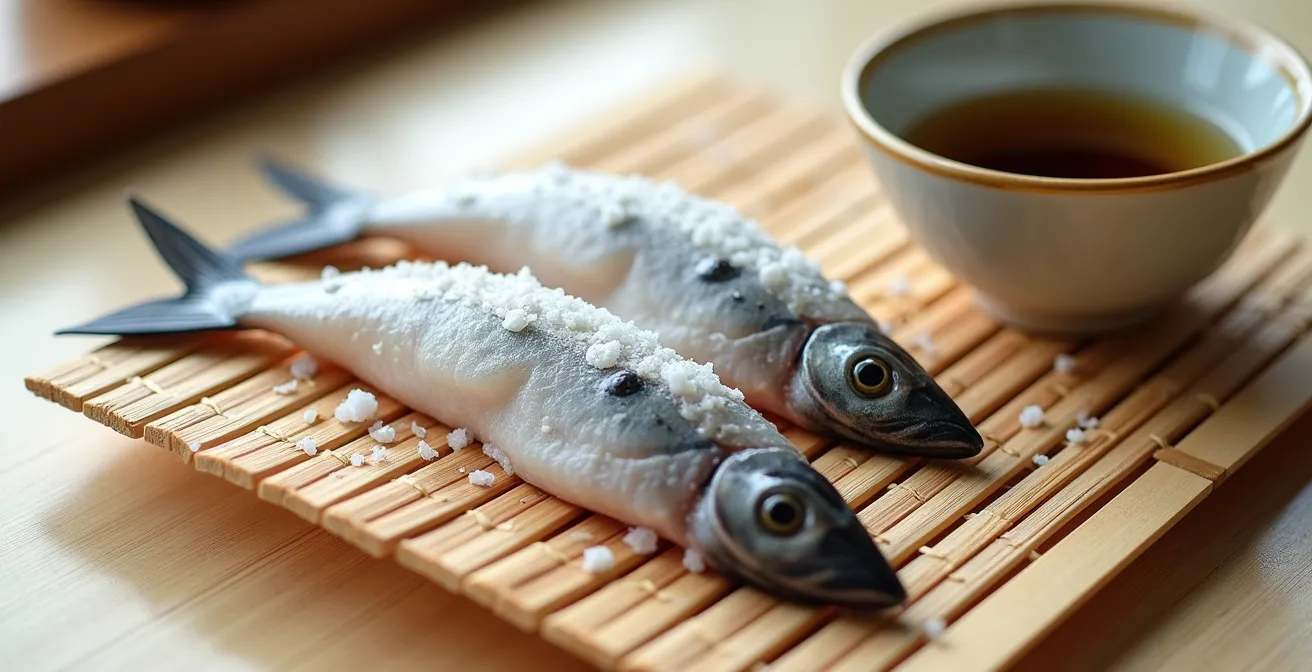
After the vinegar marinade, the fish is ready. The skin is typically peeled off before slicing for nigiri or sashimi. The flesh should be firm to the touch and have a slightly opaque, pearly appearance. This three-step method transforms oily mackerel into a refined and delicious sushi topping.
Kombu Curing or Soy Marination: Which Technique Best Suits White Fish?
While oily fish like mackerel require a strong salt-and-vinegar cure, more delicate white-fleshed fish (shiromi) such as flounder (hirame) or sea bream (tai) benefit from gentler techniques that enhance their subtle flavors without overpowering them. Two classic methods are kombujime (kombu curing) and zuke (soy marination). The choice between them depends on the desired final texture and flavor profile.
Kombujime involves sandwiching a fillet of fish between two sheets of high-quality kombu (dried kelp) that have been wiped with sake. The kombu gently draws moisture from the fish, firming its texture to an almost gummy consistency. Simultaneously, a crucial flavor transfer occurs: the kombu imparts its own significant reserves of natural glutamic acid into the fish, layering a clean, profound umami onto the fish’s own developing flavor. This method is ideal for preserving the delicate character of premium white fish while adding a sophisticated savory depth.
Zuke, on the other hand, involves marinating the fish in a mixture of soy sauce, mirin, and sake. This technique is more assertive, imparting salty, sweet, and fermented notes from the marinade. It was originally a preservation method in the days before refrigeration. While it can be used for white fish, it is often preferred for richer fish like tuna, where the bold flavors of the marinade can stand up to the fish’s own intensity. For delicate white fish, a very short marination time is essential to avoid overwhelming its natural taste.
As the expert at The Sushi Geek notes, the entire goal of aging is to increase savory notes. He explains in a post on his blog:
One of the amino acids that is generated in the aging process is glutamate, one of the component of MSG responsible for umami.
– The Sushi Geek, The Sushi Geek Blog
Ultimately, the best technique is a matter of intent. For adding deep, clean umami while respecting the fish’s inherent flavor, kombujime is superior for white fish. For adding a new, complex flavor dimension, zuke is a powerful tool. The following table, based on information from an analysis by The Japanese Food Lab, summarizes the key differences.
| Technique | Flavor Profile | Texture Result | Best For |
|---|---|---|---|
| Kombu Curing | Clean, deep umami from glutamic acid transfer | Firm, almost gummy texture from moisture removal | Delicate white fish (flounder, sea bream) |
| Soy Marination (Zuke) | Complex profile with salt, glutamates, fermented notes | Softened flesh over time | Fatty fish or when adding new flavor dimension |
| Salt Dome (Shiogama) | Intense, concentrated fish flavor | Very firm from powerful dehydration | When maximum preservation needed |
The Smell Test: How to Distinguish Aged Fish From Spoiled Fish?
The line between controlled aging and uncontrolled spoilage is a fine one, defined by the types of microbes and enzymes at work. Properly aged fish undergoes enzymatic autolysis in a low-bacteria environment, developing complex flavors. Spoiled fish is the result of runaway bacterial growth, which produces foul odors and toxins. For the advanced cook, distinguishing between the two is the most critical safety skill. The assessment is multi-sensory, relying on smell, sight, and touch.
The most telling indicator is smell. A properly aging fish develops nutty, savory, or even cheesy aromas. These are the result of fatty acids breaking down into pleasant aromatic compounds. In stark contrast, spoiled fish will emit a sharp, pungent odor of ammonia or sulfur. This is an unmistakable red flag, indicating bacterial decomposition and the production of harmful byproducts. Any hint of ammonia means the fish is unsafe and must be discarded.
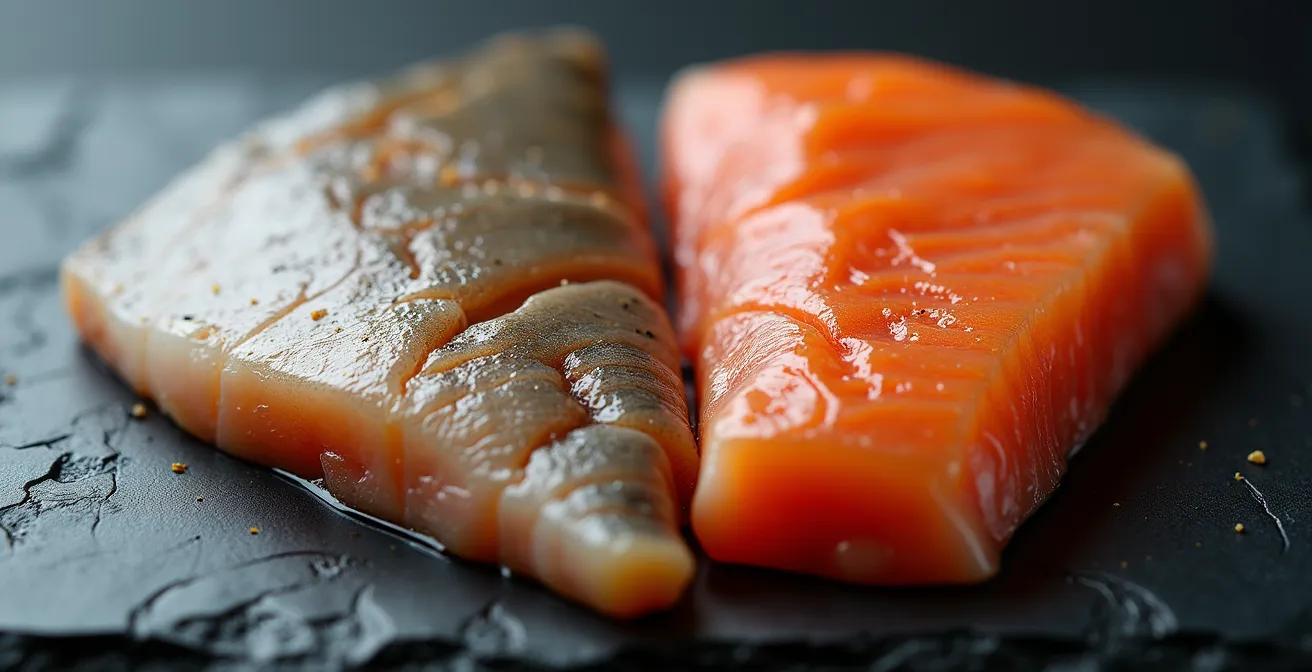
Visually, a key sign of successful aging is the formation of a pellicle—a dry, non-slimy skin on the surface of the flesh. This pellicle acts as a protective barrier against new bacteria. If the fish has a slimy film that reappears shortly after being wiped away, it indicates active bacterial growth. Other visual danger signs include any greenish or iridescent sheen on the flesh. By touch, aged fish should feel firm and tacky, never mushy or wet. If the flesh does not spring back when gently pressed, it has lost its integrity and is likely spoiled.
Checklist: Identifying Properly Aged Fish
- Smell Test: Does it smell nutty and savory, or does it have any trace of sharp ammonia or sulfur? The former is good; the latter is a critical failure.
- Visual Inspection: Is the surface covered by a dry, matte pellicle, or is there a slimy, wet film or iridescent sheen? A dry pellicle is the goal.
- Touch and Texture: Does the flesh feel firm and tacky to the touch? Gently press it—it should spring back. Mushy texture is a sign of spoilage.
- Monitor for Red Flags: Be vigilant for the clear signs of spoilage: a slimy film that returns after wiping, discoloration, and mushiness.
- Trust Your Instincts: When in doubt, throw it out. The risks of consuming spoiled raw fish are severe, and no piece of sushi is worth it.
How Many Days Should You Age Tuna to Reach Peak Tenderness?
Tuna, especially prized cuts like otoro (fatty belly) and chutoro (medium-fatty belly), is a prime candidate for aging. Its high fat content protects it from drying out and provides a rich substrate for flavor development. Unlike leaner white fish that might only be aged for a day or two, tuna can and should be aged for a significantly longer period to reach its full potential of flavor and texture. The optimal aging time, however, is not a fixed number; it depends on the size of the fish, its fat content, and how it was handled post-catch.
As a general guideline, according to traditional Japanese sushi preparation methods, most high-quality tuna is aged for 7 to 15 days. During this time, enzymes break down the large protein and fat molecules, resulting in a much softer, almost buttery texture and a significant increase in umami. The metallic, bloody notes of very fresh tuna mellow out, replaced by deeper, more savory, and nutty flavors. For exceptionally large specimens, this process can be extended even further.
Case Study: The Impact of Handling on Aging Potential
The potential for long aging is directly linked to the initial quality and handling of the fish. The ikejime technique—a method of dispatching the fish that paralyzes it and drains its blood immediately—is crucial. It minimizes stress, lactic acid buildup, and bacterial contamination. A tuna processed with proper ikejime techniques can be aged for far longer and more safely. For example, while a 30kg tuna might be aged for over a week, massive 300kg bluefin specimens handled with perfect technique have been successfully matured for up to 20 days, developing an unparalleled depth of flavor and texture.
For the home chef aging smaller blocks of tuna, the window will be shorter. A small, high-fat block of otoro may reach its peak in as little as 3-5 days in a controlled environment. The key is to monitor the fish daily using the sensory checks for smell, sight, and touch. The process ends when the texture is perfectly tender and the aroma is savory and clean, just before any signs of spoilage emerge.
How a 10-Minute Salt Cure Can Transform Supermarket Salmon?
While extended aging is a complex process best suited for pristine, professionally handled fish, the principles of curing can be applied on a smaller scale to dramatically improve the quality of fish available to the average consumer. Even a short, 10-minute salt cure can transform a standard fillet of supermarket salmon, improving its texture, flavor, and suitability for raw preparations like sashimi or sushi.
Supermarket fish, even when labeled “sushi-grade,” often suffers from excess surface moisture, which can lead to a slightly soft texture and a more pronounced “fishy” smell. A quick salt cure directly addresses these issues. By covering the salmon fillet in a generous layer of salt for just 10 minutes, you initiate osmosis. The salt rapidly draws out water from the surface of the flesh, firming it up noticeably. This process also pulls out trimethylamine (TMA), the primary compound responsible for undesirable fishy odors, leaving behind a cleaner, fresher-tasting piece of fish.
After 10 minutes, the salt should be thoroughly rinsed off, and the fillet patted completely dry. The difference is immediate and striking. The flesh will be firmer to the touch, less watery, and its color will appear more vibrant. This simple step elevates the eating experience, making the salmon more pleasant and texturally satisfying. This technique can also be a base for further flavor enhancements:
- Balanced Variation: Add a small amount of sugar to the salt. The sugar balances the salinity and adds a subtle layer of complexity.
- Citrus Enhancement: Mix finely grated lemon or yuzu zest into the salt before applying it. The citrus oils impart a bright, aromatic note that cuts through the richness of the salmon.
- Spiced Option: For a hint of warmth, add finely crushed white or black peppercorns to the salt mix.
This quick cure is a powerful and accessible technique for any home cook looking to elevate their sushi game. It’s a low-effort, high-impact method that applies the core principles of preservation to achieve a superior result with readily available ingredients.
Key Takeaways
- The primary goal of aging is enzymatic autolysis, which breaks down proteins into umami-rich amino acids like glutamate and IMP.
- Curing with salt and vinegar is a method of protein denaturation that firms texture, enhances safety, and removes “fishy” compounds like TMA.
- The difference between aged and spoiled is sensory: aged fish has nutty aromas and a dry pellicle, while spoiled fish smells of ammonia and is slimy.
Why Must Fish for Oshizushi Be Cured More Heavily Than for Nigiri?
The style of sushi dictates the preparation of the fish. For nigiri-zushi, the modern, hand-pressed style, the fish topping is often lightly cured or aged to preserve its delicate texture and nuanced flavor. However, for oshizushi, or pressed sushi, the fish must undergo a much heavier and more aggressive cure. This difference is rooted in both the history of oshizushi and the physical demands of its preparation.
Oshizushi is a much older form of sushi, originating in the Kansai region before the advent of refrigeration. As such, the primary goal of the cure was long-term preservation, not subtle flavor enhancement. The fish was packed in salt and vinegar to make it last, and these heavy-handed preservation techniques have been carried over into the modern style. This historical context explains why oshizushi toppings, like mackerel, often have a much stronger salted and pickled flavor compared to their nigiri counterparts.
Historical Context: Preservation in Pre-Refrigeration Japan
Before modern technology, preserving fish was a matter of survival. Methods like heavy salting, vinegar curing, and kombu wrapping were not for flavor but to prevent spoilage. As refrigeration became common, chefs could reduce the amount of salt and vinegar, shifting the focus from preservation to flavor enhancement. Oshizushi remains a link to that older tradition, retaining the heavily cured profile as a stylistic choice.
Beyond history, there is a crucial structural reason for the heavy cure. As a Traditional Sushi Preparation Expert explains in Japanese Culinary Traditions, the physical nature of oshizushi demands a robust topping:
A heavily cured fish undergoes significant protein denaturation, resulting in very firm, dense flesh necessary to withstand the intense pressure of the oshibako (sushi press).
– Traditional Sushi Preparation Expert, Japanese Culinary Traditions
The oshibako is a wooden box used to press the rice and fish together into a tight, rectangular block. A lightly cured or fresh piece of fish would be crushed and obliterated under this intense pressure. The heavy cure denatures the proteins to such an extent that the flesh becomes exceptionally firm and dense, allowing it to maintain its shape and integrity throughout the pressing process. Therefore, the heavy cure is not just a stylistic holdover but a functional necessity of the form.
At What Point Does Aging Fish Stop Increasing Umami and Start Rotting?
The entire process of aging fish is a race against the clock: encouraging beneficial enzymatic activity while suppressing harmful bacterial growth. There is a definitive peak in this process—a point where umami is at its maximum, just before the compounds that create it begin to degrade into undesirable, bitter flavors. Understanding this tipping point is the final piece of the puzzle for mastering aged fish.
The primary driver of umami in aged fish is inosinic acid (IMP), a nucleotide created from the breakdown of ATP after the fish’s death. The concentration of IMP rises steadily during the initial days of aging, reaching its peak flavor potential. However, the same enzymes that create IMP will continue their work, eventually breaking it down further into a compound called hypoxanthine. Unlike the savory taste of IMP, hypoxanthine has a distinctly bitter flavor. This marks the end of the beneficial aging window.
According to scientific analysis of the aging process, this degradation becomes significant after a certain point. For many fish species, IMP levels peak around day five to seven of aging, after which the concentration of bitter hypoxanthine begins to rise noticeably. This biochemical shift is the true sign that the fish is past its prime, even if it doesn’t yet show overt signs of bacterial spoilage like ammonia odors. The goal is to serve the fish at the apex of the IMP curve.
This moment represents the perfect balance. The flesh has been tenderized by enzymes, the savory amino acids and IMP have reached their highest concentration, and the negative flavors of decay have not yet appeared. Pushing beyond this point leads to diminishing returns, as savory notes are replaced by bitterness and the risk of bacterial spoilage increases exponentially. The master chef knows not only how to age fish, but, more importantly, when to stop.
Applying these scientific principles requires diligence, precision, and a deep respect for the ingredient. Begin with the highest quality fish you can source, maintain impeccable hygiene, and use your senses at every step. By embracing aging not as a risk but as a controlled technique, you can unlock a dimension of flavor in sushi that fresh fish simply cannot offer.