Techniques and expertise
The art of sushi making represents one of Japanese cuisine’s most refined disciplines, where precision, scientific understanding, and tactile sensitivity converge. What appears deceptively simple—vinegared rice topped with raw fish—actually demands mastery across multiple interconnected skills, from rice chemistry to blade mechanics. For serious home cooks, understanding these techniques transforms sushi from an intimidating mystery into an achievable craft built on logical principles.
This comprehensive resource introduces the foundational expertise required for authentic sushi preparation. Whether you’re setting up your first home sushi station or refining techniques you’ve already begun to explore, the following sections connect the essential skills that professional itamae spend years perfecting. From the microscopic reactions happening in seasoned rice to the proper angle of your knife stroke, each element plays a measurable role in the final result.
Building Your Foundation: Mindset, Environment and Safety
Before touching rice or fish, successful sushi making begins with proper mental framing and workspace preparation. The traditional apprenticeship model emphasizes years of observation before touching ingredients, while modern culinary schools compress this timeline through structured curriculum. Both approaches, however, agree on fundamental principles that home cooks must internalize.
Setting up a functional sushi station in a domestic kitchen requires thoughtful organization. Your workspace should maintain distinct zones for rice handling, fish preparation, and assembly—preventing cross-contamination while enabling smooth workflow. Temperature control matters tremendously: sushi rice performs best at specific thermal windows, while fish must remain consistently chilled until the moment of service.
Hygiene practices take on heightened importance when working with raw seafood. Beyond standard food safety, sushi demands fastidious hand washing between tasks, dedicated cutting boards for fish, and constant awareness of time-temperature relationships. Many beginners underestimate this aspect, but raw food preparation leaves no margin for casual handling. Your hands transfer both flavor and potential contamination—managing both requires disciplined protocols that become automatic with practice.
Rice Mastery: The Soul of Every Piece
Seasoned sushi rice—shari—accounts for roughly half of what you taste in nigiri, yet receives disproportionately less attention from beginners. Mastering rice involves three distinct phases, each governed by precise technical requirements and scientific principles.
Washing and Cooking: The Foundation Phase
Proper rice preparation begins with washing to remove surface starch and achieve specific water clarity benchmarks. The traditional rinsing process continues until water runs nearly clear, though some modern approaches reduce washing to preserve certain starches. Soaking time, known as shinseki, typically ranges from 20 to 30 minutes, allowing grains to hydrate evenly before cooking.
The water-to-rice ratio for sushi differs from ordinary steamed rice, generally landing between 1:1 and 1.1:1 depending on rice age and variety. Water hardness impacts this calculation—mineral content affects how grains absorb moisture and develop texture. Cooking vessel choice (electric rice cooker versus traditional pot versus donabe clay pot) introduces additional variables, each producing subtly different thermal profiles.
Seasoning Technique: Chemistry in Motion
The vinegar mixing motion represents a critical skill that separates adequate rice from exceptional shari. Using a wooden tub called hangiri, you must integrate seasoned vinegar while simultaneously cooling the rice and introducing air. The chemical reaction between rice and vinegar begins immediately—acetic acid interacts with starches while sugar and salt penetrate the grain structure.
Speed of integration matters: too slow and rice over-absorbs vinegar in some areas while remaining under-seasoned elsewhere; too fast and you crush grains, releasing excess starch that creates gumminess. The traditional fan (uchiwa) serves dual purposes—accelerating cooling while encouraging evaporation that concentrates flavors. Your goal is breaking clumps without crushing, achieving uniform flavor distribution across every grain.
Calculating the perfect rice-to-vinegar ratio involves understanding your intended toppings and personal preference. Richer fish like mackerel or salmon pair well with slightly more acidic rice, while delicate white fish requires restraint. The standard starting point hovers around 10% vinegar solution by weight, adjusted based on the vinegar blend’s acidity and your sugar-salt balance.
Temperature Control: Managing the Window
Sushi rice performs optimally within a narrow thermal range—approximately human body temperature (around 98°F/37°C). Above this, rice feels unpleasantly warm; below, starch retrogradation accelerates, causing hardening and separation. Understanding this science of starch retrogradation explains why refrigerated sushi loses its textural appeal.
Using an ohitsu container (traditional wooden rice keeper) or comparing insulated containers versus wood reveals different moisture management strategies. Wood absorbs excess surface moisture while maintaining core hydration; insulated containers preserve temperature longer but may trap condensation. During service, preventing rice from drying out requires covering with damp cloth and monitoring your preparation timing. The common error of reheating seasoned rice disrupts the delicate vinegar integration and destroys texture—a mistake without remedy.
Fish Preparation: Aging, Curing and Preservation
Modern sushi’s emphasis on ultra-fresh fish actually represents recent evolution. Traditional Edomae techniques employed deliberate aging and curing to develop flavor complexity while ensuring safety—methods that serious practitioners continue to value.
The Science of Aging
Understanding ATP breakdown in fish unlocks why timing matters so profoundly. After death, adenosine triphosphate degrades through predictable stages, producing inosine monophosphate (IMP)—the compound responsible for umami intensity. Different species reach peak IMP concentration at different intervals: lean white fish like sea bream might peak at 24-48 hours, while oilier fish follow different curves.
Timing the aging process requires balancing flavor development against spoilage risk. Identifying spoilage signs during aging demands sensory attention: off-odors, surface slime, or color changes signal problems. Temperature precision during this window—typically just above freezing—slows bacterial growth while allowing enzymatic processes to proceed.
Curing Methods: Salt, Vinegar and Kombu
Salt and vinegar curing, known as sujime, serves multiple functions: seasoning the fish, firming texture, and creating a mild preservation effect. The technique involves precise salt application time (often just 30-60 minutes for delicate fish) followed by brief vinegar exposure. This method particularly suits kohada (gizzard shad) and other silver-skinned fish.
Comparing kombujime versus zuke marination reveals different flavor philosophies. Kombujime wraps fish in kombu seaweed, extracting moisture while infusing subtle umami and ocean minerality—a technique that enhances without masking. Zuke marination, traditionally using soy-based liquids, was originally a preservation method for lean tuna but now serves primarily as flavor enhancement. Each approach demands different timing and fish selection.
Knife Skills: The Mechanics of the Cut
Knife work in sushi transcends simple slicing—it represents a technical discipline where blade angle, stroke length, and cellular damage intersect to affect both visual appeal and mouthfeel.
The single-stroke principle stands as perhaps the most important yet challenging concept. Each cut should occur in one continuous motion, with the blade traveling from heel to tip (or tip to heel, depending on technique preference) while simultaneously moving through the fish. This heel-to-tip technique minimizes cellular damage—multiple sawing motions rupture cells, releasing moisture and creating ragged edges that oxidize quickly.
Cutting angle directly impacts mouthfeel. A straight 90-degree cut presents maximum surface area but can feel blocky; a slight angle (around 70-80 degrees) creates elegant visual taper and affects how fish releases flavor on the palate. Grip pressure control matters throughout: white-knuckle tension translates through the blade into the fish, while completely relaxed hands lack precision. The optimal state resembles holding a small bird—secure enough to maintain control, gentle enough to avoid harm.
Understanding cellular damage analysis helps explain why blade sharpness matters so profoundly in sushi. A truly sharp edge parts cells rather than tearing them, preserving structural integrity and minimizing moisture loss. This principle explains why the same fish, cut with different knives, can present notably different textural experiences.
Shaping Nigiri: The Physical Technique
Nigiri formation represents the most visible expression of sushi skill—a deceptively complex physical technique that requires hand coordination, pressure calibration, and thermal awareness.
The concept of the air pocket fundamentally distinguishes professional nigiri from amateur attempts. Properly formed nigiri shouldn’t feel densely compressed—rice grains should maintain slight separation, held together by surface cohesion rather than compaction. This creates a piece that gently dissolves on the palate rather than requiring aggressive chewing.
Practicing the kotegaeshi flip technique develops the muscle memory for efficient shaping. This wrist-rotating motion allows you to form rice, apply fish, and adjust pressure using primarily one hand while the other provides support and refinement. The error of over-compressing the base remains the most common mistake—excessive pressure drives out air, creates density, and generates heat through friction.
Choosing the right hand moisture level involves constant adjustment. Too dry and rice won’t release cleanly from your palm; too wet and you dilute the vinegar seasoning while making grains slippery. Most practitioners keep a bowl of tezu (hand water, lightly acidulated with rice vinegar) nearby, applying just enough to create a non-stick surface. Adapting pressure for different toppings requires sensitivity—delicate fish like flounder needs gentler handling than firmer varieties like tuna or salmon.
Tool Care: Maintaining Your Edge
High-performance sushi knives demand specific maintenance protocols that differ significantly from Western knife care. Understanding these practices protects your investment while ensuring consistent cutting performance.
The crucial distinction between patina and rust confuses many beginners. Carbon steel knives develop a gray-blue patina through reaction to acidic ingredients—this protective layer actually prevents deeper corrosion. Rust, by contrast, appears as orange-red discoloration and indicates problematic oxidation. Learning to recognize and encourage patina while preventing rust requires keeping blades clean and dry, applying food-safe storage oils like camellia oil, and never leaving knives in contact with acidic ingredients for extended periods.
Whetstone grit progression follows a logical sequence: coarse stones (roughly 400-1000 grit) for repairing damage or establishing angles, medium stones (1000-3000 grit) for regular maintenance, and fine stones (4000-8000+ grit) for polishing and ultimate refinement. The single-bevel geometry of traditional Japanese knives requires specific sharpening techniques—the entire bevel must contact the stone uniformly, while the reverse side receives only minimal attention to remove the burr.
Regular maintenance proves far more effective than neglect followed by aggressive correction. A quick touch-up on a medium stone after each substantial use session maintains performance indefinitely, while allowing a knife to dull completely makes restoration progressively more difficult.
Mastering sushi techniques represents a continuous journey where foundational skills support increasingly refined execution. The interconnected nature of these disciplines means improvement in one area—say, knife sharpening—directly enhances another, like fish cutting precision. By understanding the scientific principles underlying each technique and practicing with deliberate attention to detail, home cooks can achieve results that honor this remarkable culinary tradition.
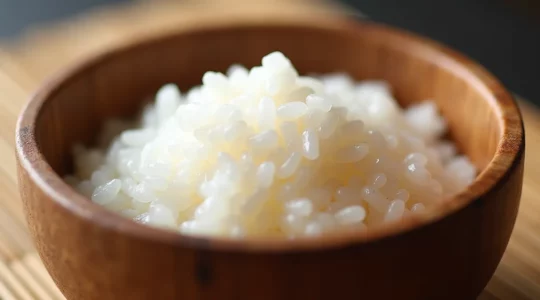
Why Does Your Sushi Rice Look Dull Instead of Glossy?
The frustrating dullness of homemade sushi rice isn’t a single failure, but a breakdown in its “skin health.” Achieving that coveted gloss is not about a secret ingredient but about mastering the chemical and physical interactions between sugar, vinegar, and…
Read more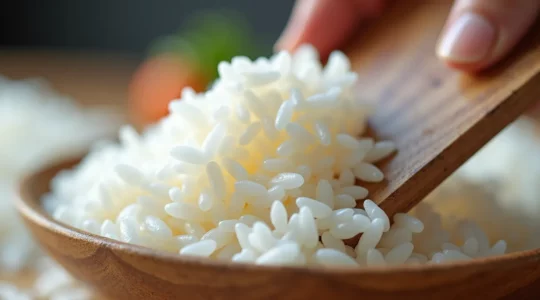
Why the ‘Cut-and-Fold’ Mixing Motion Prevents Mushy Rice?
The “cut-and-fold” motion isn’t a gentle stir; it’s a precise kinetic technique designed to manage thermal energy and pressure, preventing the molecular breakdown of rice grains. The vertical “cutting” motion cleaves through rice clumps without applying horizontal shear force, which…
Read more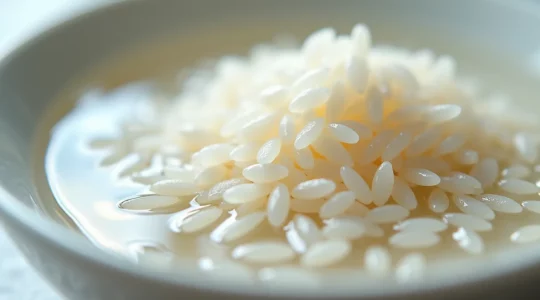
How Many Times Must You Rinse Rice to Achieve Perfect Separation?
The secret to perfectly separated rice is not rinsing a set number of times, but achieving a specific level of water clarity through controlled surface abrasion. The goal is removing excess, sticky surface starch (amylopectin) while preserving the grain’s internal…
Read more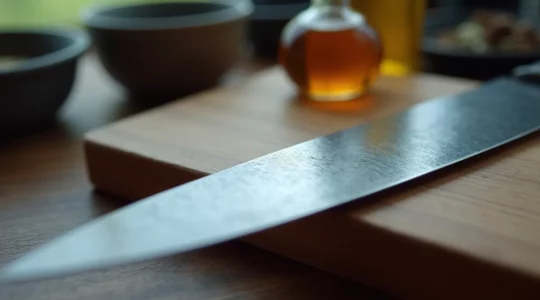
How to Prevent Rust on Your Carbon-Steel Yanagiba in a Home Kitchen
Contrary to popular belief, the goal with a carbon steel knife isn’t to prevent all discoloration; it’s to cultivate a protective blue-grey patina while preventing destructive red rust. Red rust (iron oxide) is corrosive and pits the steel, while a…
Read more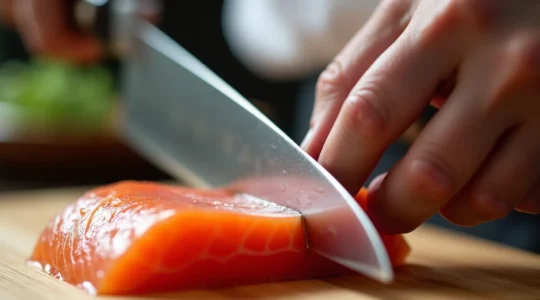
Why Sawing Your Fish Destroys the Texture and Flavor Profile?
A perfectly sharp knife is useless if your technique involves sawing; you are not cutting, but microscopically cooking and tearing the fish. A back-and-forth sawing motion generates destructive frictional heat, denaturing delicate proteins and altering texture. This incorrect motion ruptures…
Read more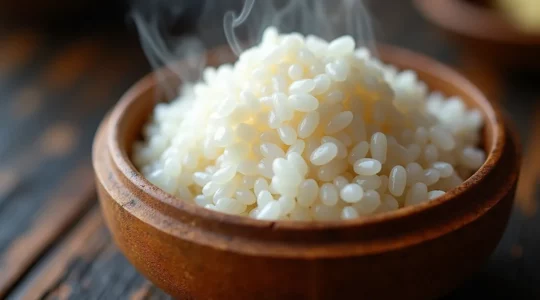
Why Maintaining Rice Temperature at Body Heat Is Crucial for Texture?
The textural perfection of sushi rice is not an art, but a function of thermal physics; maintaining it at ‘hitohada’ (body temperature) is a deliberate act of controlling starch structure and moisture. Cold rice undergoes ‘starch retrogradation’, causing it to…
Read more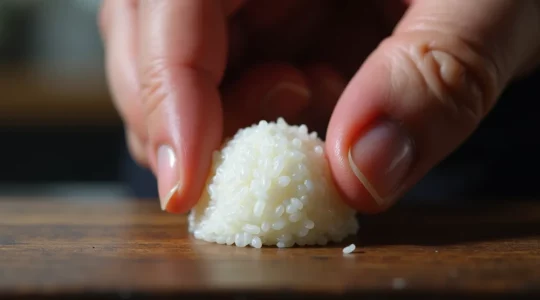
Stop Crushing Your Nigiri: A Technical Guide to Shaping Perfect Rice
The biggest mistake in making nigiri is trying to form a compact rice ball; the true goal is to engineer a delicate structure with a loose, airy core. Pressure is not uniform. It’s a gradient applied with your fingertips to…
Read more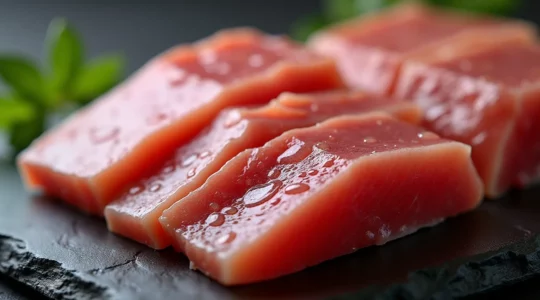
The Science of Umami: How Curing and Aging Unlocks Flavor in Sushi Fish
Contrary to the popular belief that the freshest fish makes the best sushi, the opposite is often true. True flavor depth, or umami, is not present at the moment of catch but is developed through a controlled biochemical process of…
Read more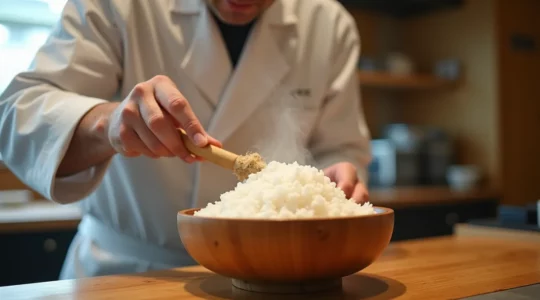
How to Perfect Vinegared Shari Rice Like a Tokyo Itamae in 30 Minutes?
Achieving perfect *shari* is not about following a recipe; it is a rapid, precise control of starch chemistry at a molecular level. The moment vinegar hits hot rice is a race against time; slow mixing causes starch to break down,…
Read more
How to Master Japanese Sushi Craftsmanship at Home Without Professional Training?
Contrary to popular belief, mastering sushi is not about owning a professional yanagiba knife or accessing expensive tuna; it is about internalizing the discipline of an Itamae (Head Chef). The foundation is not ingredients, but an unwavering commitment to hygiene…
Read more