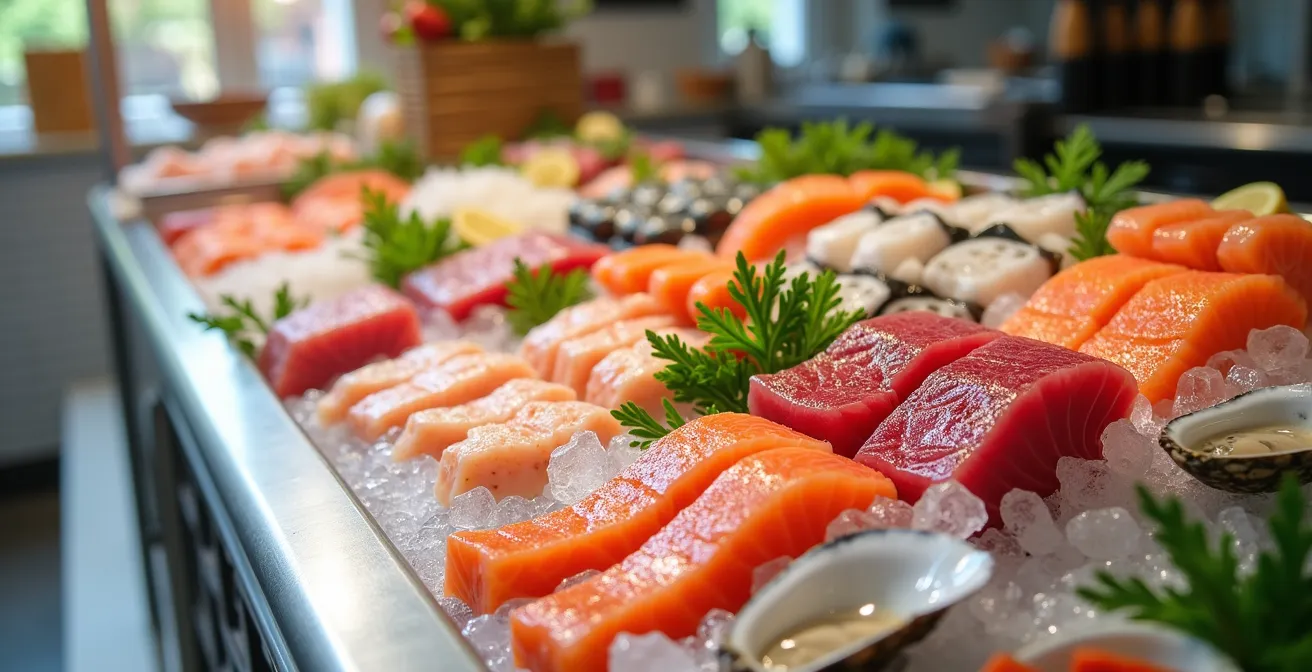
The safety of raw seafood depends less on “freshness” and more on a precise understanding of specific pathogen risks and verifiable control measures like freezing.
- Bacterial risks (like Vibrio) are highest in filter-feeding shellfish, while parasitic risks (like Anisakis) are prevalent in wild-caught finfish.
- Methods like citrus marination are ineffective against parasites; only specific freezing protocols (a “thermal kill-step”) or cooking can ensure safety.
Recommendation: For vulnerable groups, prioritize low-mercury fish that is explicitly labeled “sushi-grade” or “previously frozen” to FDA standards, and always handle it under strict temperature control.
The allure of raw seafood, from glistening oysters on the half-shell to delicate slices of sashimi, is particularly strong during the warm summer months. However, for cautious eaters and individuals in vulnerable health groups—such as pregnant women, the elderly, or the immunocompromised—this culinary pleasure is fraught with anxiety. Standard advice often revolves around ambiguous platitudes like “eat at a reputable restaurant” or “make sure it’s fresh.” While well-intentioned, this guidance lacks the scientific rigor necessary for a true risk assessment.
The reality is that “freshness” alone is not a reliable indicator of safety. A fish caught hours ago can still harbor parasites, while a properly handled, flash-frozen fish can be significantly safer. The critical distinction lies in understanding the specific biological and chemical threats associated with different species and preparation methods. These include scombrotoxin formation in tuna, viral and bacterial loads in shellfish, and the pervasive lifecycle of parasites in wild fish. Making a safe choice is not about avoiding raw seafood entirely, but about navigating a series of risk trade-offs.
This article moves beyond generic warnings to provide a detailed, evidence-based framework for evaluating the safety of raw seafood. Instead of relying on guesswork, you will learn to identify specific pathogen risks, understand the science behind effective control measures, and recognize the myths that create a false sense of security. We will dissect the distinct dangers posed by different types of seafood, from finfish to shellfish, and provide the clinical knowledge needed to make genuinely informed decisions for your health.
This guide provides a clinical perspective on the distinct risks associated with various types of raw seafood. The following sections break down the specific pathogens, toxins, and preservation methods you need to understand to navigate your choices safely.
Summary: A Clinical Look at Raw Seafood Risks
- Why Does Not-Quite-Fresh Tuna Cause Allergic Reactions in Some People?
- Oysters vs. Scallops: Which Raw Shellfish Carries Higher Viral Risks?
- Raw Salmon or Cooked Shrimp: What Is Actually Safe for Pregnant Women?
- The Ceviche Myth: Does Lime Juice Actually Kill Parasites in Raw Fish?
- What Should You Do If You Spot a Worm in Your Raw Fish?
- The Parasite Mistake: Which Species Must Never Be Eaten Raw?
- How Fast Do Omega-3 Fatty Acids Oxidize at Room Temperature?
- How Preserving Fish Enhances Umami Before Making Sushi?
Why Does Not-Quite-Fresh Tuna Cause Allergic Reactions in Some People?
The severe, allergy-like reaction some people experience after eating improperly handled tuna or mackerel is not a true allergy but a form of food poisoning known as scombroid poisoning. It occurs when certain types of fish, particularly those high in the amino acid histidine, are left at improper temperatures. This triggers a biochemical cascade where bacteria on the fish convert histidine into large amounts of histamine, the same compound released during an allergic reaction. The fish may not look or smell spoiled, yet it can contain dangerous levels of this toxin.
Symptoms appear rapidly, usually within 30 minutes of consumption, and mimic an allergic reaction: flushing, sweating, a peppery or metallic taste, dizziness, headache, and hives. While typically self-limiting, severe cases can cause respiratory distress. Critically, histamine is heat-stable, meaning cooking, smoking, or canning the contaminated fish will not destroy the toxin and prevent illness. The only effective prevention is continuous and strict temperature control from the moment the fish is caught.
The potential for high contamination is significant. For instance, a New England Journal of Medicine report highlighted a case where an FDA analysis of contaminated marlin found levels reaching 2,495 μmol of histamine per 100g, far exceeding the threshold that can cause severe symptoms. This underscores that the primary safety factor for scombroid-type fish is an unbroken cold chain, not just the time since it was caught.
Oysters vs. Scallops: Which Raw Shellfish Carries Higher Viral Risks?
While both are bivalve mollusks, oysters and scallops present vastly different risk profiles for raw consumption, primarily due to their feeding mechanisms and habitat. Oysters are filter feeders, meaning they pump large volumes of seawater through their bodies, filtering out plankton and, unfortunately, any pathogens present in the water. This process can concentrate harmful bacteria and viruses to levels much higher than in the surrounding environment. The most concerning of these is Vibrio vulnificus, a bacterium found in warm coastal waters that can cause severe illness, especially in individuals with liver disease or compromised immune systems.
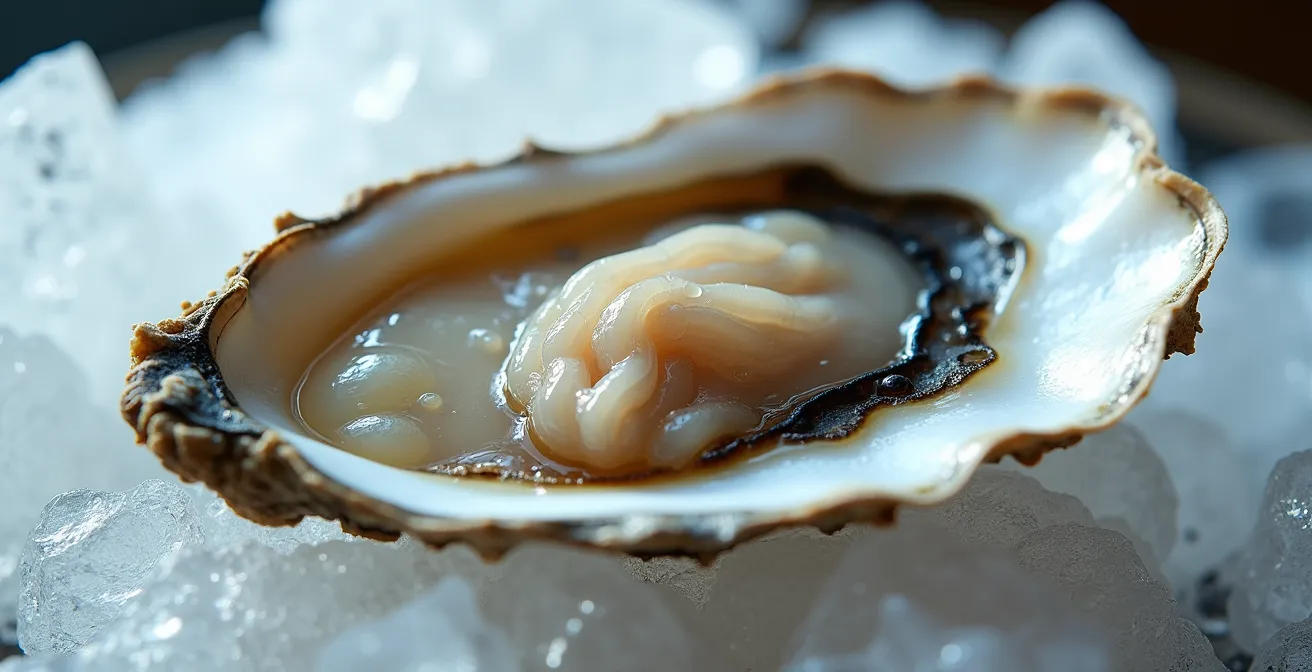
As this visualization of an oyster’s anatomy shows, its large gill structure is designed for maximum water filtration, making it an effective accumulator of waterborne pathogens. The CDC reports that about one in five people with a Vibrio vulnificus infection die, sometimes within a day or two of becoming ill. Scallops, on the other hand, typically live in deeper, colder ocean waters and are often consumed as just the adductor muscle, the part that opens and closes the shell. This muscle does not filter water and is therefore far less likely to accumulate pathogens, making it a comparatively lower-risk choice for raw consumption.
Therefore, when evaluating raw shellfish, the risk is not uniform. Oysters, clams, and mussels—all filter feeders—carry the highest risk of bacterial and viral contamination. Scallops, particularly the adductor muscle sold in isolation, represent a much lower pathogen-specific risk, provided they are handled with proper hygiene and temperature control after harvesting.
Raw Salmon or Cooked Shrimp: What Is Actually Safe for Pregnant Women?
For pregnant women, seafood consumption guidance is a complex balance of risks and benefits. The primary concerns are mercury exposure, which can harm a developing fetus’s nervous system, and microbial pathogens like Listeria and parasites. Common advice often leads to avoiding all raw fish. However, a careful risk trade-off analysis reveals a more nuanced picture. Cooked shrimp, often seen as a “safe” alternative, can carry a risk of Listeria monocytogenes if cross-contamination occurs after cooking. It can also be high in sodium or preservatives depending on its processing.
Conversely, raw salmon, when sourced correctly, can be a safer option from a microbial standpoint. The key is ensuring it has undergone a validated thermal kill-step—specifically, freezing—to eliminate parasites. The FDA provides clear guidelines for this process. Furthermore, salmon is a low-mercury fish rich in omega-3 fatty acids, which are vital for fetal brain development. This presents a scenario where the known, controllable risk of parasites is eliminated through freezing, leaving a highly nutritious food.
This perspective, based on FDA and EPA recommendations, highlights a crucial point in risk assessment:
Properly frozen, parasite-free, low-mercury raw salmon [may be safer than] cooked shrimp, which can carry a risk of listeria or high sodium/preservatives.
– Article analysis of pregnancy seafood safety trade-offs, based on FDA freezing guidelines and mercury considerations
The decision, therefore, should not be a blanket ban on raw fish but a calculated choice based on verifiable safety controls. Opting for low-mercury fish that has been explicitly treated to eliminate parasites is a sound, evidence-based strategy.
Action Plan: Verifying Parasite Control via FDA Freezing Guidelines
- Verify the Freezing Method: Ensure fish is frozen at -4°F (-20°C) for a minimum of 7 days or, alternatively, at -31°F (-35°C) for at least 15 hours in a commercial-grade freezer.
- Check the Labeling: When purchasing, look for explicit labels such as “sushi-grade,” “sashimi-grade,” or “previously frozen,” which indicate it has been treated for raw consumption.
- Understand Home Freezer Limitations: Recognize that standard home freezers typically do not reach the temperatures required to reliably kill parasites. Do not attempt this process at home.
- Know the Scope of Protection: Remember that freezing is a thermal kill-step effective against parasites only. It does not eliminate bacteria or viruses, for which hygiene and cold chain management remain critical.
- Consult Your Physician: Before making any changes to your diet during pregnancy, always discuss the specific risks and benefits with your healthcare provider.
The Ceviche Myth: Does Lime Juice Actually Kill Parasites in Raw Fish?
Ceviche, a popular dish where raw fish is “cooked” in citrus juice, is often perceived as safe due to the transformative effect of the acid. The fish’s flesh turns opaque and firm, giving the appearance of being cooked. However, this is a dangerous misconception. The acidic marinade, typically lime or lemon juice, causes a chemical process called denaturation, where the surface proteins of the fish change structure. This process is purely cosmetic and does not function as an effective thermal kill-step against pathogens.
While the high acidity can kill some surface bacteria, it does not penetrate deeply enough or act quickly enough to eliminate embedded parasites like Anisakis or tapeworms. These parasites can survive the marination process and cause serious gastrointestinal illness, known as anisakiasis, if ingested live. The only proven methods for destroying these parasites in fish intended for raw consumption are through specific freezing protocols or thorough cooking.
Case Study: The Origins of Ceviche vs. Modern Safety
Ceviche originated in coastal regions like the Sinaloa region of Mexico as a way to prepare and flavor fresh-caught seafood. Historically, the immediate consumption of extremely fresh fish minimized some bacterial risks. However, modern food safety science understands that this traditional preparation does not address the intrinsic parasitic risk. The safety of modern ceviche relies not on the marinade, but on the chef’s responsible choice to use high-quality, previously frozen fish, thereby eliminating the parasite risk before the citrus juice is ever added.
Food safety authorities are clear on this point. For example, Spanish food safety guidelines confirm that parasite elimination requires freezing at -20°C for 7 days or at a colder -35°C for over 15 hours. Citrus acid simply does not provide this level of security. Relying on lime juice for safety is a myth that poses a tangible health risk.
What Should You Do If You Spot a Worm in Your Raw Fish?
Discovering a worm in a piece of fish, whether at home or in a restaurant, can be an alarming experience. However, it’s important to react with calm, informed steps rather than panic. These worms are typically larvae of parasites like Anisakis, which are naturally present in many species of wild marine fish. The most critical factor determining the risk is whether the parasite is alive or dead.
If the fish has been properly handled and frozen according to food safety standards (e.g., sold as “sushi-grade”), any parasites present will be dead. A dead parasite, while aesthetically unappealing, is harmless if consumed. It poses no health risk. The presence of a dead worm is, ironically, evidence that the fish was wild-caught (as they are rare in farmed fish) and a reminder of why the freezing kill-step is so essential. Anisakiasis only occurs if a *live* larva is ingested.
If you encounter this situation, follow this clear, three-step action plan:
- Do not panic and remove the worm. Use tweezers or the tip of a knife to carefully pull out the visible parasite from the fillet. If the fish was properly sourced (e.g., labeled ‘previously frozen’), the parasite is almost certainly dead and poses no threat.
- Assess the fish’s source. Was the fish sold explicitly for raw consumption? If it was purchased from a reputable fishmonger as “sushi-grade,” you can be reasonably confident that the necessary freezing protocol was followed, and the parasite was neutralized. If you caught the fish yourself or bought it fresh without this guarantee, it should not be eaten raw.
- Monitor for symptoms. In the unlikely event you consumed fish with a live parasite, symptoms of anisakiasis can develop within hours. These include severe abdominal pain, nausea, vomiting, and sometimes an allergic reaction. If you experience these specific symptoms after eating questionable raw fish, you should seek medical attention immediately.
The Parasite Mistake: Which Species Must Never Be Eaten Raw?
While freezing is a highly effective control measure, some fish species have such a high and near-universal parasite load that industry convention dictates they should always be cooked and never be served raw. Attempting to eat these fish raw, even if previously frozen, is a significant gamble due to the sheer density of potential parasites and the risk of even one surviving an imperfect freezing process. The most prominent example is cod.
Cod is almost universally infested with a type of Anisakis nematode commonly known as “cod worm.” The parasite load is so consistently high that it is simply not considered a candidate for raw preparations like sushi or sashimi. The same caution applies to related species like haddock and pollock. Freshwater fish such as pike and perch are also in this category, as they can carry different parasites (like broad fish tapeworm) that pose a risk to humans.
The distinction between wild and farmed fish is also a critical factor in this risk assessment. Wild salmon, for instance, has a very high incidence of parasite infection as it is part of its natural marine lifecycle. One survey of parasite studies noted infection rates of 65-100% in various wild salmon populations. In contrast, salmon raised through aquaculture in controlled environments with parasite-free feed have a near-zero rate of infection. This is why many chefs prefer specific types of farmed salmon for raw dishes, as the intrinsic risk is dramatically lower from the start, with freezing serving as a redundant safety step rather than the primary one.
How Fast Do Omega-3 Fatty Acids Oxidize at Room Temperature?
Beyond microbial and parasitic risks, the quality and safety of raw fish are also governed by a chemical process: oxidation. Oily fish like salmon, tuna, and mackerel are prized for their high levels of healthy omega-3 fatty acids. However, these polyunsaturated fats are highly unstable and begin to break down rapidly when exposed to heat, light, and oxygen. This process of lipid oxidation is what causes fish to develop a characteristic “fishy” taste and smell.
This is not just a matter of flavor; it’s a marker of spoilage. The oxidation process begins noticeably within just one hour if fish is left at room temperature. This degradation is accelerated within the food safety “danger zone,” the range where bacteria also multiply rapidly. According to FoodSafety.gov, pathogens that cause illness grow quickly at temperatures between 40°F and 140°F (4°C and 60°C). The rule of thumb is to never leave seafood out of the refrigerator for more than two hours, and for no more than one hour if the ambient temperature is above 90°F (32°C).
The “fishy” smell is a direct result of the byproducts of this chemical breakdown. A truly fresh piece of fish should smell clean and of the ocean, not “fishy.” When you encounter that strong, unpleasant odor, it is a clear sensory signal that the omega-3s have oxidized and the fish has begun to spoil. This indicates poor temperature handling at some point in its supply chain, and it should be considered unsafe for raw consumption.
Key Takeaways
- Scombroid poisoning is caused by histamine in poorly chilled fish, a toxin that cooking cannot destroy.
- Filter-feeding shellfish like oysters concentrate pathogens like Vibrio, making them higher-risk than non-filter-feeders like scallops.
- The only scientifically validated method to kill parasites in fish for raw consumption is a commercial-grade freezing protocol (a “thermal kill-step”).
- Certain fish, like cod, have such a high natural parasite load that they should never be eaten raw by convention.
How Preserving Fish Enhances Umami Before Making Sushi?
While modern food safety focuses on eliminating risks through freezing, traditional sushi preparation has long employed a different scientific principle: controlled aging to enhance flavor. For over two centuries, master sushi chefs have developed techniques that not only mitigate risk but also maximize the umami—the savory fifth taste—of the fish. This challenges the Western notion that “fresher is always better.”
A key technique is ikejime, a humane slaughter method that involves instantly paralyzing the fish and draining its blood. This process prevents the buildup of lactic acid in the muscles, which would otherwise create a sour taste and accelerate spoilage. Once treated with ikejime, the fish is aged in a highly controlled, low-temperature environment for several days. During this time, a natural enzymatic process occurs: ATP (the energy molecule in the muscle) breaks down into a compound called inosinic acid (or inosinate).
Inosinic acid is a powerful umami compound, similar to the glutamate found in kombu or soy sauce. As the concentration of inosinic acid peaks after a few days of aging, the fish develops a much deeper, more complex, and savory flavor profile than a specimen that is “fresh off the boat.” This is why fish aged by an expert is often scientifically more savory and has a superior texture. This practice represents the pinnacle of seafood handling, where preservation techniques are used not just for safety, but to unlock the fish’s ultimate culinary potential.
Ultimately, navigating the world of raw seafood requires a shift from relying on vague terms like “freshness” to adopting a more clinical, risk-based approach. By understanding the specific pathogens, the science of preservation, and the verifiable safety controls, you can confidently enjoy this delicacy while protecting your health.