Ingredients and products
The difference between mediocre sushi and an unforgettable experience rarely lies in technique alone. At the heart of Japanese cuisine stands a principle so fundamental it shapes every culinary decision: 素材 (sozai), the inherent quality of ingredients. Whether you’re preparing nigiri at home or understanding what makes restaurant sushi exceptional, knowing how to source, evaluate, and handle ingredients transforms your relationship with this cuisine entirely.
From the chemistry that develops umami in aged fish to the critical safety protocols that protect against parasites, Japanese ingredient mastery combines ancient wisdom with modern food science. This comprehensive exploration covers everything from decoding misleading seafood labels and optimizing nori crispness to understanding why winter tuna tastes different from summer varieties. By understanding these foundations, you’ll develop the confidence to make informed choices and elevate every element that touches your sushi rice.
Sourcing and Safety: The Foundation of Raw Seafood
The single most crucial skill in sushi preparation isn’t knife work or rice seasoning—it’s the ability to identify safe, high-quality raw fish. Unlike cooking methods that destroy pathogens through heat, raw consumption demands rigorous selection and handling protocols from ocean to table.
Decoding Quality Standards and Freshness Indicators
The term “sashimi-grade” appears frequently on fish counters, yet it holds no official regulatory meaning in most countries. It’s a marketing descriptor rather than a certified safety standard. What truly matters is the handling chain: whether the fish was bled immediately upon catch, kept at proper temperatures, and processed in sanitary conditions.
Physical freshness indicators provide more reliable guidance than any label:
- Eyes should be clear, bright and slightly bulging—never cloudy or sunken
- Gills must display vibrant red or pink color, not brown or gray
- Flesh should bounce back when pressed, leaving no indentation
- Smell must be clean and ocean-like, never fishy or ammonia-scented
- Skin appears glossy with intact, tightly adhered scales
Think of freshness assessment like reading a language—once you understand these signs, you can “read” a fish’s story within seconds of seeing it on ice.
Frozen vs. Fresh: Understanding the Safety Paradox
Counter to common assumptions, frozen fish often represents the safer choice for raw consumption. Commercial freezing at -20°C (-4°F) for seven days, or flash-freezing at -35°C (-31°F) for fifteen hours, effectively kills parasites like Anisakis that naturally inhabit many marine species. This process, called candling inspection in industrial settings, has made previously risky species safe for raw consumption.
Fresh fish that has never been frozen can be sublime in flavor and texture, but only when sourced from reputable suppliers who understand raw consumption requirements. The “never frozen” badge of honor only applies when the entire cold chain—from boat to your refrigerator—maintained optimal conditions without interruption.
High-Risk Species and Transport Best Practices
Not all seafood carries equal risk. Freshwater fish should be considered off-limits for raw consumption due to significantly higher parasite loads compared to their marine counterparts. Salmon represents a special case: wild-caught varieties must be frozen first, while farmed salmon from controlled environments may be safe when fresh, depending on the farm’s protocols.
Once you’ve purchased quality fish, the race against temperature begins. Transport seafood in an insulated cooler with ice packs, minimizing time outside refrigeration. At home, store it at the coldest part of your refrigerator (ideally 0-2°C or 32-36°F), placed in a perforated container over ice that drains as it melts. Consume within 24 hours for optimal safety and quality.
Navigating Health Risks in Raw Consumption
Understanding potential hazards transforms anxiety into informed confidence. While risks exist, knowledge and proper handling make raw fish consumption safe for most people.
Parasites, Histamine and Bacterial Hazards
Anisakis worms represent the most common parasitic concern in marine fish. These threadlike parasites, visible to the naked eye as small coiled worms in the flesh, are killed by proper freezing or cooking. Candling (inspecting fish over bright light) helps commercial processors spot them, but home cooks should rely on the freezing protocols mentioned earlier.
Histamine poisoning, also called scombroid poisoning, occurs when certain fish species—particularly tuna, mackerel, and bonito—are stored at improper temperatures. Bacteria on the fish convert the amino acid histidine into histamine, which cannot be destroyed by cooking or freezing. Prevention is the only defense: maintaining continuous cold storage from catch to consumption.
Shellfish present unique challenges. Oysters, clams, and mussels filter large volumes of water and can concentrate harmful bacteria or algae-produced toxins. Source shellfish only from certified, monitored waters, and observe local advisories about harmful algal blooms.
Special Populations and Common Misconceptions
Pregnant individuals, young children, elderly adults, and anyone with compromised immune systems should avoid raw seafood entirely. The risks that are minimal for healthy adults become significant when the immune system is developing, declining, or suppressed.
One persistent myth deserves clarification: lemon juice does not “cook” or sterilize raw fish. While citric acid denatures proteins (creating a cooked appearance in ceviches), it doesn’t eliminate parasites or bacteria with the reliability of heat or proper freezing. Acidic marinades provide flavor, not safety.
If you spot something suspicious in fish—translucent, coiled threads in the flesh—don’t take chances. While one Anisakis worm doesn’t mean the entire fish is compromised, it signals the need for either thorough inspection and removal or, more prudently, selecting a different piece.
Building Balanced Sushi Rolls: Ingredients and Ratios
The architecture of a successful maki roll relies on thoughtful ingredient selection and proportion. Unlike nigiri where fish quality dominates, rolls demand consideration of how multiple components interact texturally and flavor-wise.
Selecting and Pairing Fillings
The best rolls create textural conversation—a balance between soft, crunchy, and creamy elements. Think of it as orchestrating a small performance where each ingredient has a distinct role:
- Creamy elements: avocado, cream cheese, or mayonnaise-based sauces provide richness
- Crunchy components: cucumber, tempura bits, or lightly pickled vegetables add contrast
- Protein base: raw fish, cooked seafood, or seasoned tofu anchors the flavor
- Aromatic accents: shiso leaves, scallions, or microgreens provide bright notes
Traditional flavor pairing logic in Japanese cuisine follows the principle of 調和 (chōwa), or harmony. Fatty fish like salmon pairs beautifully with crisp cucumber and the mild acidity of rice vinegar, while lean tuna benefits from creamy avocado to add mouthfeel it naturally lacks.
When preparing vegetables for rolling, technique matters. Cucumber and carrot should be cut into thin, uniform batons—about the thickness of a pencil—ensuring even distribution and easy biting. Blanch asparagus briefly to maintain color while removing raw starchiness.
Texture Balance and Common Mistakes
The raw-to-cooked filling ratio significantly impacts both safety perception and eating experience. Rolls containing only raw fish can feel monotonous and intimidating to beginners, while entirely cooked fillings sacrifice the clean, delicate flavors that define sushi. A balanced approach typically places one raw element alongside cooked or vegetable components.
The most common structural mistake? Over-saucing inside the roll. While a drizzle of spicy mayo or eel sauce on top adds flavor, incorporating heavy sauces within the roll creates a soggy mess that makes the nori dissolve and the rice clump. Think of interior sauces as seasoning—a light touch rather than a swimming pool.
Nori crispness in rolls depends heavily on the moisture barrier technique. Some sushi chefs lightly spread a thin layer of rice on the shiny side of nori first, creating a barrier before adding wet ingredients. Others work quickly and serve immediately, accepting that nori will soften as part of the eating experience. For hand rolls (temaki), timing is everything—they must be consumed within minutes of rolling.
Nori Mastery: Selection, Handling and Optimization
Seaweed might seem like a simple wrapper, but nori quality and handling dramatically influence the final product. Understanding grades and preservation techniques separates soggy disappointments from crisp, ocean-fragrant success.
Quality Grades and Thickness Selection
Nori quality follows a grading system based on color, thickness, and hole density. Gold grade nori displays deep black-purple color, uniform thickness, and almost no holes or thin spots. Lower grades appear greenish, feel papery, and contain visible imperfections.
Thickness selection depends on application:
- Standard thickness works for inside-out rolls (uramaki) where nori isn’t the textural focus
- Thicker sheets suit traditional rolls (hosomaki) and hand rolls where nori provides structural integrity and prominent flavor
- Thin sheets are occasionally used for delicate presentations but tear easily during rolling
For hand-held sushi like temaki, thickness becomes critical. Too thin, and the cone collapses as moisture from ingredients penetrates. Too thick, and it becomes leathery and difficult to bite through.
Preservation Techniques and Timing
Nori’s greatest enemy is humidity. Even brief exposure to air causes it to absorb moisture, transforming from crisp to limp. Once a package is opened, store unused sheets in an airtight container with silica gel packets, kept in a cool, dry location.
The toast-to-serve timing significantly impacts quality. Lightly toasting nori over a gas flame or in a dry pan for just seconds per side revives crispness and intensifies aroma. However, this benefit degrades within 30 minutes as the sheet reabsorbs ambient moisture. Restaurants with high volume can toast in batches; home cooks should toast immediately before use.
Temperature interaction matters more than most realize. Placing warm rice directly on nori accelerates moisture transfer and creates steam, which makes the seaweed soggy from the inside out. Allow seasoned rice to cool to room temperature before rolling, or work with slightly warm rice only if serving immediately.
High-Impact Ingredients: Where to Invest
When budget requires prioritization, understanding which ingredients deliver disproportionate impact helps allocate resources wisely. Not everything expensive is better, and not everything cheap is inferior.
Premium Essentials: Wasabi, Vinegar and Sustainable Fish
Real wasabi (hon-wasabi) differs dramatically from the dyed horseradish paste served at most establishments. True wasabi, made from freshly grated Wasabia japonica rhizome, delivers complex, aromatic heat that enhances rather than overwhelms fish. Its flavor peaks within fifteen minutes of grating, then fades. While expensive, a small amount transforms the sushi experience—but only if used fresh.
Rice vinegar quality directly affects sushi rice character. Premium brands ferment rice slowly, producing rounded acidity with subtle sweetness, while industrial versions taste sharp and one-dimensional. This is one ingredient where mid-range investment yields noticeable returns without requiring top-tier pricing.
The “expensive is better” myth particularly affects fish selection. Bluefin tuna commands premium prices partly due to flavor, but largely due to scarcity and cultural cachet. Sustainable alternatives like albacore or skipjack, when properly sourced and handled, deliver excellent sushi experiences at a fraction of the cost and environmental impact. Prioritize handling quality and freshness over species prestige.
Sesame Seeds: Roasting, Storage and Application
Few ingredients offer such dramatic transformation from such simple treatment as sesame seeds. Raw white sesame seeds taste mildly nutty; properly roasted seeds explode with aromatic complexity that elevates everything from rice bowls to roll toppings.
The science of roasting involves Maillard reactions—the same chemistry that browns meat and toasts bread. Heat sesame seeds in a dry pan over medium heat, stirring constantly, until they turn light golden and release a profound nutty aroma. This takes just 3-5 minutes, but the window between perfect and burnt is narrow. Remove from heat at the first sign of browning, as carryover heat continues the process.
Application technique matters: sprinkle sesame seeds on the outside of uramaki (inside-out rolls) immediately after rolling, while the rice is still slightly sticky. Press gently to adhere. For flavor pairing logic, white sesame provides nutty sweetness that complements fatty fish, while black sesame offers earthier, slightly bitter notes that balance rich sauces.
The most common storage error is leaving roasted sesame seeds at room temperature in open containers. Sesame contains oils that oxidize rapidly once the seed is heated, causing rancidity. Store roasted seeds in airtight containers in the refrigerator for up to two weeks, or freeze for longer preservation. For maximum aroma, grind toasted seeds into goma-shio (sesame salt) just before use.
The Science of Flavor: Fats and Enzymatic Aging
Understanding the chemistry behind seafood flavor unlocks advanced techniques that professional sushi chefs use to maximize ingredient potential. This knowledge transforms ingredient selection from guesswork into informed strategy.
Seafood Fat Chemistry and Oxidation
Fish fats differ fundamentally from terrestrial animal fats. Marine species contain high proportions of omega-3 polyunsaturated fatty acids—the same compounds celebrated for health benefits but also responsible for rapid flavor degradation. These delicate molecules oxidize quickly when exposed to air, light, or warmth, creating the “fishy” off-flavors that signal deterioration.
Seasonal variation dramatically affects fat content and distribution. Winter fish accumulate fat reserves to survive cold months and spawning demands, making winter-caught tuna, yellowtail, and salmon significantly richer than their summer counterparts. Japanese cuisine honors this cycle with seasonal specialties—toro (fatty tuna belly) peaks in winter, while leaner cuts shine in summer.
The Maillard reaction, impossible in raw preparations, becomes accessible through partial cooking techniques like tataki (seared surface, raw interior). Brief high-heat application to fish skin or exterior creates browned complexity while preserving the clean flavor of raw interior flesh. This technique works particularly well with skipjack tuna and mackerel.
Balancing acidity and oil represents a foundational principle in Japanese cuisine. Fatty fish pairs with sharper vinegar seasoning in rice, while lean fish benefits from less acidic preparations. This is why traditional Edomae-style sushi sometimes brushes lean fish with nikiri (reduced soy sauce) while serving fatty tuna with minimal intervention.
Controlled Aging for Umami Development
Freshly killed fish doesn’t represent the peak flavor moment—a fact that surprises many sushi newcomers. Immediately post-mortem, fish flesh is firm but lacks the depth that develops through controlled enzymatic breakdown. The art of 熟成 (jukusei), or aging, allows natural enzymes to break down proteins and ATP into inosinic acid, the compound responsible for savory umami depth.
This presents an inherent trade-off: texture versus flavor. As aging progresses, flesh softens while taste intensifies. The optimal window varies dramatically by species:
- Lean white fish (sea bream, flounder): 2-3 days aging develops sweetness without excessive softening
- Medium-bodied fish (salmon, yellowtail): 1-2 days balances texture and umami
- Fatty fish (tuna, mackerel): varies by cut—lean sections age longer, fatty portions shorter to prevent oil oxidation
The kelp synergy technique (kombu-jime) accelerates and enhances aging. Wrapping fish in kombu seaweed draws moisture from the flesh while infusing glutamate, another umami compound that works synergistically with inosinic acid. This creates a more complex savory profile in just 8-12 hours compared to days of simple refrigeration.
Temperature control during aging is critical. Fish should rest at 1-4°C (34-39°F)—cold enough to prevent bacterial growth but warm enough to allow enzymatic activity. Too cold (near freezing) halts enzyme function; too warm accelerates spoilage bacteria alongside desired enzymes.
Understanding these processes helps decode why sushi from skilled chefs tastes different than home preparations using the same “fresh” fish. It’s not just knife work—it’s strategic aging, species-specific handling, and applying centuries of empirical food science.
Mastering Japanese ingredients is a continuous journey rather than a destination. From recognizing freshness indicators in fish eyes to understanding how kombu synergy amplifies umami, each principle builds on the others to create that ineffable quality the Japanese call umami—not just a flavor, but the essence of deliciousness itself. By approaching ingredients with the same respect and attention that traditional sushi chefs demonstrate, you develop not just better technical skills, but a deeper appreciation for the ingredients that make Japanese cuisine extraordinary.
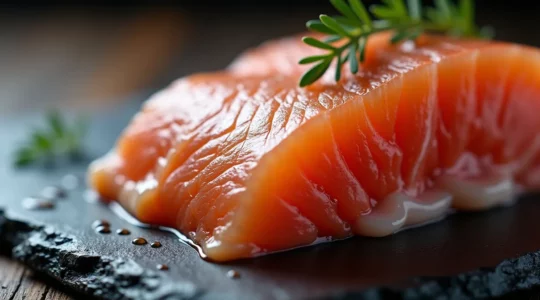
At What Point Does Aging Fish Stop Increasing Umami and Start Rotting?
The difference between perfectly aged fish and spoiled product is not art, but a quantifiable biochemical race. Umami (inosinic acid) peaks around day 7, but spoilage accelerates exponentially above 2°C, making temperature the most critical control. White-fleshed fish are biochemically…
Read more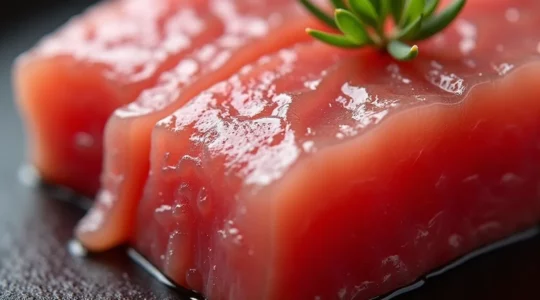
Why Does Fatty Fish Taste Metallic When Left Out for 20 Minutes?
That unpleasant metallic taste in fatty fish is not a sign of bacterial spoilage but the result of rapid chemical breakdown. The highly reactive omega-3 fatty acids are undergoing a process called lipid autoxidation, reacting with air to create volatile…
Read more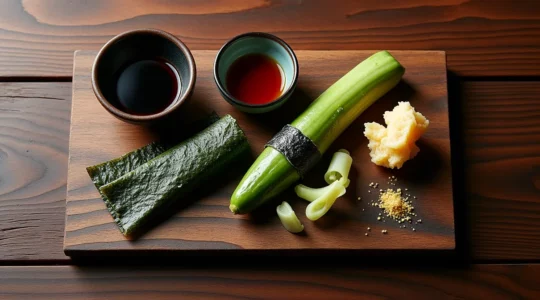
A Procurement Advisor’s Guide: Which Premium Sushi Ingredients Are Actually Worth the Splurge?
For home sushi, the biggest flavor impact comes not from spending more on everything, but from strategically investing in a few key ingredients that offer the highest sensory return on investment (ROI). A small price increase in nori and real…
Read more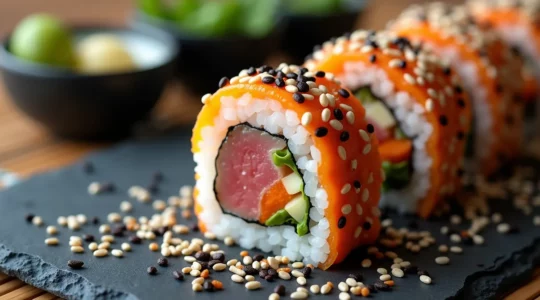
The Spice Roaster’s Guide: Unlocking Sesame’s True Potential for Spicy Tuna
The difference between a good and a great spicy tuna roll isn’t the fish—it’s how you master the sesame seeds. Roasting is a chemical transformation that unlocks crucial flavor compounds that raw seeds lack. Black sesame offers an earthy, bold…
Read more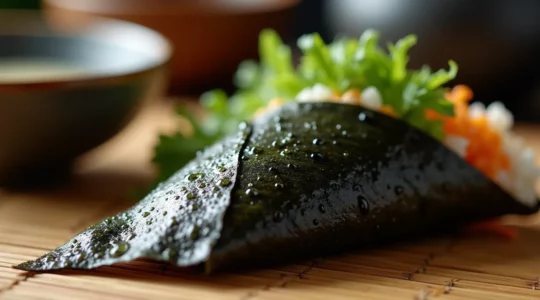
Why Do Nori Cones Lose Their Crunch in 30 Seconds and How to Fix It?
The dreaded soggy temaki cone is not a random event; it’s a rapid, predictable failure of physics caused by uncontrolled moisture migration from the rice and the air. Hot rice releases steam, which instantly compromises the nori’s structural integrity, increasing…
Read more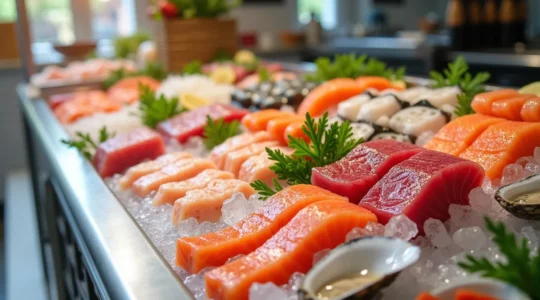
Is Eating Raw Seafood Safe for Everyone During the Summer Months?
The safety of raw seafood depends less on “freshness” and more on a precise understanding of specific pathogen risks and verifiable control measures like freezing. Bacterial risks (like Vibrio) are highest in filter-feeding shellfish, while parasitic risks (like Anisakis) are…
Read more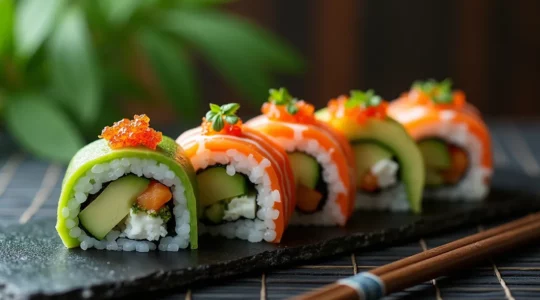
Which Fresh Fillings Pair Best With Nori Sheets for Balanced Flavor?
The secret to a perfect sushi roll isn’t the recipe, but the deliberate engineering of texture and moisture. Contrast is non-negotiable: Every soft filling like avocado or cream cheese requires a crunchy counterpart to satisfy the palate’s need for textural…
Read more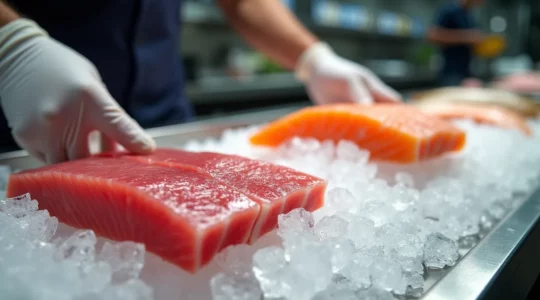
How to Identify True Sashimi-Grade Fish at Your Local Market?
The term ‘sashimi-grade’ is a marketing invention, not a legal regulation. True safety for raw fish comes from a verified parasite destruction process. Most “fresh” fish is not safe to eat raw; it must undergo a specific deep-freeze cycle to…
Read more