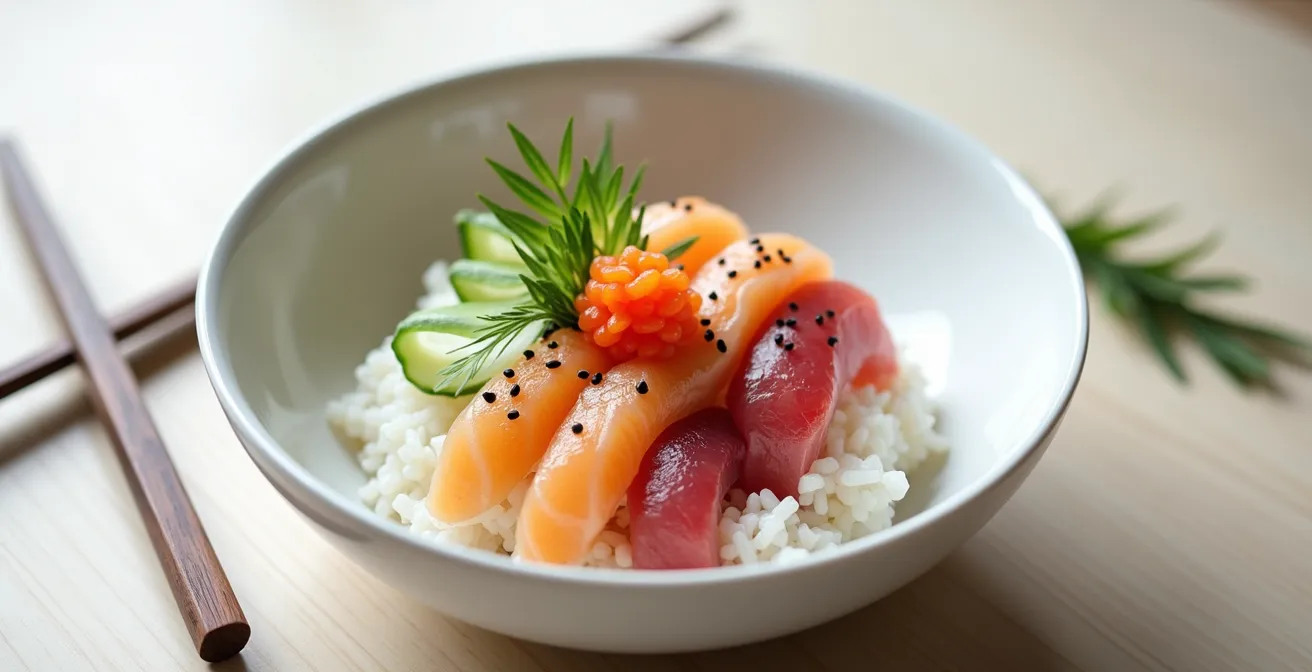
In summary:
- Transform chaotic scraps into art by applying Japanese arrangement principles (moritsuke) for visual harmony.
- Create a flavor foundation with more heavily seasoned sushi rice, designed to stand alone in every bite.
- Balance the savory fish with sweet, cooked elements like tamagoyaki and simmered shiitake mushrooms.
- Preserve the fish’s integrity by mastering temperature control and avoiding the crucial mistake of plating on warm rice.
- Embrace the zero-waste philosophy (mottainai) to turn leftovers into an expression of culinary creativity.
The sight of uneven, leftover sashimi scraps after a sushi night can feel like a culinary defeat. Those precious, expensive trimmings of tuna, salmon, or yellowtail often end up in a sad, haphazard pile, their potential wasted. The common advice is to simply toss them over rice, but this often results in a dish that tastes as disjointed as it looks—a pale imitation of the vibrant chirashi bowls served in restaurants. The instinct to just add soy sauce misses the entire philosophy of balance that defines Japanese cuisine.
Many home cooks believe the secret to a great chirashi bowl lies solely in the quality of the fish. While important, this view overlooks the meticulous craft that goes into every component. It’s not just about the fish; it’s about the rice that supports it, the sweet elements that complement it, and the visual harmony that elevates it. The challenge isn’t just using leftovers; it’s about respecting the ingredients enough to transform them.
But what if the real secret to a luxury chirashi wasn’t about having perfect fish slices, but about mastering the techniques that create a symphony of flavor, texture, and temperature from what you already have? This guide moves beyond the generic advice. It’s a zero-waste chef’s approach to culinary alchemy: turning humble scraps into a masterpiece by understanding the ‘why’ behind the methods. We will deconstruct the architecture of a high-end chirashi bowl, from visual arrangement to the science of its rice.
This article provides a structured path to mastering the art of the scrap-based chirashi. We will explore how to arrange toppings for balance, why the rice seasoning is so critical, which cooked elements provide essential harmony, and the technical mistakes to avoid. By following these principles, you’ll learn to see scraps not as leftovers, but as an opportunity for artistry.
Summary: A Chef’s Guide to Elevating Sashimi Scraps into a Chirashi Masterpiece
- Random or Patterned: How to Arrange Toppings for Visual Balance?
- Why Should Chirashi Rice Be Seasoned More Heavily Than Nigiri Rice?
- Egg Omelet and Shiitake: Which Cooked Fillings Add Essential Sweetness?
- The Plating Mistake That Warms Up Your Sashimi Before You Eat It
- How to Calculate Fish Quantities for a Family-Style Chirashi Platter?
- How to Plan a Sushi Platter That Balances Colors and Textures?
- Can You Revive Leftover Shari Without Losing Its Unique Texture?
- Why Using Sushi Rice for Donburi Bowls Is a Flavor Mistake?
Random or Patterned: How to Arrange Toppings for Visual Balance?
The first step in transforming scraps into a luxury meal is visual. A chaotic pile of fish looks like leftovers, but intentional placement turns it into a deliberate composition. This is the art of moritsuke, or Japanese food plating. Instead of random scattering, the goal is to create asymmetry, height, and focus. Think like a landscape artist, not someone filling a container. Group similar items together, create flowing lines with garnishes, and vary the height of your toppings to give the bowl a dynamic, three-dimensional quality.
A core tenet of this philosophy is the use of negative space. A bowl crammed to the edge feels overwhelming and cheapens the presentation. In contrast, purposeful empty space draws the eye to the ingredients and conveys a sense of elegance and restraint. According to Japanese dining principles, plates should have at least 30% empty space to achieve this effect. This breathing room makes each component feel more special and intentional.
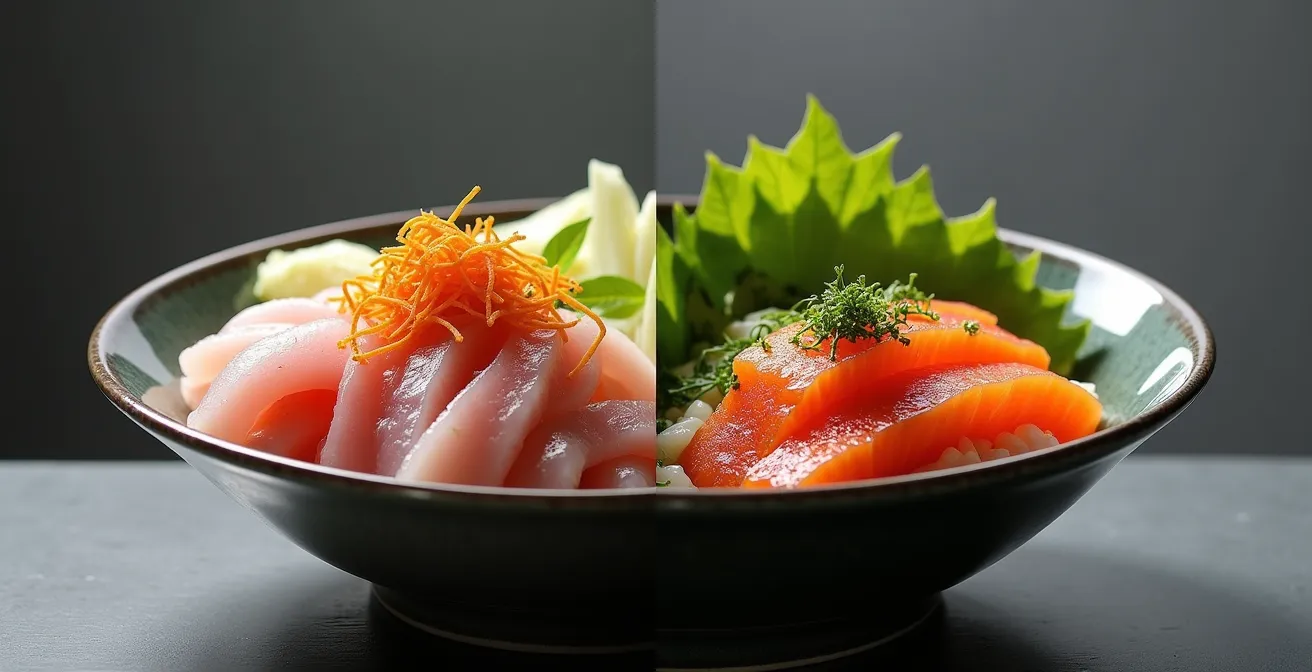
As the image above demonstrates, the same ingredients can create two vastly different impressions. The bowl on the left is chaotic, while the one on the right uses asymmetric grouping and varied height to create a sense of harmony and appeal. To achieve this, start by placing larger pieces first, then fill in with smaller scraps and garnishes. Use colorful ingredients like fish roe or microgreens to create focal points that guide the diner’s eye across the bowl.
Ultimately, the arrangement should look natural and effortless, even though it is carefully planned. This thoughtful presentation signals respect for the ingredients and transforms a simple meal into a sophisticated dining experience.
Why Should Chirashi Rice Be Seasoned More Heavily Than Nigiri Rice?
The foundation of any great chirashi bowl is not the fish, but the rice, known as shari. A common error is to use the same seasoning ratio as for nigiri sushi. However, chirashi rice requires a more assertive flavor profile. This is a matter of functional design. With nigiri, each bite is a perfectly balanced unit of fish and rice. In a chirashi bowl, the distribution is uneven. One spoonful might be mostly rice, while the next is heavy on fish. The rice must therefore be delicious enough to stand on its own.
As professional Japanese home cooks at Just One Cookbook explain, the seasoning—a blend of rice vinegar, sugar, and salt—needs to be noticeably stronger to ensure every bite is satisfying. The heightened acidity cuts through the richness of oily fish, while the increased sweetness and saltiness create a complete flavor profile that doesn’t rely on a topping to be enjoyable. This robust seasoning ensures the rice acts as an active, flavorful component rather than a neutral, starchy base.
This table illustrates the fundamental differences in seasoning philosophy, based on a comparative analysis from Delish. The data, sourced from a widely referenced chirashi bowl recipe, highlights the distinct roles each type of rice plays.
| Rice Type | Vinegar per Cup Rice | Sugar Amount | Salt Level | Purpose |
|---|---|---|---|---|
| Nigiri Rice | 1.5 tablespoons | 1 teaspoon | 1/2 teaspoon | Subtle support for fish |
| Chirashi Rice | 2-3 tablespoons | 1.5 tablespoons | 1 teaspoon | Stand-alone flavor carrier |
| Donburi Rice | None | None | None | Neutral sauce absorber |
The key takeaway is that chirashi rice is engineered to be a stand-alone flavor carrier. Its purpose is to deliver a complete taste experience, compensating for the inherently irregular composition of a “scattered” dish. Getting this foundation right is non-negotiable for achieving a luxury result from your scraps.
By seasoning your chirashi rice more aggressively, you create a baseline of flavor that elevates every other ingredient in the bowl, ensuring a harmonious and exciting experience from the first bite to the last.
Egg Omelet and Shiitake: Which Cooked Fillings Add Essential Sweetness?
A high-end chirashi bowl is a masterful exercise in flavor architecture, and one of its most important pillars is sweetness. Raw fish provides savory umami, and the rice brings acidity. Cooked, sweet elements are the essential bridge that connects these flavors, creating a complex and harmonious profile. Without them, the bowl can taste flat or one-dimensional. These sweet components also serve a strategic purpose: their pleasant flavor can help mask any slight imperfections or “off” notes in less-than-perfect fish scraps.
The two most classic sweet additions are kinshi tamago (shredded egg crepe) and simmered shiitake mushrooms. The delicate sweetness of the egg, prepared with dashi, mirin, and sugar, provides a soft, comforting contrast to the sharp fish and vinegar. Simmered shiitake, cooked in a glaze of soy sauce, mirin, and sugar, offer a deeper, more earthy and savory sweetness with a pleasant chewy texture. These aren’t mere garnishes; they are structural flavor components.
The MasterClass Culinary Team articulates this principle perfectly in their Chirashi Recipe Guide:
The sweetness of tamagoyaki and simmered shiitake mushrooms strategically bridges the savory/umami notes of the fish and the sharp acidity of the sushi rice, creating a complex, harmonious flavor profile.
– MasterClass Culinary Team, MasterClass Chirashi Recipe Guide
Beyond these two staples, other sweet elements can be used to add layers of flavor and texture. Key options include:
- Kanpyo: Simmered gourd strips marinated in a sweet soy-based sauce offer a unique, satisfying chewiness.
- Denbu or Oboro: This sweet and savory pink fish floss adds a beautiful splash of color and a fluffy texture, dissolving pleasantly on the tongue.
- Pickled vegetables: Elements like sweet pickled lotus root (renkon) can provide both sweetness and a welcome crunch.
By thoughtfully incorporating these cooked, sweet fillings, you move beyond simply assembling ingredients and begin to conduct a symphony of flavors, where each component plays a specific and crucial role in the final harmony.
The Plating Mistake That Warms Up Your Sashimi Before You Eat It
Perhaps the most critical technical error in homemade chirashi is poor temperature management. You can have the best fish and perfectly seasoned rice, but if you combine them incorrectly, you ruin the dish before it even reaches the table. The mistake is simple and common: placing cold, delicate sashimi directly onto warm or hot rice. This instantly begins to cook the fish, altering its texture from firm and fresh to soft and unpleasantly lukewarm. It destroys the refreshing contrast that is fundamental to the dish’s appeal.
Professional sushi chefs go to great lengths to maintain temperature integrity. As detailed by the Riviera Seafood Club, one technique involves ice-bathing sashimi for several minutes before plating to ensure it is optimally chilled. The rice, meanwhile, must be cooled correctly. After seasoning, it should be fanned and folded until it is just above body temperature—cool enough not to cook the fish, but warm enough to release its aromatic vinegar fragrance. Rushing this step is a fatal flaw.
To prevent direct heat transfer, chefs create an insulating barrier between the rice and the fish. A layer of finely shredded nori (seaweed) or whole shiso leaves not only separates the components but also adds its own layer of flavor and aroma. This simple barrier is a hallmark of professional preparation and is key to preserving the sashimi’s pristine quality.
Action Plan: Mastering Temperature Control for Chirashi
- Cool the Rice: Spread seasoned sushi rice in a thin layer and fan it until it is completely at room temperature or just slightly warm. Never use hot rice.
- Keep Fish Chilled: Store your sliced fish in the coldest part of your refrigerator until the absolute last moment before assembly.
- Create an Insulating Barrier: Place a layer of shredded nori or shiso leaves over the rice to act as a buffer against any residual warmth.
- Minimize Hand Contact: Arrange the delicate fish using chopsticks or tweezers to avoid transferring body heat from your hands.
- Serve Immediately: Once assembled, a chirashi bowl has a short lifespan. Serve it immediately to be enjoyed at its optimal temperature contrast.
By respecting the distinct temperature requirements of each component, you preserve the integrity of your ingredients and deliver the intended sensory experience: the delightful interplay of cool, fresh fish against fragrant, slightly warm rice.
How to Calculate Fish Quantities for a Family-Style Chirashi Platter?
When transitioning from a single serving to a family-style platter, calculating the right amount of fish becomes crucial. Too little, and the platter looks sparse and uninviting; too much, and the delicate balance with the rice is lost. The goal is not just to provide enough food, but to create an impression of abundance and luxury, a core part of the celebratory nature of chirashi.
A key metric used by professionals is visual coverage. For a generous, luxurious appearance, chefs recommend achieving 60-70% visual coverage of the rice surface with toppings. This ensures that the vibrant colors of the fish and other elements dominate the presentation, signaling a rich and satisfying meal. For an individual bowl, this translates to about 4 oz (115g) of mixed fish per 3/4 cup of cooked rice. When scaling up, the ratios remain a useful guide.
For a family-style platter, you must also consider the mix of ingredients. A successful platter features variety. A good rule of thumb for a four-person platter is to use a 50/30/20 ratio: 50% prime fish slices (like tuna or salmon), 30% diced or smaller pieces (utilizing your scraps effectively), and 20% accent ingredients (like ikura, tamago, or cooked elements). This creates visual interest and a range of textures and price points.
The following table, adapted from guidelines by Feasting at Home, provides a practical framework for portioning, whether for an individual or a party.
| Serving Style | Fish per Person | Rice Amount | Visual Coverage | Mix Recommendation |
|---|---|---|---|---|
| Individual Bowl | 4 oz mixed fish | 3/4 cup cooked | 60% coverage | 2-3 fish varieties |
| Family Platter (4 people) | 1 lb total | 4 cups cooked | 70% coverage | 50% prime, 30% diced, 20% accent |
| Party Platter (8 people) | 2 lbs total | 8 cups cooked | 65% coverage | Greater variety, more cooked options |
By applying these principles of visual coverage, ingredient ratios, and per-person quantities, you can confidently create a stunning, generous, and well-balanced chirashi platter that feels both luxurious and thoughtfully prepared.
How to Plan a Sushi Platter That Balances Colors and Textures?
A truly exceptional chirashi platter engages more than just the palate; it is a feast for the eyes. The artful balance of color and texture is what transforms a collection of ingredients into a cohesive culinary statement. This goes beyond random placement and enters the realm of strategic planning, drawing on traditional Japanese aesthetic principles to create harmony and visual appeal.
At the heart of this strategy is goshiki, the principle of five colors. Japanese culinary tradition strives to include five color groups in a meal to ensure it is nutritionally and visually balanced: red/orange (tuna, salmon, ikura), yellow (tamago, pickled daikon), green/blue (cucumber, avocado, shiso), white (scallops, squid, rice), and black/dark (nori, simmered shiitake). When planning your platter, consciously map your ingredients across these categories. This prevents any single hue from dominating and creates a vibrant, multi-colored tapestry that is instantly appetizing.
Equally important is the balance of textures. A platter with only soft fish can feel monotonous. Introducing a variety of textures creates a more dynamic and engaging eating experience. A thoughtful approach is to create distinct “zones” on the platter to guide the diner:
- A soft, melting zone: Feature fatty tuna (toro), scallops, or hamachi that offer a rich, buttery mouthfeel.
- A firm or crunchy zone: Incorporate crisp cucumber ribbons, crunchy pickled radish (takuan), or snappy tobiko.
- A rich, decadent zone: Use luxurious items like creamy uni (sea urchin) or bursting ikura (salmon roe) as focal points.
- A chewy zone: Add satisfying textures with marinated octopus (tako) or simmered shiitake mushrooms.
By thinking in terms of color palettes and textural zones, you elevate your chirashi from a simple meal to a curated experience, demonstrating a deep respect for the ingredients and the dining experience as a whole.
Can You Revive Leftover Shari Without Losing Its Unique Texture?
In the spirit of a zero-waste kitchen, the question of using leftover sushi rice (shari) inevitably arises. When refrigerated, sushi rice becomes hard and dry as the starches retrograde, losing its signature fluffy and slightly sticky texture. Microwaving it often results in a gummy, unevenly heated mess. However, there is a professional technique to gently revive leftover shari, making it perfectly suitable for a scrap-based chirashi where resourcefulness is part of the charm.
The secret, as shared by culinary experts at Sudachi Recipes, is a low-and-slow steam method. Place the cold rice in a heatproof bowl and cover it. Set this bowl over a pot of gently simmering water, creating a makeshift double boiler. Let the gentle steam warm the rice for 5 to 10 minutes. This method slowly reintroduces moisture without overcooking the grains or destroying their individual integrity. For particularly dry rice, adding a splash of sake or water to the rice before steaming can help restore its texture and add a subtle layer of umami.
This practice is deeply connected to the Japanese philosophy of mottainai, which is a sense of regret concerning waste. Using every last bit of a precious ingredient is a sign of respect. The Japanese Culinary Institute touches upon this cultural value:
The mottainai philosophy of regretting waste makes using revived shari for scrap-based chirashi perfectly acceptable and resourceful. However, for a truly luxury experience, fresh rice is always superior.
– Japanese Culinary Institute, Traditional Sushi Preparation Guidelines
While freshly made rice will always provide the absolute best texture for a high-end presentation, this revival technique is an excellent and authentic way to honor your ingredients in a more casual, everyday context. It ensures that nothing goes to waste while still producing a delicious and satisfying meal. The key is to be gentle and patient, allowing the steam to work its magic without turning the rice to mush.
By mastering this simple skill, you can confidently use leftover rice, making your homemade chirashi not only a culinary success but also an honorable expression of the mottainai spirit.
Key takeaways
- True luxury in chirashi comes from technique, not just ingredients. Master the principles of balance in flavor, temperature, and presentation.
- Chirashi rice is not the same as nigiri rice; it requires a more robust vinegar-sugar-salt seasoning to carry flavor on its own.
- Elevate savory fish scraps by creating harmony with cooked, sweet components like tamagoyaki and simmered shiitake, which bridge the flavor gaps.
Why Using Sushi Rice for Donburi Bowls Is a Flavor Mistake?
Understanding the specific role of sushi rice is key to mastering Japanese bowl dishes, and a common point of confusion is its use in donburi (rice bowls with cooked toppings like oyakodon or gyudon). While it might seem like a simple substitution, using vinegared sushi rice for a donburi is a fundamental flavor mistake. The two types of rice are engineered for completely different purposes, and swapping them undermines the integrity of the dish.
The primary function of plain steamed rice in a donburi is to absorb sauce. The hot, unseasoned grains act like a sponge, soaking up the savory dashi-based broth from oyakodon or the sweet and savory sauce from gyudon. This creates a cohesive and deeply flavorful experience where the rice and topping become one. In contrast, chirashi is a “scattered” dish where components remain distinct, and there is no heavy sauce to absorb.
As Chef Takashi Yamamoto explains in his work on Japanese bowl fundamentals, the seasoning on sushi rice creates a barrier that prevents this essential interaction.
The vinegar-sugar coating on sushi rice ‘seals’ the grains, preventing essential sauce absorption and leaving donburi dishes disjointed.
– Chef Takashi Yamamoto, Japanese Rice Bowl Fundamentals
Using sushi rice in a donburi results in a clash of flavors. The acidity of the vinegar fights with the savory broth, and the sauce pools at the bottom of the bowl instead of infusing the rice. This distinction also extends to kaisendon, a bowl of sashimi over rice. Though it looks similar to chirashi, kaisendon is traditionally served over plain, warm steamed rice, not vinegared shari, creating a simpler, more direct showcase for the raw fish which is then seasoned by the diner with soy sauce.
By respecting these distinct roles and choosing the right rice for the right bowl, you demonstrate a deeper understanding of Japanese culinary principles and ensure that every dish you create is harmonious and delicious as intended.