The anxiety of a chef’s choice menu isn’t about the food; it’s about a loss of control. This guide reframes the omakase experience not as a culinary test, but as an exercise in “controlled surrender.” By learning to establish a psychological contract of trust with the chef through clear, respectful communication, you can transform apprehension into a mindful and deeply rewarding culinary journey.
You’re seated at the counter, the clean scent of vinegar and wood in the air. The chef, a silent master of their craft, begins to work. Then, a wave of anxiety washes over you. What if they serve something you can’t eat? What if you hate it? This feeling—the silent pressure of the unknown—can overshadow what should be a sublime experience. Many articles will simply tell you to “be adventurous” or list basic etiquette, but they fail to address the core psychological hurdle: the act of surrendering control.
The anxiety you feel is completely normal. It stems from a deeply ingrained human need for predictability and safety. But what if the key to enjoying omakase wasn’t about forcing your palate, but about reframing your mindset? What if you could see the meal not as a test, but as a guided exercise in trust and mindfulness? This is the principle of controlled surrender: willingly placing your experience in the hands of an expert within a safe and respectful framework.
This guide acts as your “restaurant psychologist,” helping you build that framework. We will explore how to establish a clear and respectful culinary dialogue with the chef about your needs. We’ll provide strategies to train your palate for challenging flavors and textures. Finally, we’ll walk through the subtle etiquette that turns a simple meal into a shared, memorable performance. It’s time to replace anxiety with anticipation.
Summary: A Psychologist’s Guide to Enjoying a Chef’s Choice Meal
- How to Inform the Chef of Allergies Without Insulting His Menu?
- How to Train Your Palate to Enjoy Sea Urchin and Fish Roe?
- Why You Should Never Ask for Salmon at a Traditional Chef’s Choice Meal?
- The Pre-Dinner Snacking Mistake That Ruins a 15-Course Experience
- What to Do If You Truly Cannot Swallow a Piece Served by the Chef?
- The Conversation Mistake That Distracts the Chef During Service
- Why Does Not-Quite-Fresh Tuna Cause Allergic Reactions in Some People?
- How to Pace a 12-Course Sushi Meal to Avoid Palate Fatigue?
How to Inform the Chef of Allergies Without Insulting His Menu?
The single greatest source of omakase anxiety is the fear of being served a dangerous or disliked ingredient. The solution lies in establishing a respectful “psychological contract” with the chef before the first piece of fish ever meets rice. This isn’t about making demands; it’s about providing crucial information so the chef can guide your experience safely. The timing and tone of this communication are everything. An insult comes not from having a restriction, but from surprising the chef mid-service, which disrupts their meticulous flow and artistic vision.
Think of it as a collaboration. By informing the restaurant at the right time, you are empowering the chef to be creative within your boundaries. This proactive step shows respect for their planning process. In fact, OMAKASE Japan’s guide confirms that 100% of high-end establishments request advance notice for any dietary restrictions. It is the expected, professional courtesy. This isn’t just about allergies; it’s about building a foundation of trust. As noted at Yuzu Omakase in Bangkok, a simple, respectful greeting establishes a personal connection, which is vital in a setting built on the interaction between chef and diner.
Your goal is to make the information an integral, seamless part of the reservation, not a last-minute crisis. Following a clear hierarchy for communication removes all ambiguity and ensures both you and the chef can relax and focus on the meal.
Action Plan: The 4-Step Hierarchy of Allergy Communication
- Inform During Booking: This is the most crucial step. It allows the chef ample time to plan, source alternative ingredients, and thoughtfully prepare substitutions.
- Confirm Upon Arrival: When you check in with the host, politely re-confirm that your dietary notes were received. This ensures the message was passed on correctly.
- Politely Remind When Seated: A brief, quiet confirmation directly with the chef or their immediate staff before service begins shows final diligence. A simple, “Just confirming my shellfish allergy note, chef,” is perfect.
- Never Wait Until Mid-Course: Announcing an allergy as a piece is being served is the most disruptive action. It halts the flow, limits your options, and puts the chef in a difficult position.
How to Train Your Palate to Enjoy Sea Urchin and Fish Roe?
Certain ingredients, like uni (sea urchin) and ikura (fish roe), are prized in omakase but can be texturally challenging for the uninitiated. The creamy, briny richness of uni or the salty “pop” of ikura can be overwhelming if you’re not prepared. The fear of not enjoying these delicacies can create significant anxiety. The key is not to force it, but to engage in palate mindfulness—a gradual process of exposure and reframing.
Instead of viewing these ingredients as a pass/fail test, approach them with curiosity. The goal is familiarity, not instant love. A powerful technique is “texture framing,” where you connect the unfamiliar sensation to a familiar one. Is the creaminess of uni so different from a rich avocado or a savory custard? Is the burst of ikura unlike that of a juicy piece of fruit? By building these mental bridges, you give your brain a comfortable reference point, reducing the shock of the new.
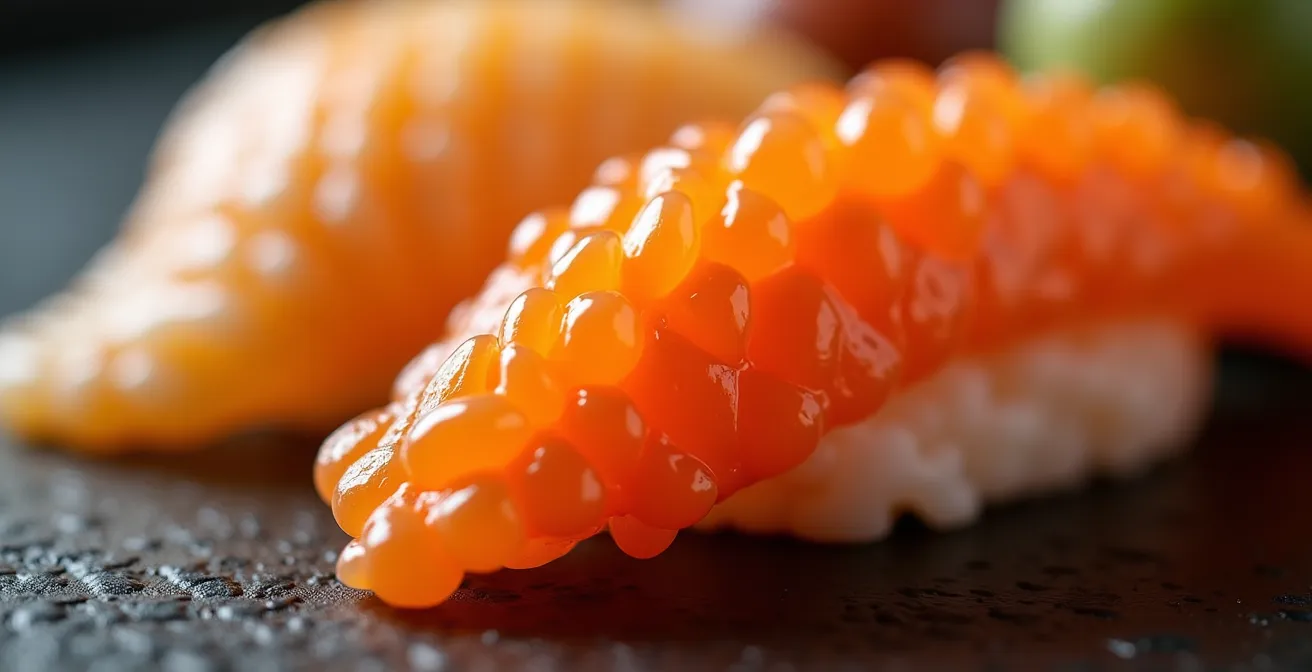
This visual appreciation is the first step. The next is a gradual, progressive training strategy. Don’t start with a full piece of uni nigiri. Begin with dishes where it’s a minor component, like a uni pasta or a sushi roll with just a touch of ikura. This allows you to experience the flavor in a diluted, less intimidating form. As you build familiarity, you can graduate to more direct encounters, learning to appreciate the subtle differences between, for example, sweeter, cleaner Hokkaido uni and other varieties.
Why You Should Never Ask for Salmon at a Traditional Chef’s Choice Meal?
Requesting a specific fish during an omakase, especially a common one like salmon, can be seen as a misunderstanding of the entire concept. Omakase is a journey curated by the chef, showcasing the absolute best of what is seasonal, local, and prepared with profound skill. It is an expression of a philosophy, not a customizable menu. Asking for salmon is like attending a symphony and asking the conductor to play a pop song; it shows a disconnect from the art form being presented.
The reason lies in the history and tradition of Edomae sushi. As the Michelin Guide explains, this is the most traditional form, rooted in techniques developed in old Tokyo (Edo) to preserve fish caught locally in the bay. The chef’s artistry is in aging, curing, and marinating these specific, seasonal catches to bring out their ultimate flavor. Modern omakase is a direct descendant of this tradition, focusing on the chef’s ability to work with the finest ingredients available *that day*.
Edomae sushi is considered the most traditional form, dating back hundreds of years to when fish in Japan’s capital city of Edo—now Tokyo—was sold by street vendors as a snack and was stored in vinegar to keep it from spoiling. Having a set menu allows chefs the proper time to prepare fish in the edomae style.
– Guide Michelin, Kitchen Language: What Is Omakase?
Salmon is not native to the waters around Tokyo and was only introduced to the Japanese sushi scene in the 1980s through a Norwegian marketing campaign. While popular worldwide, it is not part of the traditional Edomae repertoire. By asking for it, you are implicitly questioning the chef’s selection and the centuries of tradition upon which their menu is built. Trusting the chef means trusting their judgment on what fish is at its peak and best represents their craft.
The Pre-Dinner Snacking Mistake That Ruins a 15-Course Experience
The omakase experience is a delicate symphony of flavors, temperatures, and textures, meticulously planned by the chef. One of the most common and unintentional mistakes a diner can make is arriving with a “dirty” palate. Chewing gum, drinking coffee, or eating a sugary snack even an hour or two before your meal can drastically dull your senses and compromise your ability to appreciate the subtle nuances the chef has worked so hard to create. You wouldn’t wear earplugs to a concert; arriving with a compromised palate is the culinary equivalent.
The chef’s pacing and temperature control are critical. Each piece of nigiri is served at its optimal temperature, designed to be eaten almost immediately. According to sushi etiquette experts, you should eat a piece within 30 seconds of presentation. Waiting longer allows the warm rice to cool and the cold fish to warm, collapsing the carefully constructed contrast that makes the bite perfect. Snacking beforehand not only affects your appetite but can also make you a less mindful participant, more likely to be distracted and miss this crucial window.
To truly honor the experience (and your investment), you must prepare your palate as carefully as the chef prepares the fish. This involves a “cleansing” protocol in the hours leading up to your reservation. Avoid any strong flavors—from mints and coffee to scented hand lotions—that could interfere with your senses of taste and smell. Hydrating with neutral beverages like plain water or a mild green tea is ideal. This simple discipline ensures you arrive as a blank canvas, ready to fully receive the art that is about to be presented.
What to Do If You Truly Cannot Swallow a Piece Served by the Chef?
This is the peak anxiety scenario for many diners: you’ve put a piece in your mouth, and for reasons of texture or flavor, you genuinely cannot bring yourself to swallow it. Panic sets in. Do you force it down? Spit it out? The fear of offending the chef is immense. The most empowering thing to remember here is that a graceful exit is possible, and that chefs are more concerned with your enjoyment than with rigid adherence to the menu.
The key is discretion. Your goal is to resolve the situation quietly without drawing attention or disrupting the experience of other diners. The napkin is your most important tool. By bringing it to your mouth as if to simply dab your lips, you can discreetly deposit the piece without anyone noticing. There is no need for a dramatic gesture or an apology at that moment. The most important thing is to manage the situation calmly and privately.
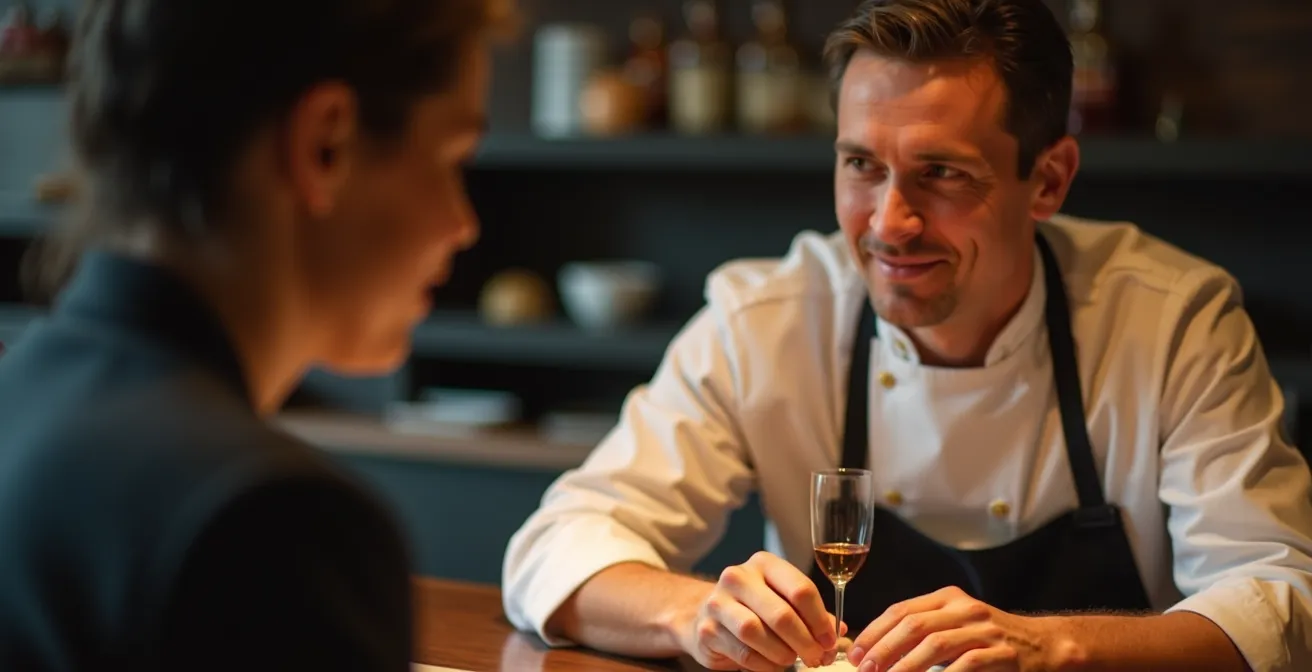
Remember the human element of the experience. The chef is a professional, but also a host. As Chef Nobu Yamazaki of Sushi Taro explains, his primary concern is whether his guests are happy, stating he might “completely change it in the middle of the course. It really depends on the customer.” This reveals the truth: chefs are partners in your experience, not dictators. If asked, a simple, honest, and polite response like, “My apologies, chef, the texture was a personal challenge for me,” is perfectly acceptable. It is non-accusatory and frames the issue as a matter of personal preference, not a flaw in the food. This maintains respect while communicating your experience honestly.
The Conversation Mistake That Distracts the Chef During Service
The omakase counter is an intimate stage, and the interaction between you and the chef is part of the performance. Engaging in a culinary dialogue shows interest and respect. However, the wrong kind of conversation can inadvertently imply distrust or distract the chef during moments of intense concentration. Asking “Is this fresh?” is the cardinal sin. In a reputable omakase restaurant, freshness is the absolute baseline; asking the question is like asking a surgeon if their tools are sterile. It breaks the psychological contract of trust you’ve worked to build.
The timing and nature of your questions are crucial. The chef is multitasking at an incredible level—slicing fish with precision, seasoning rice, monitoring every guest’s pace, and planning the next several courses. A good question is one that invites them to share their expertise when they have a natural pause in their workflow, such as after presenting a piece to you. Questions about the origin of the fish, the aging process, or the best season for an ingredient show genuine curiosity and deepen your appreciation of their craft.
In contrast, bad questions challenge the chef’s judgment or disrupt their flow. Questioning the color of a fish or asking for something else mid-course puts them on the defensive. The best approach is to observe their rhythm and ask questions during moments of connection, like when they make eye contact or their hands are momentarily free. This turns the conversation from a potential interruption into a welcome interaction.
This table, based on advice from Michelin-starred chefs, provides a clear guide for a respectful and enriching culinary dialogue.
| Good Questions (Show Interest) | Bad Questions (Imply Distrust) | Best Timing |
|---|---|---|
| What region is this fish from? | Is this fish fresh? | After chef presents the piece |
| Is this aged or cured? | Why is it this color? | When chef makes eye contact |
| What season is best for this? | Can I have something else? | Between courses |
| How do you prepare this? | Is this safe to eat? | When chef’s hands are free |
Why Does Not-Quite-Fresh Tuna Cause Allergic Reactions in Some People?
A specific fear for some diners is the risk of scombroid poisoning, an allergic-type reaction to high levels of histamine that can develop in improperly handled fish like tuna or mackerel. The symptoms—flushing, headaches, and rashes—can be alarming. While this is a valid concern with poorly stored fish, it is psychologically and practically a non-issue within the context of a high-end omakase. Understanding *why* it’s not a risk is a powerful tool for building trust and alleviating anxiety.
Scombroid poisoning occurs when bacteria on fish that isn’t kept at the proper temperature produce excess histamine. The entire philosophy and business model of a top-tier sushi-ya is built on preventing this. The trust you place in the chef is backed by an immense, unseen system of quality control. As noted in guides to Japanese dining, Japan has the highest number of Michelin-starred restaurants globally, a testament to a culture where chefs take their craft with the utmost seriousness.
These chefs build their reputations on a fanatical devotion to sourcing and handling. They often rise before dawn to select the finest fish, cultivating deep relationships with fishermen and suppliers. The preparation involves countless meticulous steps, honed over years of rigorous training, to ensure every piece is handled under perfect conditions. At this level of the culinary world, the risk of scombroid poisoning is virtually eliminated by the chef’s personal and professional honor. Believing in the chef is not blind faith; it is a rational trust in a system of extreme quality control.
Key Takeaways
- Trust Is a Two-Way Street: The foundation of a great omakase experience is a psychological contract. You trust the chef’s art, and the chef trusts you to communicate your essential needs clearly and in advance.
- Your Mindset Is the Main Ingredient: Reframe the meal from a culinary test to a mindful practice. Use techniques like “texture framing” to approach unfamiliarity with curiosity, not fear.
- Chefs Prioritize Your Enjoyment: A great chef is a host whose goal is your satisfaction. They are partners in the experience, not adversaries. A graceful exit strategy for a challenging piece is always possible.
How to Pace a 12-Course Sushi Meal to Avoid Palate Fatigue?
The final element of a successful omakase experience is managing your own endurance. A multi-course meal, especially one with 12 or more pieces, is a marathon, not a sprint. The chef will naturally pace the meal, typically moving from lighter, more delicate fish to richer, more intensely flavored ones. However, you also have a role to play in preventing palate fatigue, where your taste buds become overwhelmed and you can no longer distinguish subtle flavors.
Your primary tool for this is the pickled ginger, or *gari*. It is not a garnish to be eaten with the sushi. Its purpose is to cleanse your palate *between* each piece, resetting your senses for the next offering. Use it especially when transitioning between different types of fish. Your secondary tools are your drink and your mind. Take small, intermittent sips of sake or tea rather than large gulps of water, which can make you feel bloated. Most importantly, practice mindful eating. Take a moment to observe each piece before you eat it. Notice the temperature and texture as it hits your tongue. Chew slowly, identifying the flavors as they evolve.
Finally, learn to recognize the signals that the main course is concluding. The meal’s structure is intentional. As Wikipedia’s entry on omakase notes, the chef serves courses one by one, allowing diners to watch the preparation. When you are served a hand roll (*temaki*), a piece of sweet egg omelet (*tamago*), or a small bowl of miso soup, it is a traditional signal that the savory portion of the meal is drawing to a close. Recognizing these cues allows you to mentally and physically prepare for the end of the journey, savoring the final bites without feeling rushed or overwhelmed.
By shifting your perspective from one of anxiety to one of mindful, controlled surrender, you unlock the true beauty of omakase. It becomes more than a meal; it becomes a memorable dialogue between you and a master of a craft. With these tools, you are ready to book your next reservation not with fear, but with the confidence and excitement this unique culinary art form deserves.