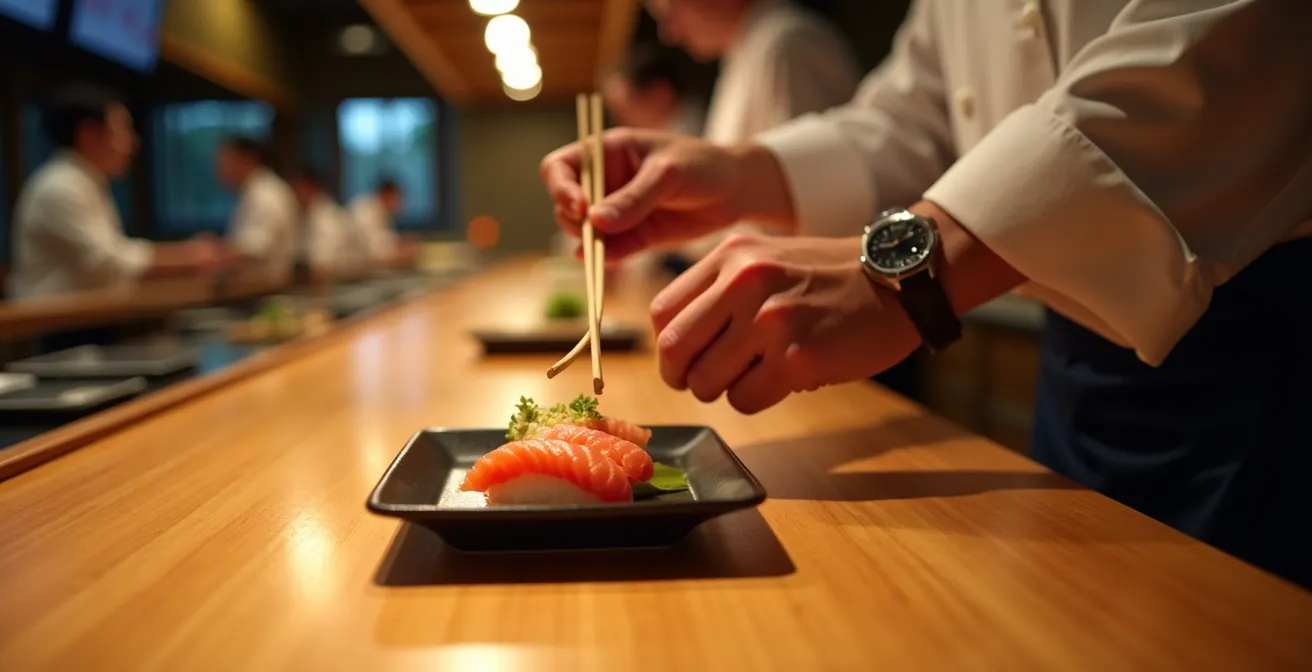
The true art of enjoying omakase isn’t about following rules, but about learning to decode the chef’s culinary performance.
- Every element, from the temperature of the rice to the focused lighting, is a deliberate choice designed to heighten your sensory perception.
- Your seating choice, the order of the courses, and even your own scent neutrality directly shape the flavor architecture of the meal.
Recommendation: Shift from a passive diner to an active observer. Pay attention to the sensory cues to unlock a deeper, more valuable appreciation of the itamae’s craft.
Stepping up to a high-end sushi counter can feel like entering a sacred space. The hushed tones, the focused movements of the itamae (sushi master), and the weight of expectation can be intimidating. For many fine dining patrons, the experience is governed by a litany of unspoken rules, a fear of making a faux pas that overshadows the pleasure of the meal. The common advice revolves around etiquette: eat your nigiri in one bite, don’t douse it in soy sauce, and never rub your chopsticks together. While these customs are important, they only scratch the surface of the experience.
This approach frames omakase as a test of manners, where the goal is simply to avoid mistakes. But what if the true key to unlocking the profound value of a multi-course sushi meal wasn’t in the rules you follow, but in the sensory cues you learn to decipher? The secret lies in understanding that you are not just a customer; you are an audience member at a meticulously crafted culinary performance. Every detail is part of a deliberate choreography designed to guide your palate and engage all five of your senses.
This guide will move beyond mere etiquette to explore the ‘why’ behind the ‘what’. We will delve into the sensory science and artistry that define the omakase journey. You will learn to see the itamae’s hands not just as tools, but as storytellers; to understand the lighting as a spotlight in a culinary theatre; and to appreciate the meal’s progression as a carefully composed symphony of flavors. By learning to read these cues, you transform from an intimidated guest into an active, appreciative connoisseur, capable of extracting every nuance of value from this exceptional dining art form.
This article provides a roadmap for your senses, detailing the specific elements that contribute to an elevated omakase experience. The following sections will guide you through the intricacies of temperature, texture, seating, and pacing, empowering you to engage with your next sushi meal on a profoundly deeper level.
Summary: How to Elevate Your Sensory Dining Experience at a High-End Sushi Counter?
- Why Temperature Contrast Between Fish and Rice Enhances Umami?
- How to Watch the Itamae’s Hands to Anticipate the Texture of Your Next Bite?
- Counter or Table: Which Seating Choice Offers the Best Sensory Connection?
- The Perfume Mistake That Ruins the Tasting Experience for Everyone Nearby
- In What Order Should You Eat Nigiri to Maximize Flavor Perception?
- Hot Sake or Cold Sake: Which Pairs Better With Warm Eel vs. Cold Sashimi?
- Why Is Lighting Focused Only on the Cutting Board and the Plate?
- How to Pace a 12-Course Sushi Meal to Avoid Palate Fatigue?
Why Temperature Contrast Between Fish and Rice Enhances Umami?
The first sensation of a perfect piece of nigiri is not its taste, but its temperature. This contrast is a deliberate and fundamental element of the sensory experience. The goal is to serve the shari (sushi rice) at hitohada, or human body temperature, while the neta (the fish topping) remains cool. This isn’t arbitrary; it’s rooted in the science of flavor perception. When the slightly warm, vinegared rice meets the cool, delicate fish in your mouth, a dynamic sensory event unfolds. The warmth of the rice gently coaxes the fats and oils in the fish to release their full aromatic potential, making them more perceptible to your palate.
This temperature interplay is a key driver of umami, the coveted fifth taste. The deeply satisfying flavor profile of sushi arises from a synergy of glutamates and nucleotides present in its ingredients. According to research into sushi science, pairing ingredients rich in these compounds—like the glutamates in seaweed and the inosinate in fish—dramatically intensifies the umami sensation. The carefully controlled temperature contrast is the catalyst that sparks this reaction. The principle is clear: sushi rice should be slightly warm, while fish should be cool, to create this peak flavor expression.
Therefore, when you receive a piece of nigiri, it is served at its absolute peak. Any delay diminishes this crucial temperature contrast. This is why an itamae works with such speed and precision, handing you the piece the moment it’s complete. It’s an invitation to experience a fleeting moment of perfect balance, where temperature is the key that unlocks the deepest layers of flavor.
How to Watch the Itamae’s Hands to Anticipate the Texture of Your Next Bite?
The itamae’s hands are the epicenter of the omakase experience—a mesmerizing display of skill that is both an art form and a source of vital information for the observant diner. This is the heart of the culinary choreography. By paying close attention to the chef’s movements as they form each piece of nigiri, you can anticipate the texture and character of your very next bite before it even reaches your plate. It’s a silent dialogue between chef and guest, communicated through pressure, rhythm, and gesture.
Observe the pressure applied to the shari. Does the chef use light, swift fingertips, creating a pocket of air within the rice? This often indicates an airy, delicate texture that will melt away in the mouth, a technique frequently used for leaner fish. Conversely, does the chef apply a firmer, more deliberate pressure, compacting the rice slightly? This can signal a piece designed to have more structure and chew, perhaps to support a heavier or richer neta like eel or a thick slice of tamago (egg). The final, gentle pat or turn is not just flourish; it’s the finishing touch that sets the piece’s structural integrity.
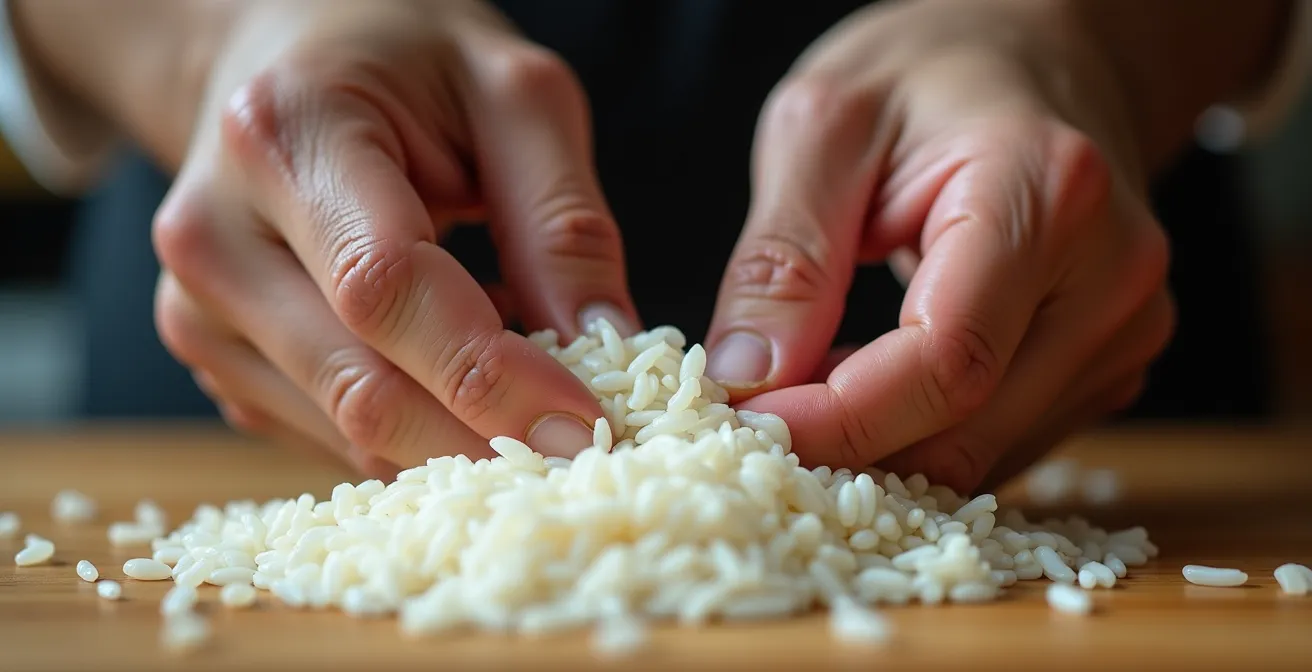
This visual preview enhances your appreciation. Knowing what to expect allows you to adjust your own handling of the sushi. An airier piece, for instance, is best eaten with your fingers to maintain its delicate structure, as chopsticks might cause it to crumble. Watching the creation is part of the tasting. You are not just seeing food being made; you are witnessing the birth of a specific textural experience, and your role is to receive it in a way that honors the chef’s intention.
Counter or Table: Which Seating Choice Offers the Best Sensory Connection?
At a high-end sushi restaurant, the choice between a seat at the counter and a table in the dining room is the most consequential decision you will make. It is not a matter of simple preference, but a strategic choice that fundamentally defines the nature of your sensory experience. While a table offers privacy, the counter is unequivocally the superior choice for anyone seeking a true connection to the art of omakase. It is the front-row seat to the culinary performance, transforming a meal into an immersive event.
The primary advantage of the counter is immediacy. Each piece of nigiri is handed to you by the itamae the moment it is completed, at its optimal temperature and texture. A 30-second transit from the counter to a table is enough to alter this delicate balance. Furthermore, the counter offers an unparalleled multi-sensory engagement. You hear the crisp slice of the knife, smell the subtle aroma of the vinegared rice, and witness the culinary choreography of the chef’s hands. This direct dialogue, both verbal and non-verbal, is an integral part of the experience. It’s an opportunity to ask questions, understand the provenance of the fish, and receive personalized guidance from the master.
This table, based on a comparative analysis of the omakase experience, breaks down the distinct advantages of each seating choice.
| Aspect | Counter Seating | Table Seating |
|---|---|---|
| Visual Experience | Direct view of preparation | Limited visibility |
| Interaction | Direct dialogue with chef | Server-mediated |
| Timing | Immediate serving at peak texture | 30-second transit delay |
| Sensory Engagement | Sound, smell, sight all engaged | Primarily taste focused |
Ultimately, choosing the counter is choosing full immersion. It is an acknowledgment that omakase is more than just food; it is a performance, an education, and a relationship. Given the limited number of these coveted seats, securing one is to claim your place in the heart of the experience.
The Perfume Mistake That Ruins the Tasting Experience for Everyone Nearby
The platitude “don’t wear perfume” is perhaps the most well-known rule of sushi etiquette, but it is often misunderstood as a simple matter of politeness. The reason runs much deeper and is central to the sensory integrity of the meal. The delicate, nuanced aromas of fresh fish, high-quality nori, and expertly seasoned shari are subtle and fleeting. A strong artificial scent from perfume, cologne, or even heavily fragranced lotion acts as a bulldozer to the senses, overpowering these delicate notes not only for you, but for every other guest at the counter.
A high-end sushi bar is a carefully controlled olfactory environment. The itamae relies on your ability to perceive the subtle differences in aroma between a piece of buttery otoro (fatty tuna) and a briny, clean-tasting shiromi (white fish). Introducing an external fragrance is akin to wearing noise-canceling headphones at a symphony; you miss the entire performance. It disrupts the sensory decoding process and severs the connection between smell and taste, which are intrinsically linked. What you perceive as flavor is largely a function of what you smell.
To fully honor the experience, adopting a “scent-neutral” protocol is essential. This extends beyond just perfume and cologne. It is a holistic approach to ensuring your presence does not interfere with the carefully curated sensory environment of the restaurant. True connoisseurs understand this respect is non-negotiable.
Action Plan: Your Scent-Neutral Protocol for Omakase Dining
- Arrive Unscented: Refrain from using any perfume, cologne, aftershave, or strongly scented hair products on the day of your reservation.
- Check Your Lotions: Opt for unscented hand soap and lotion before you arrive. The scent from your hands is closest to your food.
- Remove Watches and Bracelets: Beyond the etiquette of preventing scratches on the valuable counter, leather straps and metal bands can retain and emit scents. Remove them and place them in your bag.
- Mind Your Attire: Avoid clothes that have been stored with mothballs or strong fabric fresheners. The goal is complete scent neutrality.
- Cleanse Upon Arrival: If possible, wash your hands with the restaurant’s provided (and likely unscented) soap as soon as you are seated.
By adhering to this protocol, you are not just being polite. You are actively preserving the integrity of the tasting experience for yourself and those around you, demonstrating a profound respect for the itamae’s art.
In What Order Should You Eat Nigiri to Maximize Flavor Perception?
An omakase meal is not a random collection of dishes; it is a meticulously constructed narrative for your palate. The sequence in which the pieces are served follows a deliberate logic, a concept best described as palate architecture. The itamae guides you on a journey, typically progressing from lighter, more delicate flavors to richer, more robust ones. This prevents palate fatigue and ensures that the subtle notes of the initial pieces are not overwhelmed by the powerful flavors of those that follow. Your role as the diner is to trust and follow this carefully plotted course.
The typical progression of an omakase course begins with otsumami—small, artful appetizers like sashimi, grilled items, or steamed dishes. These serve to awaken the palate. Following this prelude, the main act begins: the nigiri. The sequence usually starts with shiromi (white-fleshed fish) such as flounder or sea bream, known for their clean, subtle flavors and firm textures. From there, the journey continues through silver-skinned fish (hikarimono) like horse mackerel, which introduce a slightly oilier and more distinct taste. The crescendo builds towards the richer, fattier cuts of tuna—from the leaner akami to the marbled chutoro and finally the supremely rich otoro. The meal often concludes with richer, sweeter items like unagi (eel) or a sweet, custardy tamago (egg omelet), followed by a hand roll and soup to signal the end.
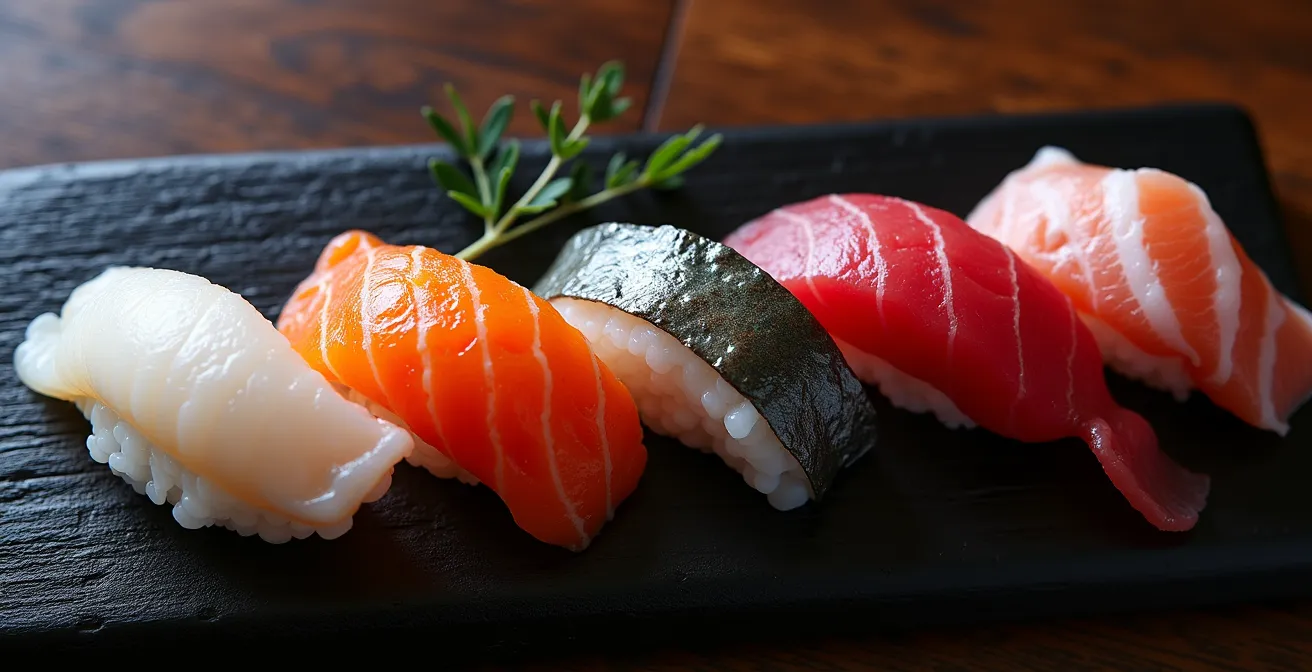
Understanding this structure transforms your experience. You are no longer just eating fish; you are participating in a story. Each piece builds upon the last, creating a cumulative effect that is far greater than the sum of its parts. Trying to alter this order would be like reading the chapters of a novel out of sequence—you would get the words, but you would miss the story entirely.
Hot Sake or Cold Sake: Which Pairs Better With Warm Eel vs. Cold Sashimi?
The interplay between sake and sushi is a sophisticated dance of temperature and flavor. The question is not simply whether to drink sake hot or cold, but how to use temperature as another tool for sensory decoding. A knowledgeable diner understands that the temperature of sake can either complement or contrast with a dish, dramatically altering the tasting experience. The chef will often guide this pairing, but understanding the underlying principles empowers you to appreciate the ‘why’ behind their choices.
As a general rule, delicate, aromatic, and premium sakes like a fruity Daiginjo are best served chilled. The cold temperature preserves their subtle floral and fruit notes, which would be destroyed by heating. These sakes pair beautifully with clean, light-flavored dishes like shiromi sashimi or raw scallop, as they enhance the natural sweetness and delicacy of the seafood without overpowering it. A crisp, dry Junmai Ginjo, also served cold, has the acidity and structure to cut through the richness of fatty fish like otoro, cleansing the palate with each sip.
Conversely, richer, earthier, and more full-bodied sakes, often from the Junmai category, can be gently warmed (atsukan). Warming the sake softens its profile and amplifies its savory, rice-forward umami notes. This makes it an ideal partner for robust, cooked, or smoky dishes. For example, a warm Junmai beautifully complements the caramelized soy glaze of grilled unagi (eel), creating a comforting and deeply savory pairing. The following table, adapted from guidelines for omakase dining, serves as a practical reference for these pairings.
| Fish Type | Sake Temperature | Sake Style | Flavor Effect |
|---|---|---|---|
| Fatty Tuna (Otoro) | Cold (5-10°C) | Crisp Junmai Ginjo | Cuts through richness |
| Grilled Eel (Unagi) | Warm (40-45°C) | Rich Junmai | Complements caramelized soy |
| White Fish (Shiromi) | Cold (5-10°C) | Delicate Daiginjo | Enhances subtle flavors |
| Raw Scallop | Room Temperature | Fruity Daiginjo | Brings out natural sweetness |
The ultimate guidance comes from the chef, who has selected the sake to match their specific menu. However, with this knowledge, you can better understand and appreciate the harmony they have orchestrated between beverage and food.
Why Is Lighting Focused Only on the Cutting Board and the Plate?
The ambiance of a high-end sushi-ya is often dark, intimate, and serene, punctuated by sharp, focused pools of light. This is not a coincidence or a simple aesthetic choice; it is a deliberate act of stagecraft. The lighting design serves a critical function: to direct your attention and heighten your sensory focus. It’s a technique of theatrical focus, creating a stage where the only things that matter are the artist’s hands and their creation. As one guide evocatively describes the ideal setting:
Imagine sitting at a warm wooden counter in a quiet, secluded room in Tokyo. The scent of freshly sliced fish lingers in the air. Across from you, the chef moves with silent precision—eyes focused, hands flowing like a well-rehearsed dance.
– Japan Food Guide, Best Private OMAKASE Sushi Counters in Tokyo
This atmosphere is made possible by the lighting. By keeping the surrounding environment in soft shadow, the itamae eliminates visual distractions. Your phone, the other guests, the decor—all of it fades into the periphery. Your gaze is naturally drawn to two key areas: the brilliantly lit cutting board where the culinary choreography unfolds, and your own plate, where the finished piece is presented like a jewel on a dark velvet cushion. This sharp contrast makes the colors of the fish appear more vibrant, the sheen of the rice more lustrous, and the details of the presentation more pronounced.
This focused illumination forces you to be present. It is a non-verbal cue from the chef, asking for your complete attention. It invites you to lean in, to observe closely, and to engage all your senses with the piece in front of you. In this minimalist theatre, light is used not just to see, but to guide perception. It isolates the art from the noise of the world, creating an intimate bubble where only you, the chef, and the sushi exist.
Key Takeaways
- The omakase experience is a sensory performance, not just a meal; your role is to be an active, appreciative audience member.
- Every detail, from temperature contrast and eating order (palate architecture) to lighting and scent, is a deliberate choice by the itamae.
- The greatest value comes from learning to decode these cues, transforming you from a rule-follower into a true connoisseur.
How to Pace a 12-Course Sushi Meal to Avoid Palate Fatigue?
The final, and perhaps most personal, skill in mastering the omakase experience is pacing. A multi-course sushi meal is a marathon, not a sprint. According to a culinary guide from MasterClass, omakase meals are long affairs, and diners should expect to set aside at least two hours for the full journey. Rushing through the courses or failing to manage your palate can lead to sensory burnout, causing the later, often richer, pieces to taste muddled or indistinct. Pacing is your responsibility as a diner, a way of showing respect for the meal’s intricate structure.
The most crucial tools for pacing are already provided: pickled ginger (gari) and green tea. The ginger is not a topping; it is a palate cleanser, meant to be eaten in small amounts between different types of fish to reset your taste buds. Similarly, a sip of green tea can wash away lingering flavors and prepare you for the next course. However, the most profound technique is mental: the practice of savoring the yoin, or the lingering aftertaste and resonance of each piece. After you swallow, take a moment. Take a breath. What flavors remain? Is it the sweetness of the rice vinegar, the salinity of the fish, or a subtle umami note? Acknowledging the yoin extends the life of each bite and builds a sensory memory throughout the meal.
Adopting a simple rule like “One Piece, Three Breaths” can be transformative. Take one breath to observe the piece as it’s presented. Eat it in one bite. Then, take two slow breaths to fully savor the flavors and the yoin before reaching for your tea or ginger. This meditative approach not only prevents you from rushing but also deepens your appreciation for the complexity of each creation. It ensures that the twelfth piece is just as exciting and distinct as the first.
By shifting your mindset from following rules to decoding a performance, you unlock a new dimension of dining. The high price of an omakase meal is not just for the ingredients; it is for the artistry, the precision, and the curated sensory journey. Your final step as a connoisseur is to actively participate in that journey, armed with the knowledge to appreciate every deliberate, masterful detail.