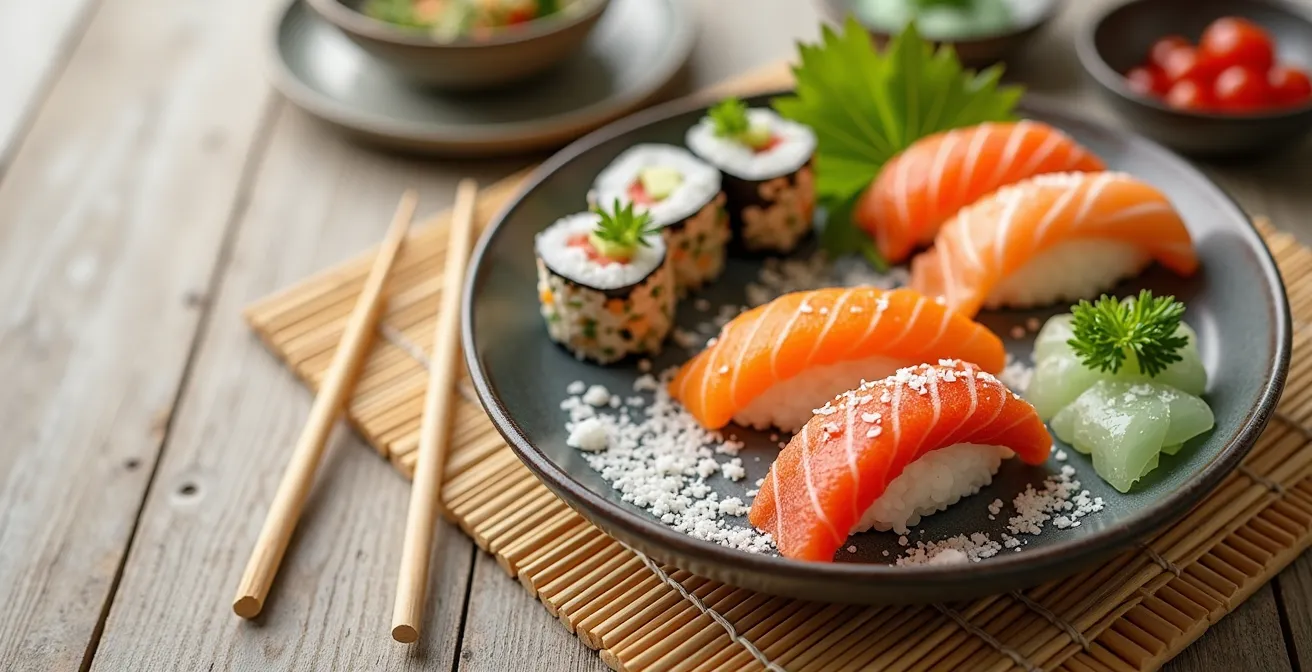
Eating sushi responsibly isn’t about memorizing a list of “good” and “bad” fish; it’s about understanding the complex systems behind your plate.
- The status of iconic species like Bluefin Tuna is dynamic and varies dramatically by ocean, making blanket rules obsolete.
- Terms like “farmed” do not guarantee sustainability, and even trusted eco-labels have significant flaws that require scrutiny.
Recommendation: The most impactful action is to become an informed diner who questions the source, embraces culinary innovation, and makes choices based on specific, current information rather than outdated rules.
The feeling is familiar for many sushi lovers: a mix of delight and a nagging sense of guilt. As you lift a glistening piece of toro to your lips, the headlines about collapsing fish stocks and ocean devastation echo in your mind. For years, the solution seemed simple, a mantra passed down from environmental groups: just don’t eat Bluefin tuna. This well-intentioned advice, however, has become a dangerous oversimplification. The reality of ocean conservation is far more complex, a shifting seascape of regional successes, systemic failures, and surprising new solutions.
Relying on outdated blacklists or blindly trusting marketing terms like “farm-raised” or “sushi-grade” is no longer enough. In fact, it can sometimes lead to choices that are just as harmful as the ones we’re trying to avoid. The path to truly responsible consumption doesn’t lie in a simple set of rules, but in developing a new framework for thinking—one rooted in informed scrutiny, a willingness to challenge assumptions, and an appetite for innovation. It requires moving beyond the single species and looking at the entire system.
This guide is designed to arm you with that critical perspective. We will dismantle the common myths surrounding sustainable sushi, from the evolving story of Bluefin tuna to the hidden environmental costs of farmed fish. We’ll investigate the reliability of seafood certifications, explore the exciting frontier of invasive species and plant-based alternatives, and demystify the marketing jargon that obscures the truth. By the end, you won’t just have a new list of fish to eat or avoid; you’ll have the tools to be a genuine agent of change, one delicious, ethical bite at a time.
This article provides a deep dive into the critical questions you should be asking. The following sections break down the key areas where informed choices can make a real difference for our oceans.
Summary: A Comprehensive Guide to Making Ethical Sushi Choices
- Status of Stocks: Is It Ever Ethical to Eat Wild Bluefin Tuna Today?
- Is Farmed Hamachi Better for the Ocean Than Wild Catch?
- Lionfish and Jellyfish: Can Eating Invasive Species Help the Ecosystem?
- MSC or ASC: Which Seafood Labels Can You Actually Trust?
- Ahimi and Unami: Can Plant-Based Alternatives Match the Texture of Raw Fish?
- Bluefin or Bigeye: Which Tuna Choice Supports Ocean Health Better?
- What Does ‘Sashimi-Grade’ Actually Mean Legally in Your Country?
- Is the ‘California Roll’ Considered Authentic Sushi Evolution or Distortion?
Status of Stocks: Is It Ever Ethical to Eat Wild Bluefin Tuna Today?
For decades, Bluefin tuna has been the poster child for overfishing, a symbol of humanity’s destructive appetite. The simple directive to “never eat Bluefin” was an effective and necessary conservation message. However, the situation today is more nuanced, demanding a more sophisticated approach. Thanks to stringent quotas and international cooperation, some populations are showing signs of recovery. For instance, recent conservation assessments show Atlantic bluefin moved from ‘Endangered’ to ‘Least Concern’ on the IUCN Red List in 2021. This is a monumental conservation victory that complicates the old, absolute ban.
This positive development does not mean it’s a free-for-all. The recovery is fragile and applies specifically to certain stocks, like the Eastern Atlantic population. In stark contrast, Pacific bluefin populations have experienced a catastrophic 96.4% decline from unfished levels, remaining under extreme threat. This stark difference highlights the core of modern sustainable seafood choices: geography and stock-specificity are everything. A blanket rule for an entire species is no longer sufficient. An ethical choice requires knowing not just what the fish is, but where it came from and which specific population it belongs to.
Even with recovering Atlantic stocks, immense pressure remains. The high price Bluefin commands continues to drive illegal fishing and puts management plans at risk. Therefore, while a piece of Atlantic Bluefin may no longer be the absolute ecological sin it once was, exercising extreme caution and demanding full traceability from the restaurant is the bare minimum for any conscious consumer. Most conservation experts still advise avoidance to maintain recovery momentum.
Your Quick Guide: A Traffic Light System for Tuna
- Green (Best Choice): Actively seek out pole-caught Albacore or Skipjack tuna. These species have more sustainable population levels, and the fishing method results in very low bycatch of other marine life.
- Yellow (Use Caution): If eating Yellowfin, verify it was caught by troll or pole-and-line methods. The specific fishing location matters greatly, so ask the chef or supplier for details.
- Red (Avoid): Steer clear of any Bigeye or Yellowfin tuna caught using longlines. This fishing method is notorious for its high bycatch rates, harming turtles, sharks, and seabirds.
- Black (Never): Despite some recovery, the pressure on all Bluefin species remains too high. Continued avoidance is the safest and most responsible choice to support long-term ocean health.
The Bluefin story teaches us that sustainability is not a static destination but a dynamic process. It forces us to move beyond simple rules and embrace the complexity of marine ecosystems.
Is Farmed Hamachi Better for the Ocean Than Wild Catch?
The “farmed vs. wild” debate is another area where simple assumptions can be misleading. Many diners choose farmed fish like hamachi (Japanese amberjack or yellowtail) believing it’s an inherently better choice that alleviates pressure on wild populations. Unfortunately, the reality of most industrial aquaculture is far from a perfect solution. The method of farming is critically important, and much of the hamachi served in restaurants comes with its own significant environmental baggage.
The primary issue lies with open-net pen aquaculture, the dominant method used for species like hamachi and salmon. These pens, located in coastal waters, allow for the free exchange of waste, uneaten feed, parasites, and diseases between the farm and the surrounding marine environment. This can create pollution dead zones on the seafloor and spread disease to wild fish populations. As Brandon Hill, Director of Operations at the sustainable chain Bamboo Sushi, points out:
Most of the yellowtail eaten in the US is farm-raised, a lot of it in Japan and Australia in ways that are very environmentally unfriendly
– Brandon Hill, Director of Operations at Bamboo Sushi
Another major problem is the reliance on wild-caught fish for feed. Many carnivorous farmed fish, including hamachi, require several kilograms of wild feeder fish (like sardines and anchovies) to produce just one kilogram of market-ready product. This practice, known as the “fish-in, fish-out” ratio, means that instead of reducing pressure on the oceans, these farms are simply transferring it down the food chain, depleting crucial forage fish populations.
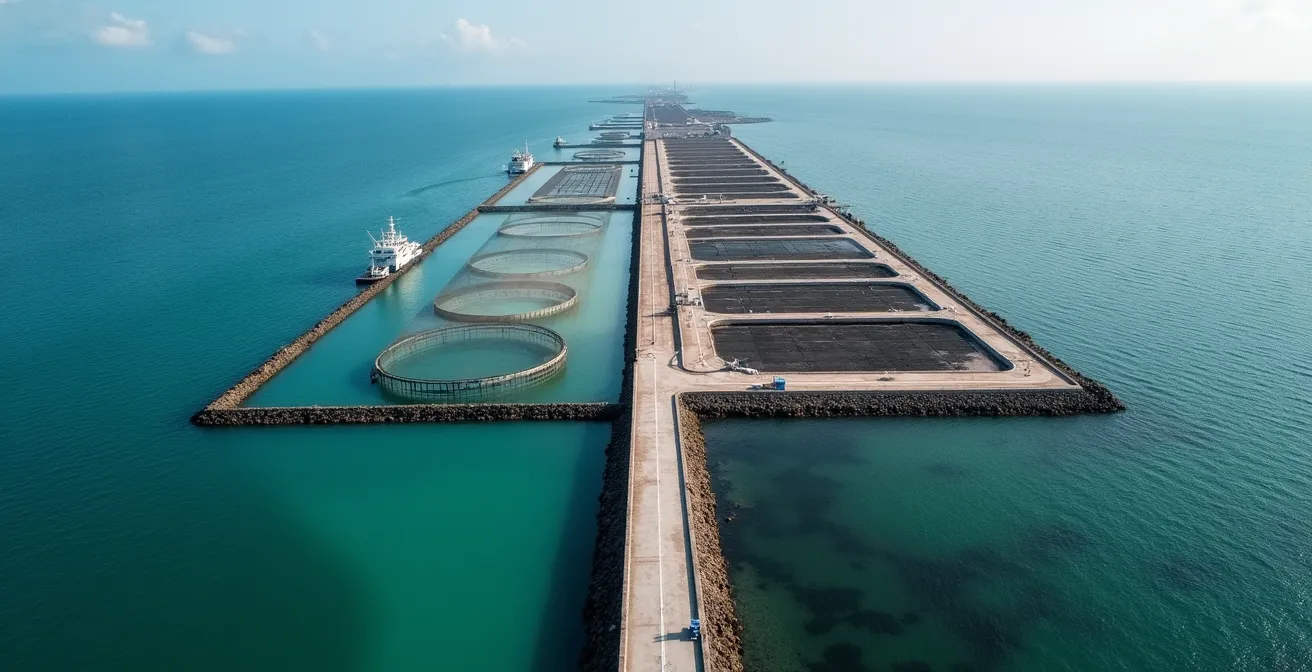
The good news is that better systems exist. Land-based recirculating aquaculture systems (RAS) offer a more sustainable path forward. These closed-loop facilities treat and recycle their water, preventing pollution and disease from escaping into the wild. They also offer greater control over feed, paving the way for alternatives that don’t rely on wild-caught fish. When choosing farmed fish, the key question is not *if* it was farmed, but *how*.
Until closed-containment farming becomes the industry standard, consumers must treat “farm-raised” with the same level of scrutiny as “wild-caught.”
Lionfish and Jellyfish: Can Eating Invasive Species Help the Ecosystem?
While much of the sustainability conversation focuses on avoiding harm, a growing movement champions a more proactive approach: eating for ecological benefit. This concept is most powerfully demonstrated through the consumption of invasive species. Creatures like lionfish in the Atlantic and Caribbean, or Asian shore crabs on the East Coast, are ecological disasters. They out-compete native species for food and habitat, reproduce rapidly, and have few natural predators, devastating local ecosystems.
The solution? Create a commercial and culinary demand for them. By turning these pests into a delicacy, we can incentivize their removal from the environment. This “invasive-tarian” or “invivore” movement creates a powerful alliance between chefs, diners, and fishermen, all working towards the shared goal of ecosystem restoration. It reframes the diner not just as a consumer, but as an active participant in a conservation effort. Every lionfish sashimi or crab roll ordered is a direct contribution to protecting native reefs.
Case Study: Chef Bun Lai’s Invasive Species Sushi Program
A pioneer in this movement is Chef Bun Lai of Miya’s restaurant in New Haven. For years, his menu has boldly featured invasive species that other chefs wouldn’t touch. Dishes made from invasive lionfish, Asian shore crabs, and even nuisance jellyfish are mainstays. Chef Lai’s work goes beyond the kitchen; he delivers educational lectures that pair sustainable sushi tastings with powerful environmental messaging. He demonstrates that these invaders can be transformed into delicious, marketable products, creating a viable economic model for ecological restoration. His restaurant proves that culinary innovation can be a potent conservation tool.
This approach represents a paradigm shift. Instead of a diet based on restriction and avoidance, it offers a path of abundance and positive action. While it’s not a silver bullet for all our ocean’s problems, eating invasive species is one of the clearest win-win scenarios in the world of sustainable food. It protects biodiversity, supports local fishing communities, and introduces diners to new and exciting flavors. Asking your local sushi restaurant if they ever feature invasive species on their menu can be a powerful way to spark change.
Ultimately, this movement challenges us to see our plates as part of a larger system, where a single choice can help restore balance to a damaged environment.
MSC or ASC: Which Seafood Labels Can You Actually Trust?
For the busy consumer, seafood certification labels like the Marine Stewardship Council (MSC) for wild-caught fish and the Aquaculture Stewardship Council (ASC) for farmed fish seem like a godsend. They promise a simple shortcut to an ethical choice. However, a deeper look reveals that while these labels are valuable, they are not infallible. Blind trust is unwise; informed scrutiny is essential. Both organizations have faced significant criticism that conscious consumers should be aware of.
The MSC, the most established label, has been criticized for potential conflicts of interest, as its funding model relies on the very fisheries it certifies. Critics point to instances where the MSC has certified fisheries with high levels of bycatch or those targeting stocks of questionable health. Similarly, the ASC has been accused of lowering its standards to accommodate existing industry practices, particularly in the case of salmon farming, a sector rife with environmental issues. This means that an ASC-certified salmon may still come from a farm with many of the problems discussed earlier.
Despite these flaws, abandoning certified seafood altogether would be a mistake. Research consistently shows that it’s still a far better choice than the alternative. As researchers noted in a 2012 study:
It is still reasonable to buy certified seafood, because the percentage of moderately exploited, healthy stocks is 3–4 times higher in certified than in non-certified seafood
– Marine Policy researchers, Marine Policy journal
This data is powerfully illustrated in a comparative analysis. The table below, sourced from a review of seafood certifications, breaks down the strengths and weaknesses of the major players, providing a tool for more nuanced decision-making.
| Certification | Strengths | Criticisms | Reliability Score |
|---|---|---|---|
| MSC (Marine Stewardship Council) | Covers 12% of global marine catch; Well-established since 1997 | Industry-funded conflicts of interest; Certified fisheries with high bycatch | 47-69% healthy stocks vs 15% non-certified |
| ASC (Aquaculture Stewardship Council) | Standards for farmed seafood; Covers shrimp and shellfish well | Lowering standards for salmon farms; Accommodating current practices | Good for shellfish, questionable for salmon |
| Friend of the Sea | More stringent requirements; Smaller operations | Less market penetration | Higher standards but limited availability |
Think of a label as a filter that removes the worst offenders, but still requires you to do a final check. The best approach is to favor certified products while continuing to ask questions about species, location, and fishing or farming methods.
Ahimi and Unami: Can Plant-Based Alternatives Match the Texture of Raw Fish?
The most foolproof way to avoid supporting overfishing is, of course, to not eat fish. For years, this meant resigning oneself to cucumber and avocado rolls. But a new generation of plant-based seafood is revolutionizing the sushi counter, offering alternatives that aim to replicate the taste, and most importantly, the texture of raw fish. These products are moving beyond simple substitution and into the realm of true culinary craft, providing a compelling option for eco-conscious diners who don’t want to compromise on experience.
Innovators in food science are using a surprising array of ingredients to mimic the unique qualities of sushi-grade seafood. Tomato, when expertly prepared and marinated, can take on the deep red color and tender bite of tuna (often marketed as “Ahimi”). Konjac, a root vegetable, can be carved and treated to achieve the slight chew and firm texture of squid or scallop. Even common vegetables are being transformed: smoked carrots can stand in for salmon, and marinated eggplant can mimic the rich, savory flavor of unagi (eel).
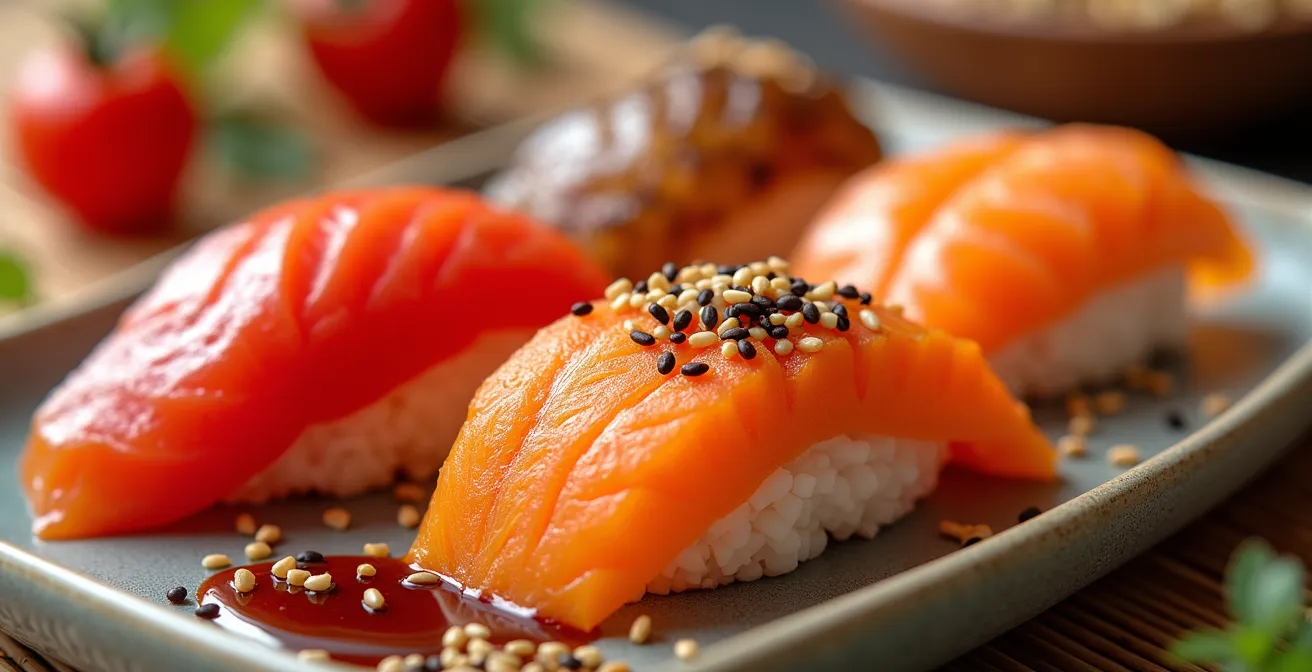
These are not the mushy veggie burgers of the past. The focus is squarely on mouthfeel—the slip of sashimi, the firmness of nigiri. The goal is to create an experience so convincing that it satisfies the craving for traditional sushi. While some purists may scoff, this field represents a vital frontier for sustainability. It offers a way to completely decouple our love for sushi from the pressures on marine ecosystems. The versatility of these plant-based ingredients is impressive, offering a wide palette for creative sushi chefs.
- Tomato-based alternatives: Best for creating a convincing tuna-like texture and appearance for nigiri, especially after marination.
- Konjac preparations: Ideal for mimicking the firm, slightly chewy texture of squid or cuttlefish in maki rolls.
- Smoked carrot: Sliced thinly, it serves as an excellent visual and textural substitute for smoked salmon in classic rolls.
- Marinated eggplant: When cooked and glazed, it provides a rich, savory alternative for unagi-style preparations.
- Cured watermelon: A surprising but effective option for creating a raw tuna-like appearance and texture for sashimi presentations.
As these products become more sophisticated and widely available, they present a powerful solution: all of the flavor and ritual of a sushi meal, with none of the ecological guilt.
Bluefin or Bigeye: Which Tuna Choice Supports Ocean Health Better?
For those who still choose to eat tuna, navigating the menu can feel like a high-stakes test. Understanding the differences between species is crucial, as their population health and the methods used to catch them vary wildly. The choice is often not as simple as “tuna,” but a specific decision between options like Bluefin, Bigeye, Yellowfin, and Albacore. As we’ve established, all Bluefin should be off the table. The choice then falls to other species, but even here, the answer is complex.
Bigeye tuna is often considered a premium product, but it is heavily overfished in many regions. It is frequently caught using destructive longlines that result in high levels of bycatch. Yellowfin can be a better option, but only if it’s caught using responsible methods like pole-and-line or trolling, which are highly selective. The most consistently sustainable choices are typically Albacore and Skipjack tuna, especially those caught by pole-and-line in well-managed fisheries. These smaller, faster-reproducing species can better withstand fishing pressure.
The challenge for consumers is that this level of detail is rarely offered on a menu. The tragic reality is that truly sustainable options are the exception, not the rule. According to some industry experts, it’s estimated that only about 1% of all sushi restaurants serve sustainably fished tuna. This sobering statistic highlights the urgent need for systemic change, but also the power of consumer demand. When customers consistently ask for sustainable options, it sends a clear market signal.
Case Study: Bamboo Sushi’s Sustainable Tuna Sourcing
Proving that it can be done, Bamboo Sushi became the world’s first certified sustainable sushi restaurant chain. Their model is built on radical transparency and unwavering commitment. They refuse to serve any Bluefin species. Their other tuna is sourced exclusively from specific, well-managed fisheries in places like Hawaii and the Philippines where selective pole-and-line or handline methods are used. They see their menu as an educational tool, actively teaching customers about the differences between tuna species and why their sourcing policies are so crucial for ocean health. Bamboo Sushi’s success demonstrates that a profitable business model can be built on a foundation of true sustainability.
Until sustainable sourcing becomes the norm, the most powerful tool a diner has is the question: “Do you know what kind of tuna this is and how it was caught?”
What Does ‘Sashimi-Grade’ Actually Mean Legally in Your Country?
Of all the terms used to sell fish, “sushi-grade” or “sashimi-grade” might be the most reassuring—and the most misleading. It conjures images of pristine, top-quality fish handled with surgical precision. The truth is that in many countries, including the United States, this term has no legal or regulatory definition. It is a pure marketing invention used by suppliers to denote what they consider their highest quality fish, suitable for raw consumption.
This lack of regulation creates a significant gap between consumer perception and reality. While a reputable fishmonger will use the term to identify their freshest and best-handled fish, a less scrupulous one can slap it on any piece of fish they want to move. There is no government body like the FDA or USDA inspecting and certifying fish as “sashimi-grade.” As one guide on the topic clearly states:
Sushi grade fish and sashimi grade fish are marketing terms created to identify supposedly high-grade fish that can be eaten raw, but are not tied to any actual rules set by a governmental body
– FDA Guidelines Analysis, All About Sushi Guide
So, what actually matters for safety? The key regulations for fish intended for raw consumption concern freezing to kill parasites. The FDA has very specific guidelines requiring fish to be frozen at extremely low temperatures for a set duration. This is the critical safety step, not a vague marketing label. Any establishment serving raw fish should be following these protocols meticulously. This is far more important than whether the fish was labeled “sashimi-grade” by the distributor.
This means the responsibility falls back on the consumer to become an investigator. When buying fish to prepare sushi at home, or even when questioning a restaurant, you need to ask the right questions. Don’t ask “Is this sushi-grade?” Instead, ask: “Was this fish frozen according to FDA guidelines for parasite destruction?” and “When was it caught and how has it been handled?” Your safety depends on proper handling and freezing, not on a meaningless marketing term.
Trust in your senses—fresh fish should smell clean like the ocean, not “fishy”—and trust in a supplier who can give you specific, transparent answers about their handling processes.
Key Takeaways
- True sustainability requires moving beyond simple rules and understanding the complex, dynamic systems behind seafood.
- The most responsible choice often depends on specific details: the ocean a fish came from, the method used to farm it, or the way it was caught.
- Culinary innovation, from eating invasive species to embracing plant-based alternatives, offers powerful and positive solutions to ecological problems.
Is the ‘California Roll’ Considered Authentic Sushi Evolution or Distortion?
For many sushi purists, the California roll—with its inside-out construction, avocado, and imitation crab—is the ultimate symbol of Western distortion. It’s often dismissed as “inauthentic” or “beginner’s sushi.” But viewed through the lens of sustainability and culinary evolution, this humble roll can be seen in a completely different light: as a landmark of sustainable innovation.
The roll was created in the 1960s or 70s to appeal to an American palate not yet accustomed to raw fish or seaweed. The key ingredient, imitation crab (or ‘kamaboko’), is typically made from surimi, a paste created from Alaskan pollock. This is where the sustainability story gets interesting. Alaskan pollock is one of the most well-managed and abundant fish stocks in the world. The species is fast-growing and reproduces at a young age, making it incredibly resilient to fishing pressure. By replacing expensive and often overfished toro (fatty tuna) with a super-sustainable alternative, the California roll became an accidental masterpiece of eco-conscious design.
Case Study: The California Roll as Sustainable Innovation
The widespread adoption of the California roll demonstrates a powerful principle: culinary evolution can be a driver of sustainability. The roll’s use of imitation crab, made from highly sustainable Alaskan pollock, and avocado, a plant-based fat, provided a delicious and affordable alternative to toro. This innovation didn’t just create a popular dish; it unknowingly created a pathway to reduce pressure on severely threatened Bluefin tuna populations. It shows that moving away from traditional ingredients is not necessarily a corruption of the cuisine, but can be a necessary and creative adaptation to modern ecological realities.
This perspective challenges our rigid notions of authenticity. As Chef Bun Lai, a champion of sustainable sushi, argues, the idea of a static, “authentic” cuisine is a myth. Food is in a constant state of evolution, adapting to new ingredients, cultures, and environmental constraints.
Food has been evolving since the beginning of time. Most of the popular ingredients that we eat today and think of as sushi weren’t considered ingredients for sushi thousands of years ago anyway
– Chef Bun Lai, Miya’s Restaurant, New Haven
The California roll, therefore, isn’t a distortion. It’s a powerful example of how sushi can adapt and thrive, becoming more resilient and responsible in the process. It invites us to celebrate the next wave of innovation, whether it comes from invasive species, plant-based proteins, or other creative solutions we haven’t yet imagined.
Frequently Asked Questions About How to Eat Sushi Responsibly
Is ‘sashimi-grade’ a regulated term in the US?
No, ‘sashimi-grade’ is an unregulated marketing term with no official FDA standards. It is used by vendors to indicate what they consider their highest quality fish suitable for raw consumption, but it is not a guarantee of safety or quality backed by any governmental body.
What are the actual FDA requirements for raw fish?
The FDA’s primary concern is the destruction of parasites. Their guidelines mandate freezing fish at one of the following temperatures and durations: at -4°F (-20°C) for 7 days; at -31°F (-35°C) until solid and then stored for 15 hours; or frozen at -31°F and then stored at -4°F for 24 hours.
What questions should I ask my fishmonger?
Instead of asking if a fish is “sushi-grade,” ask more specific questions like: “When was this fish caught?”, “Was it frozen to FDA guidelines to kill parasites?”, “Can I see the whole fish to check for freshness cues like clear eyes and red gills?”, and “How was the fish handled after it was caught?”