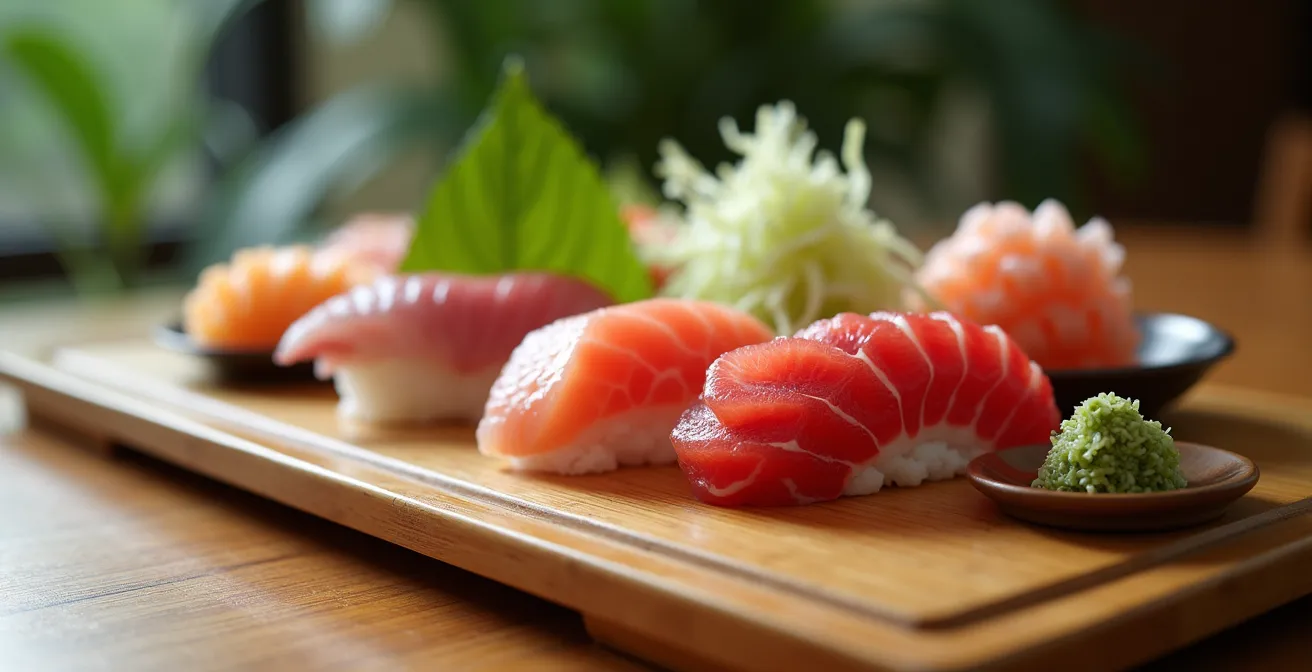
Contrary to popular practice, the goal of sashimi accompaniments is not to add flavor, but to selectively reveal the fish’s own inherent purity and texture.
- The molecular structure of the fish, or its cellular integrity, is the source of all flavor and must be preserved through precise, single-stroke cuts.
- Garnishes like wasabi and daikon are not for flavor but are functional tools: wasabi’s volatile pungency cuts fat, while daikon’s enzymes aid digestion.
Recommendation: Approach your next sashimi platter as a sensory progression. Start with lighter fish, using only a hint of citrus or salt, and observe how each element interacts with and enhances the raw ingredient.
The image is a familiar one: a beautiful slice of raw fish, plunged into a murky pool of soy sauce and wasabi, its delicate character completely overwhelmed. For many, this is the default way to eat sashimi. The common advice revolves around simple rules—don’t mix the wasabi in the soy sauce, use ginger between bites—but these are merely surface-level instructions. They address the “how” but completely miss the “why.” This approach, focused on addition, fundamentally misunderstands the philosophy at the heart of exceptional sashimi.
True appreciation is not born from what you add, but from what you subtract. The purist’s journey into the world of sashimi is a practice in minimalism. It is an exploration of the ingredient in its most essential state. This requires moving beyond the crutch of heavy sauces and instead learning to use each element on the plate as a precise tool. The goal is not to mask, but to unveil. It’s about understanding the subtle dialogue between the blade and the flesh, the fleeting chemical reaction of a condiment, and the curated sequence that guides the palate from simple to complex.
The key lies in a shift in perspective. What if the shredded daikon wasn’t just decoration? What if the thickness of the cut was a deliberate choice to alter the entire mouthfeel? This guide is not another list of rules. It is an invitation to understand the principles of texture, flavor, and sensory progression that allow the fish itself to be the hero. We will explore how to preserve the fish’s cellular integrity, why the order of consumption matters, and how subtle techniques can amplify umami far better than any sauce ever could.
This article provides a structured path to understanding this minimalist philosophy. Each section unpacks a specific element of the sashimi experience, revealing the intention behind the tradition and empowering you to taste fish in its purest form.
Summary: Appreciating the Art and Science of Pure Sashimi
- Why Is Shredded Daikon Served With Sashimi and Should You Eat It?
- How Much Wasabi Is Needed to Cut Through the Fat of O-Toro?
- Thick Slice or Paper Thin: Which Cut Best Suits White Fish Texture?
- The Dipping Mistake That Masks the Delicate Flavor of Flounder
- Why You Should Eat Lean Tuna Before Fatty Tuna in a Sashimi Platter?
- Raw vs. Cooked: Which Form of Fish Oil Is Better Absorbed by the Body?
- Kombu Curing or Soy Marination: Which Technique Best Suits White Fish?
- Why Sawing Your Fish Destroys the Texture and Flavor Profile?
Why Is Shredded Daikon Served With Sashimi and Should You Eat It?
The delicate, snow-like pile of shredded daikon radish, or tsuma, is far more than a decorative bed for sashimi. It is a functional component designed to be eaten with the fish. Its primary role is digestive. Raw daikon contains powerful enzymes like amylase, protease, and lipase, which actively help the body break down the complex proteins and fats found in raw fish. This makes the meal lighter and easier to process, embodying the Japanese principle of creating food that is both delicious and harmonious with the body.
This enzymatic benefit is incredibly time-sensitive. The delicate structures that hold these enzymes are fragile, and according to research on enzyme preservation, up to 50% of daikon’s digestive enzymes can be lost within just 30 minutes of grating. This is why freshly prepared daikon is crucial; the crisp, slightly peppery radish you eat at a high-quality sushiya is at its peak of enzymatic potency, a benefit lost in pre-packaged preparations. Its crystalline texture also provides a refreshing contrast to the richness of the fish.
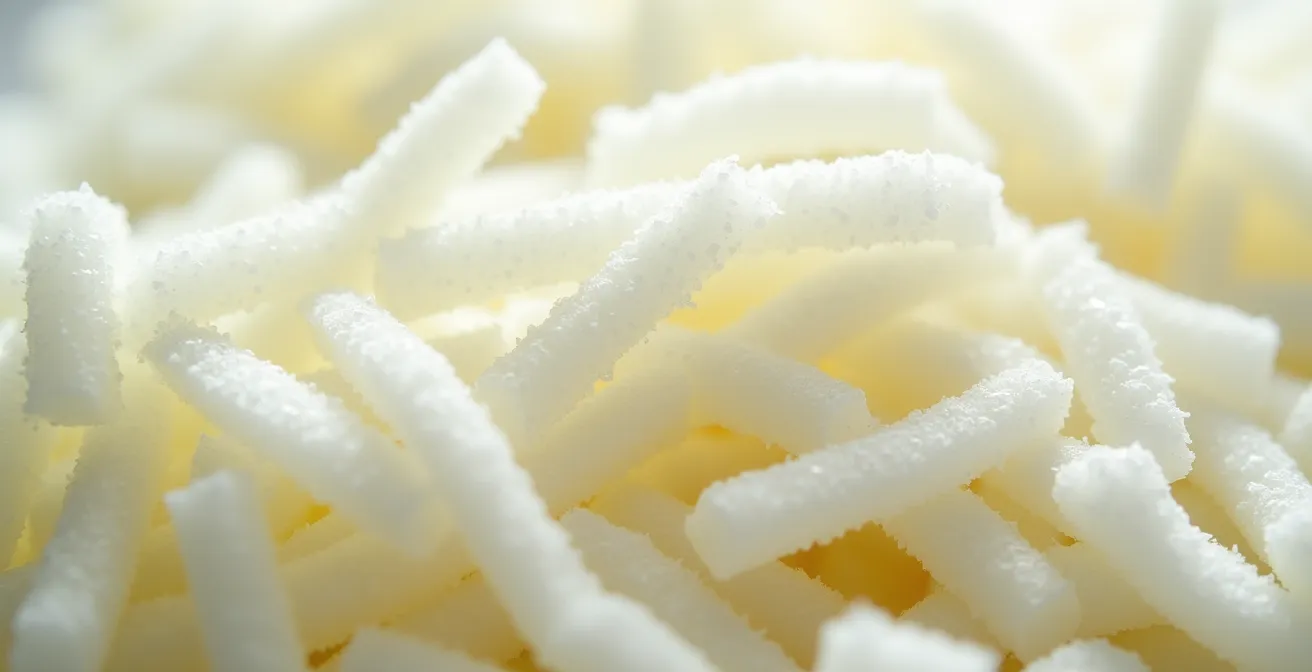
Beyond digestion, the daikon acts as a mild palate cleanser. A small bite between different types of fish can reset your taste buds without the overpowering intensity of pickled ginger (gari), which should be reserved for more significant transitions. Think of the daikon as a gentle refresh, allowing you to fully appreciate the subtle nuances of the next piece of fish. To eat it, simply take a few strands with your chopsticks and enjoy them alongside a slice of sashimi.
How Much Wasabi Is Needed to Cut Through the Fat of O-Toro?
The relationship between wasabi and fatty fish like o-toro (fatty tuna belly) is a matter of chemistry, not just taste. The goal isn’t to create a searing heat but to use wasabi’s unique properties to cut through the richness of the fat, cleansing the palate for the next bite. The pungent, stimulating sensation of real wasabi comes from a volatile compound called allyl isothiocyanate. This compound is only created when the plant’s cells are ruptured by grating, triggering an enzymatic reaction.
The chemical in wasabi that provides its initial pungency is the volatile compound allyl isothiocyanate, which is produced by hydrolysis of allyl glucosinolate… the hydrolysis reaction is catalyzed by myrosinase and occurs when the enzyme is released on cell rupture caused by partial maceration – e.g., grating – of the plant.
– Wikipedia contributors, Wasabi – Chemical properties
This “volatile pungency” is key. Unlike the lingering burn of chili peppers, the kick from wasabi is fleeting, traveling up through the nasal passages and disappearing quickly. This allows it to slice through the oils of the o-toro without destroying the fish’s delicate umami. The amount needed is minimal—a tiny dab, about the size of a small pea, placed directly on the fish. This ensures the wasabi’s effect is immediate and targeted. Furthermore, chemical analysis reveals that authentic wasabi contains 10% more total isothiocyanates than its common substitute, horseradish, making its effect cleaner and more potent.
Drowning the fish or mixing a large amount of wasabi into soy sauce is a mistake. It dilutes the enzymatic reaction and creates a muddy, one-dimensional saltiness that completely masks the nuanced, buttery flavor of the o-toro. The proper technique respects the ingredients: a small amount of wasabi on the fish, followed by the briefest dip in soy sauce. It is a precise application for a specific chemical effect.
Thick Slice or Paper Thin: Which Cut Best Suits White Fish Texture?
The thickness of a sashimi slice is not arbitrary; it is a deliberate choice made by the chef to create a specific “textural dialogue” with the fish’s muscle structure. The cut determines how the fish feels in the mouth and how its flavor is released. Different types of fish demand different cuts to showcase their best qualities. For delicate, firm-fleshed white fish like flounder (hirame) or sea bream (tai), a paper-thin slice is superior.
This technique, known as usu-zukuri (thin slice), involves cutting the fish into nearly translucent slices, often arranged in a chrysanthemum pattern. The thinness serves two purposes. First, it makes the firm, sometimes chewy texture of these fish more tender and pleasant to eat. A thick slice of flounder could feel tough, but a thin one melts on the tongue. Second, it increases the surface area of the fish that comes into contact with the palate, allowing its subtle, clean, and slightly sweet flavor to be perceived more fully. It’s a cut that prioritizes elegance and nuance.
Conversely, richer, softer fish like tuna or salmon benefit from a thick, bold cut called hira-zukuri (rectangular slice). This substantial, 10mm-thick piece allows the diner to appreciate the full, buttery texture and rich flavor profile of the fish. A paper-thin slice of fatty tuna would simply disintegrate and lose its satisfying mouthfeel. The following table illustrates how different cuts are matched to different fish to optimize the eating experience.
| Cutting Style | Thickness | Best For | Technique |
|---|---|---|---|
| Hira-zukuri | 10mm thick | Tuna, Salmon | Straight down cut |
| Usu-zukuri | 2-3mm paper-thin | Flounder, Sea Bream | Diagonal angle cut |
| Sogi-zukuri | 5-7mm medium | White fish | 40° angle cut |
The Dipping Mistake That Masks the Delicate Flavor of Flounder
The most common error in eating delicate white fish like flounder (hirame) is drenching it in traditional dark soy sauce (koikuchi shoyu). This is a fatal mistake that completely obliterates the subtle, clean, and elegant flavor of the fish. Flounder’s taste is nuanced and slightly sweet, with a firm texture that is best appreciated with minimal intervention. Overpowering it with the high sodium and strong fermented flavor of regular soy sauce is akin to shouting over a whisper.
The purist’s approach is one of subtraction and precision. Instead of a deep dip, the goal is to add just enough of a complementary element to enhance, not mask. A chef’s delicate placement of a single drop of citrus is the ideal. For a health-conscious diner seeking to avoid sodium, there are several superior alternatives that respect the fish’s integrity.
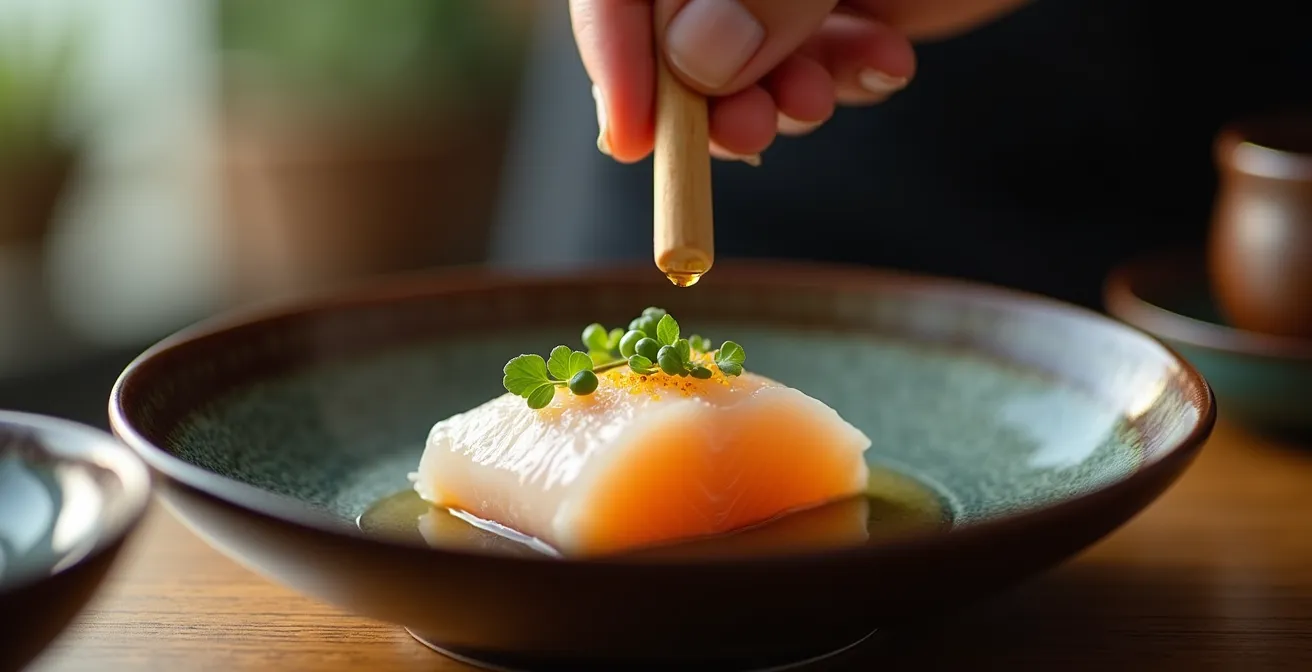
The correct method is to apply seasoning with surgical precision. Rather than dipping, consider these minimalist techniques that amplify the flounder’s natural character:
- Use ponzu, a citrus-based sauce, which offers a bright acidity that complements the fish without the heavy saltiness of soy.
- Apply just a few grains of high-quality sea salt (shio) directly onto a corner of the fish to provide a clean, mineral accent.
- Try a single drop of sudachi or yuzu juice for a fragrant citrus lift that enhances the fish’s natural sweetness.
- If soy sauce is desired, opt for white soy sauce (shiro shoyu), which is lighter in color and flavor, adding umami without overwhelming the fish.
- When dipping, touch only the very edge or corner of the slice to the sauce, never submerging the entire piece.
Action Plan: Seasoning Delicate Fish with Precision
- Identify the fish: Is it a delicate white fish (flounder, sea bream) or a rich, fatty fish (tuna, salmon)?
- Select the right agent: For white fish, choose ponzu, high-quality salt, or a drop of citrus. For fatty fish, a light touch of soy sauce is appropriate.
- Apply, don’t dip: Place a tiny amount of wasabi or a few grains of salt directly on the fish. Touch only the corner of the fish to the liquid.
- Assess the flavor: Notice how the minimal seasoning enhances the fish’s natural taste and texture rather than masking it.
- Adjust for the next piece: Based on the experience, decide if even less seasoning is needed to achieve the perfect balance.
Why You Should Eat Lean Tuna Before Fatty Tuna in a Sashimi Platter?
The order in which you eat sashimi is not a matter of arbitrary etiquette; it is a carefully considered sensory progression designed to maximize the palate’s ability to perceive flavor. The guiding principle is to move from light to heavy, from subtle to rich. Starting with a powerful, fatty fish like o-toro would overwhelm your taste buds, coating them in rich oils and making it impossible to appreciate the delicate nuances of lighter fish that follow. This is why sashimi is traditionally served at the beginning of a formal meal.
Japanese chefs consider sashimi the finest dish in Japanese formal dining and recommend that it be eaten before other strong flavors affect the palate.
– Wikipedia contributors, Sashimi – Japanese dining etiquette
When presented with a platter featuring various cuts of tuna, the progression is clear. You should always begin with the leanest cut and work your way up to the fattiest. The classic bluefin tuna “triumvirate” provides a perfect example of this journey:
- Akami (Lean Tuna): This is the deep red, meaty part of the tuna. It has a firm texture and a clean, pure taste of the fish with a subtle, underlying umami. It prepares the palate without overwhelming it.
- Chutoro (Medium Fatty Tuna): This cut, from the belly and back, offers a perfect balance. It is a harmonious blend of the meaty texture of akami and the rich, buttery fat of o-toro. It serves as the bridge in your sensory journey.
- Otoro (Fatty Tuna): This is the grand finale. The most prized cut from the underside of the belly, o-toro is intensely marbled with fat. It has a rich, decadent flavor and a melt-in-your-mouth texture that coats the palate. Eating it last is essential, as its powerful profile would numb the taste buds to anything that came before it.
This progression is a deliberate narrative for your palate. Each step builds upon the last, allowing for the full appreciation of each distinct cut. To do otherwise would be to miss the story the chef is trying to tell.
Raw vs. Cooked: Which Form of Fish Oil Is Better Absorbed by the Body?
From a health perspective, one of the primary benefits of consuming fish is its rich content of Omega-3 fatty acids and other vital nutrients. When it comes to absorption, consuming fish in its raw form, as sashimi, offers a distinct advantage. The key lies in the presence of natural, heat-sensitive enzymes within the fish itself. These enzymes, which are part of the fish’s biological makeup, can aid our own digestive process, but they are extremely fragile.
Heat is the enemy of these delicate structures. As studies on enzyme preservation demonstrate, digestive enzymes in raw preparations are destroyed at temperatures above 42°C (107°F). When fish is cooked, whether by grilling, pan-searing, or baking, these beneficial enzymes are denatured and rendered inactive. The fish oil and nutrients are still present, but your body has to work harder to break them down and absorb them without the assistance of the fish’s own enzymatic toolkit. Consuming fish raw preserves this natural synergy.
This is where the traditional accompaniments for sashimi, like grated daikon, play a crucial role. The daikon provides its own set of digestive enzymes—protease for protein and lipase for fats—which work in concert with the enzymes in the raw fish. This concept of food synergy, where components of a meal work together to enhance nutritional uptake, is a cornerstone of traditional Japanese cuisine. The combination of raw fish and raw daikon creates a digestive powerhouse, ensuring the body can more easily and efficiently absorb the beneficial oils and proteins.
Therefore, while cooked fish is still a healthy choice, the oils and nutrients from raw fish are arguably more bioavailable. The body can assimilate them with greater ease, thanks to the preserved ecosystem of enzymes in both the fish and its traditional raw accompaniments.
Kombu Curing or Soy Marination: Which Technique Best Suits White Fish?
For a purist, enhancing the flavor of sashimi is a delicate art of subtraction, not addition. Two traditional techniques, Kombu-jime and Zuke, exemplify this philosophy, but they serve very different purposes and are suited to different types of fish. For delicate white fish, Kombu-jime is the far superior method as it aligns with the goal of amplifying the fish’s own flavor.
Kombu-jime is a technique where slices of fish, typically white fish like sea bream or flounder, are sandwiched between sheets of dried kelp (kombu) and left to cure for a few hours. The kombu does two things: it draws out excess moisture from the fish, firming up its texture and making it silkier. More importantly, it infuses the fish with a deep, natural umami from the glutamic acid present in the kelp. This process doesn’t add an external flavor; it acts as a catalyst, intensifying the fish’s own inherent savory character. It is the epitome of enhancement through subtraction.
Zuke, on the other hand, is a marination technique, most often used for leaner, red-fleshed fish like akami tuna. The fish is briefly soaked in a mixture of soy sauce, mirin, and sake. This method was originally developed as a means of preservation in the days before refrigeration. While it does tenderize the fish, its primary function is to impart the flavor of the marinade onto the fish. It is a technique of addition, which, while delicious, masks the pure taste of the ingredient. The following table breaks down the core differences.
| Technique | Philosophy | Best For | Effect on Texture | Flavor Impact |
|---|---|---|---|---|
| Kombu-jime | Enhancing natural flavor | Sea bream, flounder | Firmer, silkier | Amplifies umami |
| Zuke (soy marination) | Adding external flavor | Lean tuna, bonito | Tender, slightly sticky | Adds soy profile |
Every fish is different, and there are no universal techniques for any fish.
– Japan Experience Editorial, The Art of Sashimi
Key Takeaways
- Respect the Ingredient: The goal is to enhance, not mask. Use sauces and condiments with extreme moderation.
- Mind the Progression: Always eat sashimi in order from lightest to richest to allow your palate to appreciate each nuance.
- Technique is Everything: The cut of the fish and the way it is prepared are just as important as the ingredient itself, as they define texture and flavor release.
Why Sawing Your Fish Destroys the Texture and Flavor Profile?
The single most important element in preparing sashimi, before any garnish or sauce is even considered, is the cut. The difference between a sublime, melt-in-your-mouth slice and a mushy, flavorless piece lies in the preservation of its cellular integrity. When a chef uses a sawing motion or a dull knife, the blade tears and shreds the fish’s delicate muscle fibers at a microscopic level. This action ruptures the cell walls, causing them to release their flavorful juices and umami compounds prematurely, leaving the fish with a compromised texture and a dull taste.
To prevent this, Japanese chefs use a specialized knife called a yanagiba. This long, slender, single-edged blade is designed for one purpose: to slice through fish in a single, long, and uninterrupted pulling motion. There is no back-and-forth sawing. The length of the blade allows the cut to be completed in one fluid stroke, from heel to tip. This clean slice passes between the cells rather than crushing them, keeping their structure intact. This is the secret to a perfect slice of sashimi—one that retains its moisture, its firm yet tender texture, and its full, clean flavor.
The key to cutting sashimi is to keep the fish cells intact as much as possible. This means you should always cut against the grain for more tender slices. By doing so, you make the connective tissues shorter, resulting in a better texture.
– Yakushi Knives Editorial, How to Cut Sashimi: A Step-by-Step Guide
This principle of preserving cellular integrity is the foundation upon which all other aspects of the sashimi experience are built. Without a clean cut, the natural quality of even the most expensive fish is lost. It is a profound demonstration of respect for the ingredient, where the chef’s skill with the blade is paramount. The perfect texture you feel in your mouth is a direct result of this microscopic-level preservation.
By adopting this minimalist and mindful approach, you transform the act of eating sashimi from a simple meal into a refined sensory experience. It is an act of tasting with intention, of appreciating the chef’s skill, and, above all, of honoring the pure, unadulterated essence of the fish. The next time a platter of sashimi is placed before you, resist the urge to immediately reach for the soy sauce. Instead, take a moment. Observe the cut, note the progression, and begin your journey by tasting the fish in its most honest form.