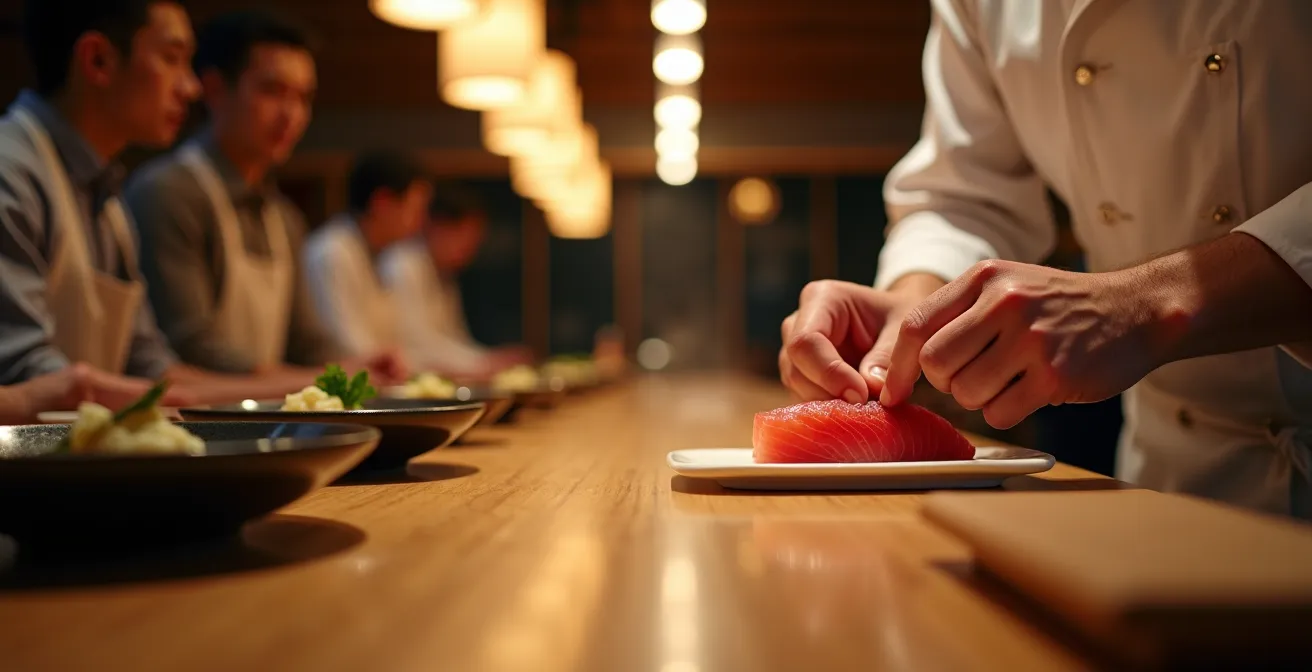
The $300 price tag for a sushi dinner is not merely for fresh fish; it is the price of admission into a meticulously constructed global system of value, narrative, and artistry.
- Economic scarcity, driven by both auction theater and strict fishing quotas, transforms rare ingredients like Oma tuna into luxury assets.
- Western cultural validation, led by institutions like the Michelin Guide, elevated the humble sushi counter to a stage for high art, justifying premium pricing.
Recommendation: When assessing a high-end sushi experience, look beyond gimmicks like gold flakes and evaluate the authenticity of its three core pillars: ingredient provenance, the chef’s narrative skill, and the integrity of the cooking techniques.
The quiet reverence of an eight-seat counter, the swift, practiced movements of the itamae, the presentation of a single, perfect piece of nigiri—the modern high-end sushi experience feels worlds away from its origins as a humble street food. The journey from a quick, preserved snack to a multi-hundred-dollar gastronomic ritual is a story often simplified to “fresh fish” and “skilled chefs.” But this explanation misses the point entirely. The true value is not just in the product, but in a complex architecture of economics, culture, and storytelling that has been built over decades.
While many discussions focus on the obvious markers of quality, they fail to dissect the underlying systems that manufacture desire and justify the cost. We will move beyond the surface-level platitudes to explore the convergence of factors—from the theater of the Toyosu fish auction to the global influence of a French tire company—that created this billion-dollar industry. This is not just about food; it’s about the codification of an art form and the economics of authenticity. Understanding this framework is the key to appreciating why a meal can be valued as highly as a work of art, and how to discern true value from pure spectacle.
This article deconstructs the key pillars that support sushi’s elite status. We will examine the ingredients, the institutions, the experience, and the economics that work in concert to create its profound value proposition. Prepare to look at that slice of tuna in a whole new light.
Summary: The Anatomy of a Luxury Sushi Experience
- Why Does a Single Slice of Oma Tuna Cost More Than a Steak Dinner?
- How Did the Michelin Guide Change Global Standards for Sushi Restaurants?
- Kaiseki or Omakase: Which Fine Dining Style Offers More Variety?
- The Gold Flake Trap: When Does Luxury Decor Ruin the Sushi’s Flavor?
- What Is the Next High-End Trend After the ‘Omakase Boom’ Fades?
- How Much Does It Cost to Fly Bluefin Tuna from Toyosu to JFK?
- Street Stall vs. Michelin Star: How Did Sushi Change Its Social Status?
- Why Does Omakase Cost 40% More in New York Than in Tokyo?
Why Does a Single Slice of Oma Tuna Cost More Than a Steak Dinner?
The economics of a high-end sushi meal begin long before the fish reaches the chef’s knife; they begin in the frigid waters off the coast of Japan and culminate in the high-stakes theater of the Toyosu Fish Market. Here, the concept of value is defined by a powerful combination of natural rarity and manufactured scarcity. The bluefin tuna from Oma, often called the “black diamonds” of the sea, is the ultimate example. These fish are prized for their high fat content, developed from feeding on rich squid and saury in the Tsugaru Strait. This quality is palpable in the intricate marbling, or shimofuri, which melts on the tongue.
This natural quality is then amplified by an economic system. At the annual New Year’s auction, a single fish can become a national news story. A recent auction saw a staggering $3.2 million for a 535-pound bluefin tuna, a price driven by publicity and prestige as much as by taste. As the 73-year-old fisherman who caught a previous record-holder exclaimed, “It was as fat as a cow. It’s like a dream.” This auction system creates a powerful anchor price, setting a benchmark for what the absolute best is “worth.”
Furthermore, this is compounded by strict international fishing quotas. Even when populations recover, Total Allowable Catch (TAC) limits create an artificial scarcity. This ensures that even for a regular, non-record-breaking fish, the supply is perpetually constrained while global demand from high-end restaurants continues to rise. Therefore, that single slice of o-toro on your plate carries the weight of ecological limits, auction-house drama, and a reputation that positions it as an edible luxury asset, far surpassing the commodity status of a steak.
How Did the Michelin Guide Change Global Standards for Sushi Restaurants?
If Oma tuna represents value through scarcity, the Michelin Guide represents value through cultural validation. For decades, sushi existed within its own ecosystem of quality, understood by Japanese diners and chefs. It took an external, authoritative Western voice to translate this craft into a language of luxury the entire world could understand. When Sukiyabashi Jiro became the first-ever sushi-only restaurant to receive three Michelin stars, it was a seismic event. The guide, traditionally focused on French haute cuisine, was officially declaring that a humble, 20-minute meal at a 10-seat counter in a Tokyo subway station was gastronomically equivalent to a multi-course tasting menu in a Parisian palace.
This validation created a global benchmark. Suddenly, aspiring itamae had a new pinnacle to strive for, and diners had a new lens through which to evaluate their experience. The Michelin star became a universal symbol of excellence that transcended cultural barriers, justifying premium price points to an international clientele. It shifted the focus from just the food to the entire performance: the serene environment, the precision of the service, and the almost spiritual dedication of the chef, or shokunin.
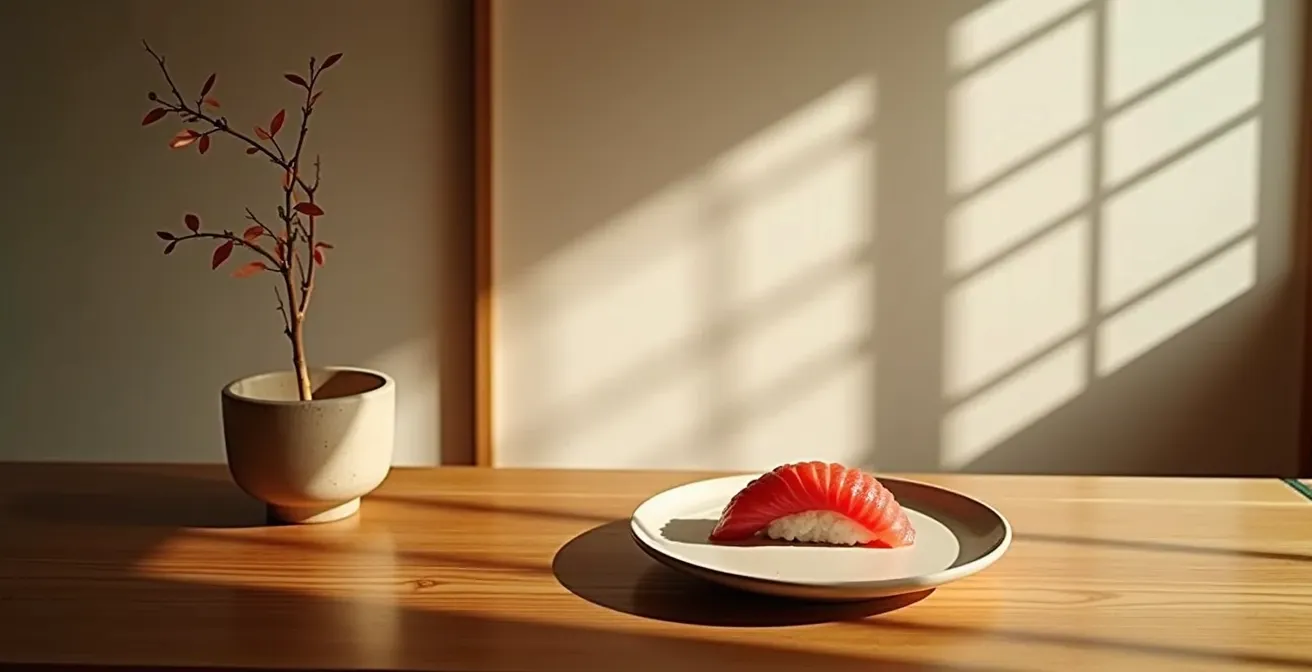
As the image above illustrates, the aesthetic of high-end sushi is often one of profound minimalism, an expression of the Japanese wabi-sabi philosophy—finding beauty in imperfection and simplicity. The Michelin Guide’s recognition helped frame this aesthetic not as a lack of opulence, but as a deliberate and sophisticated form of luxury in itself. It taught a global audience to see the unadorned hinoki wood counter and the simple ceramic plate as markers of an elevated experience, cementing the idea that in the world of high-end sushi, less is indeed more.
Kaiseki or Omakase: Which Fine Dining Style Offers More Variety?
Once inside a top-tier Japanese restaurant, the price is further justified by the chosen narrative format of the meal. The two dominant styles, Kaiseki and Omakase, offer profoundly different experiences, and understanding this difference is key to appreciating their value. While both are multi-course tasting menus, they tell very different stories. Omakase, which translates to “I leave it up to you,” is a hyper-focused dialogue between the diner and the sushi chef. It is a linear journey, primarily showcasing one discipline: the art of raw fish, rice, and seasoning. The variety comes from the progression of fish, moving from lighter whitefish to richer, fattier cuts, each piece building on the last.
Kaiseki, on the other hand, is a much broader, more symphonic expression of a season. It is less a dialogue with one artist and more a curated exhibition of the kitchen’s full capabilities. A kaiseki meal is a seasonal “anthology of short stories,” featuring a wide array of cooking techniques—grilling (yakimono), simmering (nimono), frying (agemono), and steaming (mushimono)—in addition to a raw fish course (sashimi). The variety is explicit and structural, designed to showcase different textures, temperatures, and flavors.
This table, based on a comparative analysis of Japanese dining formats, breaks down the fundamental differences in their narrative structure.
| Aspect | Omakase | Kaiseki |
|---|---|---|
| Narrative Style | Linear ‘novel’ about the sea | Seasonal ‘anthology’ of stories |
| Chef Role | Single artist/performer | Director orchestrating multiple acts |
| Interaction | Intimate counter performance | Formal, detached service |
| Focus | Singular mastery of sushi | Variety of cooking techniques |
| Price Range | $300-500 per person | $200-400 per person |
Ultimately, Kaiseki offers more variety in terms of cooking methods and ingredients. However, the premium price of omakase is justified by its depth, not its breadth. It offers an unparalleled, intimate performance centered on a singular, masterfully executed craft, making it a different, and often more expensive, kind of luxury.
The Gold Flake Trap: When Does Luxury Decor Ruin the Sushi’s Flavor?
As sushi’s price point ascended into the stratosphere, an inevitable tension emerged between authentic luxury and gimmicky spectacle. The “gold flake trap” is a perfect metaphor for this conflict. True high-end sushi is an exercise in sensory economics, where every element should enhance the central flavor of the fish and rice. An authentic luxury might be a specific type of aged soy sauce that deepens the umami of a particular fish, or freshly grated wasabi whose sharp fragrance complements the fat of o-toro. These are additions that serve the taste.
In contrast, gimmicky luxury often serves the eye (and the Instagram feed) at the expense of the palate. Gold leaf, while visually opulent, has no flavor and can interfere with the delicate texture of the fish. Similarly, truffle oil, a powerful and often synthetic aromatic, can completely overwhelm the nuanced notes of the seafood it is meant to accompany. These additions prioritize spectacle over substance, shifting the experience away from a refined culinary art and toward a display of wealth. The moment a luxury decoration detracts from or masks the core flavor, it has failed its purpose and crossed into the realm of gimmickry.
Distinguishing between these two can be challenging. The following checklist helps identify markers of genuine quality versus superficial flash.
Action Plan: Identifying Authentic vs. Gimmicky Luxury in Sushi
- Ingredient Focus: Does the “luxury” addition enhance the fish (e.g., a rare citrus, a specific sea salt) or distract from it (e.g., gold, excessive sauce)?
- Chef’s Explanation: Can the chef articulate a clear flavor-based reason for the addition, or is it simply described as “luxurious”?
- Balance of Flavors: Is every flavor on the plate discernible and purposeful, or does one powerful ingredient like truffle oil dominate everything?
- Aesthetic vs. Function: Does the presentation serve to highlight the quality of the fish, or does it obscure it under a pile of toppings like excessive caviar?
- Core Components: Is the rice perfectly seasoned and textured, and is the fish impeccably fresh? No amount of luxury topping can save a meal if these fundamentals are flawed.
In the end, the most luxurious sushi experiences are often the most restrained. They demonstrate a confidence in the quality of their core ingredients, refusing to hide them behind tasteless or overpowering decorations.
What Is the Next High-End Trend After the ‘Omakase Boom’ Fades?
The global “omakase boom” has standardized the high-end sushi experience, but like all trends, it will evolve. The future of luxury sushi appears to be moving away from the standardized tasting menu and toward hyper-specialization and sustainability. As diners become more educated, they seek deeper, more unique experiences that go beyond the familiar progression of tuna, salmon, and yellowtail. This has given rise to a new generation of chefs who are dedicating their careers to a single, niche technique.
One of the most significant emerging trends is jukusei, or aged sushi. This centuries-old technique, once rare, is being revived and refined by modern masters. By carefully controlling temperature and humidity, chefs can age fish for days or even weeks. This process breaks down proteins into amino acids, intensifying the umami flavor and creating a richer, more tender texture. A chef specializing in jukusei offers a completely different flavor landscape, transforming familiar fish into something new and profound. This is no longer just about freshness; it’s about controlled transformation.
This move toward specialization is paralleled by a growing emphasis on sustainability as the new ultimate luxury. With concerns over overfishing, the provenance of seafood has become a critical part of the narrative. In the US, for example, a 2.2 million pound catch limit was set for Pacific bluefin, reflecting a global push to manage stocks. Restaurants that champion lesser-known, local, or sustainably-farmed fish are building a new kind of prestige. The story is no longer just “this is the rarest fish,” but “this is the most responsibly sourced fish.” This ethical dimension adds a new layer of value for the conscientious high-net-worth consumer, suggesting the future of high-end sushi lies in specialization, technique, and a transparent connection to the ocean.
How Much Does It Cost to Fly Bluefin Tuna from Toyosu to JFK?
The ability to enjoy a perfect slice of o-toro in New York, London, or Dubai is a modern miracle of logistics, built on a cold chain of formidable expense and precision. The cost of transporting a highly perishable, high-value product like bluefin tuna is a significant component of the final price on your plate. The journey from the auction floor at Tokyo’s Toyosu Market to a sushi counter at New York’s JFK is a race against time that involves multiple layers of cost, starting the moment the fish leaves the water.
The entire system is predicated on maintaining a continuous, unbroken chain of extreme cold. This process begins on the fishing vessel itself, thanks to advanced -60°C flash-freezing technology. This ultra-low temperature is crucial; it halts microbial decay and prevents the ice crystals that would destroy the fish’s delicate cellular structure at standard freezer temperatures. Once at the market, the fish is handled in refrigerated facilities, sold, and then expertly packed in specialized, insulated containers with dry ice for its journey by air freight.
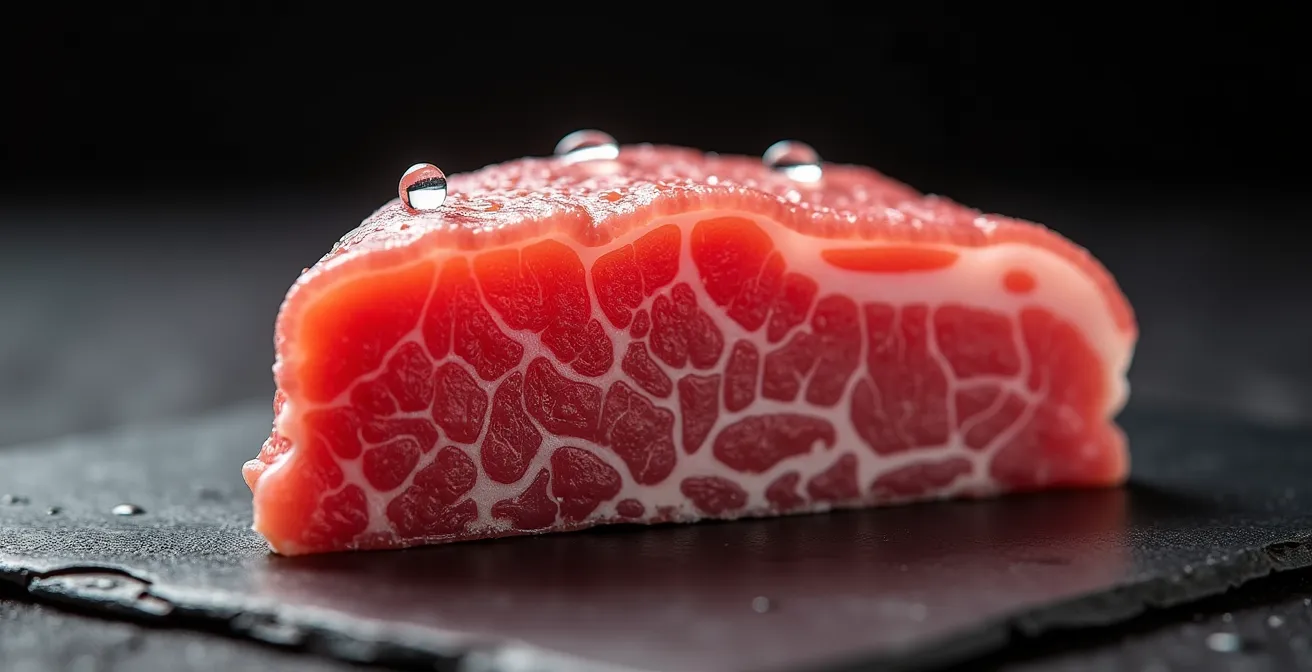
The air freight itself is a premium service. These shipments are prioritized and tracked meticulously. Upon arrival at JFK, the clock is still ticking. The fish must clear customs—a process expedited for such perishable goods—and be immediately picked up by a specialized refrigerated truck for delivery to the restaurant. The total cost includes the initial price of the fish, handling fees, specialized packaging, premium air freight charges (which fluctuate with fuel costs), customs brokerage fees, and ground transport. While exact figures vary daily, this logistical chain can easily add thousands of dollars to the cost of a single prime tuna, a cost ultimately distributed across each exquisite slice served.
Street Stall vs. Michelin Star: How Did Sushi Change Its Social Status?
Sushi’s transformation from a commoner’s fast food to a symbol of elite status is one of the most remarkable stories in modern gastronomy. Originally, in the Edo period, sushi was sold from street stalls (yatai) as a convenient, preserved snack for people attending the theater or on the go. The vinegar in the rice acted as a preservative for the fish, making it a practical and accessible food for the masses. It was the 19th-century equivalent of a hot dog stand.
The crucial turning point occurred during Japan’s period of rapid economic growth in the post-war era. From the 1950s to the 1970s, as the nation’s wealth grew, so did its appetite for luxury. According to food historians, it was during this time that sushi transformed into an ‘ultra-luxury food’ with prices reflecting this elite perception. Ambitious chefs moved their operations indoors, opening elegant restaurants with refined decor and sourcing only the finest ingredients. Sushi was rebranded as a food for special occasions, business dinners, and expressions of status.
“$300-a-plate restaurant is legendary among Tokyo foodies”
– Netflix documentary description, Jiro Dreams of Sushi (2011)
This new perception was then exported to the West. The 1980s “sushi boom” in America introduced it as an exotic, healthy, and sophisticated choice, embraced by celebrities and the financial elite. Documentaries like *Jiro Dreams of Sushi* further mythologized the itamae as a dedicated artisan, and the sushi counter as a sacred space. This media portrayal cemented its status not just as food, but as a cultural experience worthy of reverence and a high price tag. The journey was complete: from the bustling street to the hushed, exclusive counter.
Key Takeaways
- True value in sushi comes from a balance of ingredient quality, chef’s skill, and narrative—not superficial additions.
- The global price of sushi is heavily influenced by Western validation systems (like Michelin) and the complex logistics of a global cold chain.
- The future of luxury sushi is shifting towards hyper-specialization (like aged sushi) and a strong emphasis on sustainability.
Why Does Omakase Cost 40% More in New York Than in Tokyo?
The significant price difference for a top-tier omakase experience between New York and Tokyo is a case study in the arbitrage of authenticity and the economics of scarcity. While a diner in Tokyo might pay $270 for a world-class meal, a comparable experience in New York can easily command $400-$500 or more. This isn’t just about rent. It’s about the cost of importing not just the fish, but the entire cultural ecosystem.
The single greatest factor is the scarcity of human talent. In Tokyo, there is a deep, multigenerational pool of master itamae. In New York, a chef with that level of training and experience is an extremely rare and valuable commodity. High-end restaurants must pay a significant premium to attract and retain this talent, a cost passed directly to the consumer. Second is fish sourcing. While a Tokyo chef has direct, daily access to the unparalleled variety of Toyosu Market, a New York chef must rely on a combination of costly imports for Japanese fish and sourcing high-quality local alternatives, adding complexity and expense.
The following table, drawing from market observations, highlights the structural cost differences that create this price disparity.
| Cost Factor | Tokyo | New York |
|---|---|---|
| Minimum Omakase Price | ¥55,000 ($270) | $400-500 |
| Labor Pool | Deep pool of masters | Rare skilled itamae |
| Fish Sourcing | Direct Toyosu access | Import + local premium |
| Real Estate | Subway stations acceptable | Prime Manhattan required |
| Market Premium | Cultural authenticity | Scarcity premium |
Finally, there’s the market premium itself. In Tokyo, high-end sushi is an established part of the cultural landscape. In New York, it is an imported luxury. The experience carries a scarcity premium; there are far fewer truly world-class sushi counters relative to the population of high-net-worth individuals willing to pay for them. Diners are paying for the privilege of accessing an authentic experience that has been painstakingly recreated thousands of miles from its origin. The 40% premium is the price of that distance.
Ultimately, appreciating a $300 sushi experience requires a shift in perspective. It’s an investment in a story—of a fish’s journey, a chef’s lifelong dedication, and a culture’s profound connection to nature and craft. By understanding the intricate systems that create this value, you can more fully savor every moment and every bite.