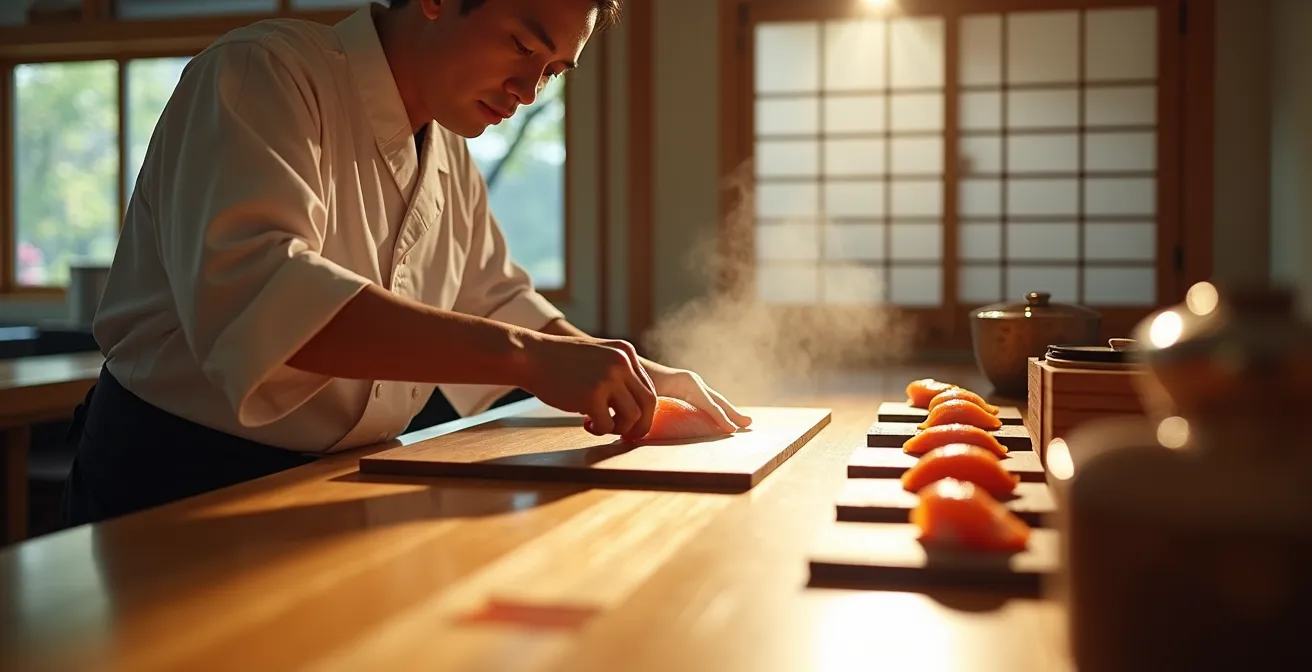
Contrary to the popular belief that “fresher is better,” the true essence of Edo-mae sushi lies in the masterful transformation of fish through curing and cooking to unlock its ultimate potential.
- Curing and simmering are not preservation compromises; they are deliberate techniques to enhance umami, improve texture, and create complexity.
- Iconic toppings like anago and kohada are defined by these methods, achieving a softness and depth of flavor that raw fish cannot match.
Recommendation: Seek out sushi-ya that honor these time-tested preparations to experience the authentic, perfected taste of traditional Tokyo-style sushi.
There is a pervasive, and frankly, misguided belief in the modern sushi world: that the ultimate virtue of a fish is its freshness. Diners demand to know if the tuna was caught this morning, believing that the closer to the ocean, the closer to perfection. This obsession with “freshness” is a modern marketing gimmick, born from the age of refrigeration and global shipping. It has nothing to do with the true art and soul of sushi as it was conceived. The soul of sushi is Edo-mae.
Edo-mae is not about preserving fish; it is about perfecting it. The work of a true itamae is a form of culinary alchemy. We don’t just slice and serve. We engage in a dialogue with the ingredient, using techniques honed over centuries—curing with salt and vinegar (shiojime, sujime), simmering in rich broths (nitsume), and aging (jukusei)—to unlock flavors and textures that lie dormant in a “fresh” piece of fish. This is not a concession to a pre-refrigeration era; it is the very pinnacle of our craft.
This misguided worship of raw imports like salmon, which you will never find on my counter, ignores the history and philosophy that makes Edo-mae sushi a profound culinary experience. In this guide, I will walk you through the fundamental techniques and principles that define our style. We will explore why a piece of simmered anago or a slice of cured kohada represents a higher form of the art than any simple, raw slice ever could.
This article will delve into the specific preparations that define the Edo-mae tradition, explaining the ‘why’ behind each technique. Prepare to have your understanding of what makes great sushi fundamentally challenged and, I hope, corrected.
Summary: Edo-mae Style Fish: Why Cured Toppings Taste Better Than Fresh Catch?
- Why Simmering Anago Is Crucial for the Soft Texture of Edo-mae Sushi?
- How to Balance Vinegar and Salt When Curing Kohada for Nigiri?
- Edo-mae vs. Hokkaido Style: Which Offers a Purer Seafood Taste?
- Why You Will Never Find Salmon on a Strictly Traditional Edo-mae Menu?
- How to Reduce Eel Broth Into a Rich Tsume Glaze Without Burning It?
- Red Miso or White Miso: Which Is Traditional for Edomae Sushi Endings?
- How to Cure Mackerel With Salt and Vinegar in 3 Simple Steps?
- Why Pressed Oshizushi Lasts Longer Than Nigiri Without Refrigeration?
Why Simmering Anago Is Crucial for the Soft Texture of Edo-mae Sushi?
One of the most profound textural experiences in Edo-mae sushi is anago, or saltwater eel. Unlike its freshwater cousin, unagi, which is often grilled, anago is defined by simmering. This is not merely ‘cooking’ the fish; it is a delicate transformation. The goal is to achieve a texture so soft and ethereal it feels like it could melt on your tongue. This is impossible without a slow, careful simmer.
The magic lies in the breakdown of collagen. Anago is rich in connective tissue. A quick, high-heat cooking method would tighten these tissues, resulting in a rubbery texture. Instead, we gently simmer the eel in a broth of soy, mirin, and sake. This slow process allows the tough collagen to break down and convert into gelatin. Indeed, research shows that the tsume reduction becomes thick from collagen converting to gelatin after 20+ minutes of simmering, giving the eel that signature, unctuous mouthfeel. This creates a cloud-like softness that is the hallmark of expertly prepared anago.
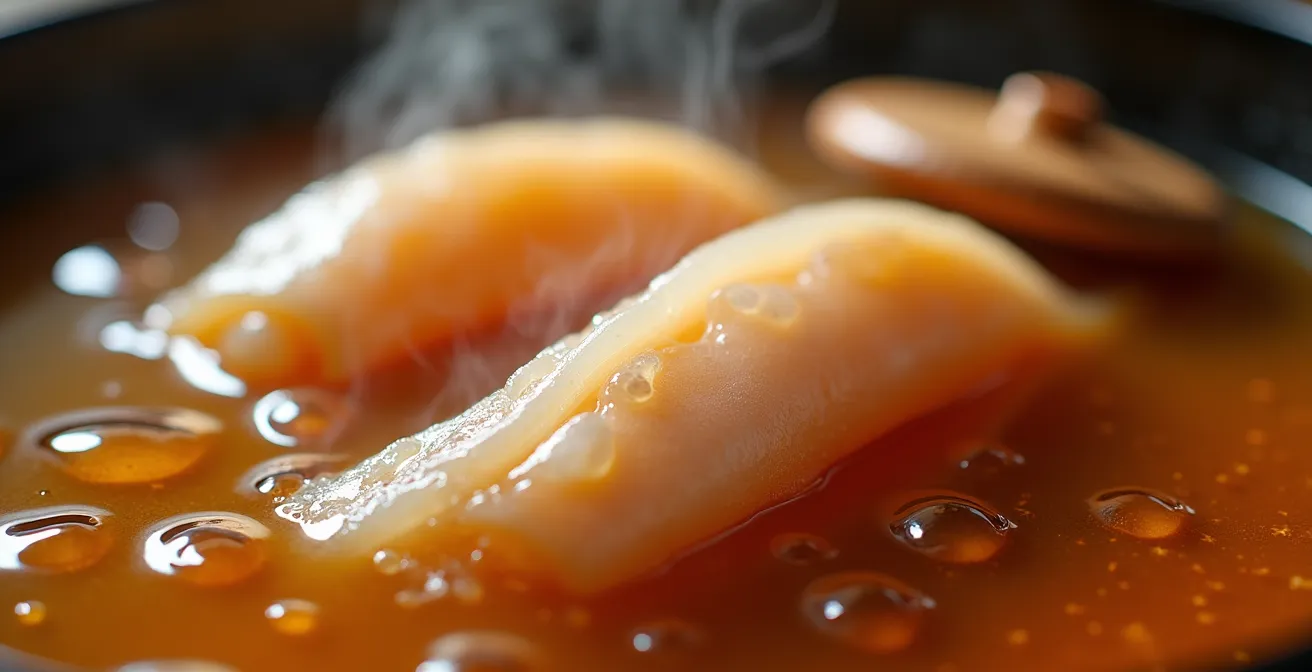
As you can see, the process is gentle and controlled. The simmering liquid itself, known as nitsume, becomes concentrated with the eel’s essence. This broth is then reduced over a long period to create the thick, sweet glaze called tsume that is brushed onto the finished nigiri. The simmer, therefore, serves a dual purpose: it perfects the textural integrity of the eel while simultaneously creating the very sauce that will complete it. A piece of raw anago would be tough and unremarkable; the simmered piece is a masterpiece of texture.
How to Balance Vinegar and Salt When Curing Kohada for Nigiri?
If anago is the masterclass in texture, then kohada (gizzard shad) is the ultimate expression of flavor alchemy. This small, silver-skinned fish is the heart of Edo-mae sushi. Served fresh, its flavor is overwhelmingly fishy and its flesh is unremarkable. It is an ingredient that is not just improved by curing; it is entirely dependent on it. The art of preparing kohada is a delicate dance between salt and vinegar, a process that requires immense skill and intuition.
The process, a combination of shiojime (salting) and sujime (vinagering), is a fundamental test for any itamae. Here is the principle:
- Salt Treatment: First, the fish is salted. This is not for flavor alone. The salt draws out excess moisture and undesirable fishy compounds from the flesh. Through osmosis, the flesh firms up, concentrating its inherent taste.
- Vinegar Bath: After being rinsed, the kohada is bathed in rice vinegar. The acidity of the vinegar “cooks” the fish by denaturing its proteins, further firming the texture and rendering it safe to eat. More importantly, it cuts through the fish’s natural oiliness.
- Timing Adjustment: This is where true mastery comes in. As noted in the traditional methods of Ginza Karaku, it is absolutely important to serve the sushi when the taste has properly condensed. A master chef adjusts the curing time based on the fish’s size, its seasonal fat content, and even the day’s humidity. A few minutes too long, and the fish becomes tough and acidic. Too short, and it remains fishy.
This process is not a recipe; it’s a conversation with the ingredient. The chef must feel the fish, understand its properties, and react accordingly. The final product is a piece of nigiri with a beautifully patterned skin, firm yet tender flesh, and a complex flavor profile that balances the natural richness of the fish with the bright acidity of the vinegar and the deep umami unlocked by the cure. This is the perfected taste that Edo-mae strives for.
Edo-mae vs. Hokkaido Style: Which Offers a Purer Seafood Taste?
The modern obsession with pristine, untouched fish is largely influenced by what can be called “Hokkaido-style” sushi. Given Hokkaido’s cold, rich waters, its culinary philosophy is built on showcasing the natural quality of its abundant fresh catch. The fish is served with minimal intervention to highlight its oceanic, clean flavor. This is a valid approach, but it is not the philosophy of Edo-mae. To ask which is “purer” is to misunderstand the question. Hokkaido style aims for a pristine taste; Edo-mae style aims for a perfected one.
As the experts at Sushi University rightly state, “The idea that freshness is the most important aspect of fish is not in line with the concept of Edomae sushi.” Our philosophy was born in Tokyo Bay, where warmer waters meant that techniques were needed not just to preserve, but to improve the catch. This necessity became an art form. We don’t see curing or simmering as hiding the fish’s flavor; we see it as revealing its true, deepest character. It is a transformation from simple to complex.
This table summarizes the fundamental differences in philosophy and execution, based on a comparative analysis of regional styles.
| Aspect | Edo-mae Style | Hokkaido Style |
|---|---|---|
| Philosophy | Transform through curing techniques | Preserve natural freshness |
| Preparation | Vinegar marination, simmering, aging | Minimal processing, served raw |
| Flavor Profile | Complex umami, concentrated essence | Clean, oceanic, pristine |
| Texture Focus | Enhanced through enzymatic breakdown | Natural firmness of fresh catch |
| Historical Context | Born from preservation necessity in warm Tokyo Bay | Developed with cold water abundance |
Hokkaido style presents the ingredient as it is. Edo-mae style presents the ingredient as it can be, elevated by the chef’s hand. It is the difference between a beautiful block of marble and a finished sculpture. Both have value, but only one is a completed work of art. The “purer” taste, for an Edo-mae traditionalist, is the one that has been thoughtfully refined and brought to its peak potential.
Why You Will Never Find Salmon on a Strictly Traditional Edo-mae Menu?
It is a question I am asked with frustrating regularity: “Chef, why no salmon?” My answer is always the same: because salmon is not a part of our tradition. It is a foreign fish, a modern import, and its presence on a sushi menu is a clear sign that you are not in a truly traditional Edo-mae establishment. This is not a matter of taste, but of principle and history.
As culinary historians note, Edo-mae sushi, by definition, used only fish caught in the local waters of Tokyo Bay (Edo Bay). This naturally included species like kohada, anago, various clams, and types of tuna. It did not, and could not, include salmon. Salmon was not native to these waters. The ubiquitous orange-fleshed salmon you see today is almost exclusively Atlantic salmon, imported from places like Norway. It is an outsider.
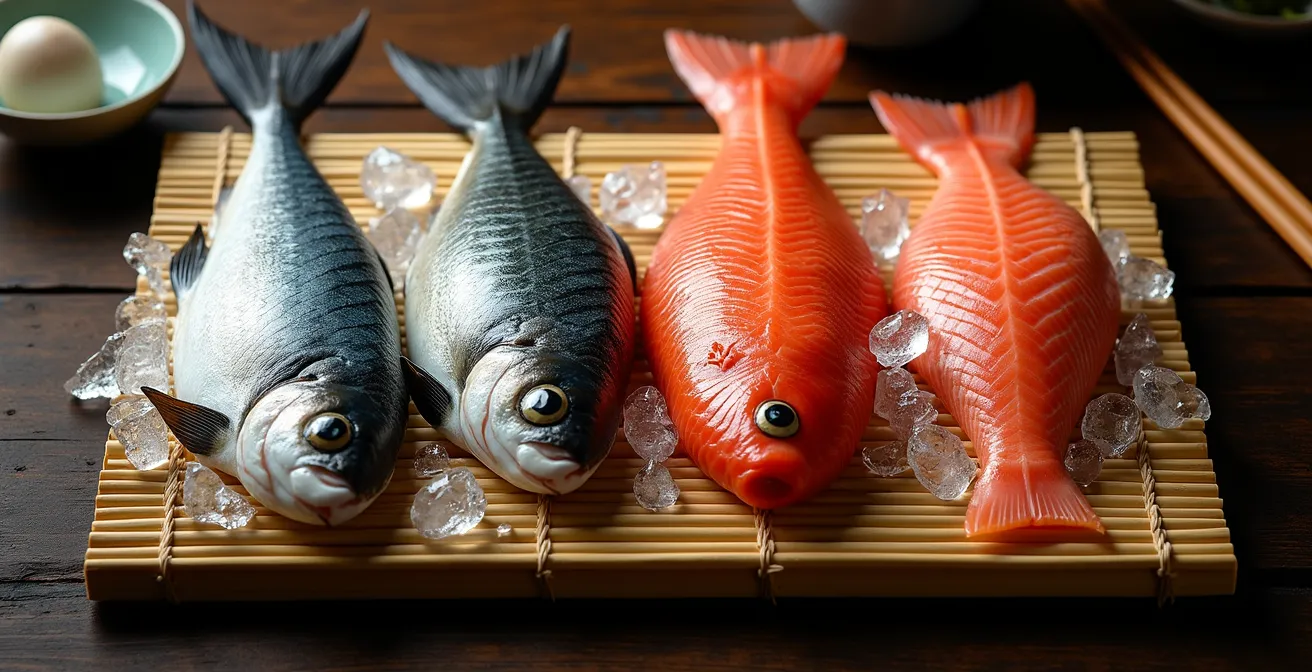
The rise of salmon in sushi is a very recent phenomenon, driven by a successful Norwegian marketing campaign in the 1980s. Before that, Japanese people did not eat raw salmon due to concerns about parasites found in Pacific salmon. The Norwegians introduced their parasite-free, farmed Atlantic salmon, and a new market was born. Indeed, historical trade data reveals that in 1980, Norway exported 2 tonnes of salmon to Japan; 20 years later it was exporting more than 45,000 tonnes annually. It became popular in casual, conveyor-belt sushi restaurants, but it never gained a foothold in high-end, traditional sushiya.
Edo sushi at the time used only those fish that could be caught in the nearby bay. This excludes salmon, which is very popular today and is usually imported from Norway.
– byFood Editorial Team, Edomae Sushi: What It Is & Where To Try It
For a traditionalist, the issue is twofold. First, it breaks the geographical rule of using local catch. Second, salmon’s soft, fatty texture and simple flavor profile do not benefit from the complex curing or aging techniques that define our craft. It is best served fresh, which aligns with the modern “fresh is best” fad, but not with the Edo-mae philosophy of transformation. To serve salmon would be to abandon our identity.
How to Reduce Eel Broth Into a Rich Tsume Glaze Without Burning It?
The tsume glaze for anago is more than a sauce; it is the lifeblood of a sushiya, a liquid history passed down through generations. In many storied restaurants, the tsume pot is never emptied. Instead, the broth from each day’s simmering of anago is added to the mother sauce, which is then slowly reduced. This practice means that some establishments, like the famed Jinbocho Tsuruhachi, have a tsume that contains remnants of sauce over 100 years old. It is a living ingredient, gaining complexity with each passing day.
The process of reducing this precious broth into a thick, glossy glaze is fraught with peril. The goal is a rich, syrupy consistency, full of the deep umami from the eel and a balanced sweetness. The enemy is burning. The sugars in the mirin and soy sauce, combined with the gelatin from the eel, can easily scorch, ruining the entire batch and breaking a chain that may have lasted for decades. Preventing this requires patience and vigilance, not just a recipe.
The key is a low, slow reduction. Boiling the broth rapidly will not only increase the risk of burning but can also deteriorate the very gelatin that gives tsume its body. A true itamae uses all their senses, especially smell. You learn to recognize the aroma of the sauce as it moves from savory-sweet to the acrid edge of burning. It’s a skill learned over years at the counter, not from a book. Adding eel bones and heads to the broth also provides a natural source of gelatin, creating a superior texture without resorting to artificial thickeners.
Your Checklist for a Perfect Tsume Reduction
- Temperature Control: Maintain a consistent low to medium-low temperature. Never allow a rolling boil for extended periods.
- Aroma Monitoring: Use the ‘aroma test’ to constantly monitor the smell. The moment it shifts from sweet to sharp, reduce the heat immediately.
- Natural Thickening: Incorporate eel bones and heads into the initial broth. This provides the crucial collagen that will break down into gelatin for a natural, silky thickness.
- Gentle Simmering: Use a traditional wooden drop-lid (otoshibuta) to ensure even heat distribution and prevent vigorous bubbling that can degrade the proteins.
- Patience: Do not rush the process. A proper reduction takes time, allowing flavors to concentrate and meld without scorching the sugars.
This process encapsulates the Edo-mae spirit: using every part of the ingredient, respecting tradition, and understanding that time and patience are the most valuable tools in the kitchen.
Red Miso or White Miso: Which Is Traditional for Edomae Sushi Endings?
The Edo-mae sushi experience is a carefully constructed narrative, and the final chapter is often a simple bowl of miso soup. However, even this final note is a matter of tradition and philosophy. In the world of Edo-mae, the choice of miso is not arbitrary. The traditional choice is overwhelmingly red miso (akamiso).
This preference is rooted in regional identity. Red miso, which is fermented for a longer period with a higher proportion of soybeans, is characteristic of the Kanto region, where Tokyo (Edo) is located. It has a deep, robust, and salty flavor with a powerful umami punch. This bold profile was favored by the samurai and working classes of old Edo. It serves a specific purpose at the end of a sushi meal: it acts as a powerful palate cleanser, cutting through any lingering fish oils and providing a deeply satisfying, warming conclusion. This strong flavor profile is consistent with other Edo-mae preferences, such as the use of red vinegar (akazu) made from sake lees in the sushi rice, which also imparts a deeper, more complex flavor than standard white rice vinegar.
White miso (shiromiso), by contrast, is more typical of the Kansai region (Kyoto, Osaka). It is fermented for a shorter time with a higher percentage of rice, resulting in a much sweeter and milder flavor. While delicious in its own right, its gentleness does not provide the same definitive, cleansing end to a meal of rich, cured fish. A sushiya serving white miso soup is likely making a modern concession to diners who prefer a less intense flavor, or is perhaps blending traditions. For the purist, however, the meal is not complete without the assertive, savory depth of a true akamiso soup.
How to Cure Mackerel With Salt and Vinegar in 3 Simple Steps?
Mackerel, or saba, is another pillar of the Edo-mae tradition, and like kohada, it is a fish that is fundamentally transformed by the curing process. As an oily fish with a strong, distinct flavor, serving it raw would be an aggressive and often unpleasant experience. The technique of curing it, known as shime saba, tames its wild nature and turns it into a sublime piece of nigiri with concentrated umami and a firm, pleasing texture.
The science behind it is elegant. Curing with salt and vinegar creates an environment with low pH and reduced water activity. As food science research confirms, this low pH environment is hostile to bacteria, making the fish safe to consume. But the purpose is primarily culinary. The process chemically “cooks” the proteins through the action of acetic acid, firming the flesh and mellowing its intense flavor. Here is the foundational method:
- Step 1 – The Salt Purge: The filleted mackerel is generously coated in salt. This is a crucial first step that draws out excess moisture and any strong, “fishy” blood notes through osmosis. This is especially important for an oily fish like mackerel. The flesh will become noticeably firmer.
- Step 2 – The Vinegar Cook: After the salt is thoroughly rinsed off, the mackerel is submerged in rice vinegar. The acetic acid immediately begins to denature the proteins on the surface of the fish, turning it an opaque white. The duration of this step is critical and depends entirely on the thickness and fat content of the fish.
- Step 3 – The Resting Transformation: The fish is removed from the vinegar and allowed to rest. During this time, the initial harshness of the vinegar mellows, and its flavor penetrates deeper into the flesh. Simultaneously, the fish’s own enzymes begin to work, tenderizing the flesh and breaking down proteins into amino acids, which is the very source of deep umami.
What you are left with is not simply “pickled fish.” It is a carefully engineered piece of food where the oiliness is balanced by acidity, the texture is firm but not tough, and the flavor is a complex layering of sea, salt, vinegar, and umami. It is the dialogue between the chef and the ingredient made manifest.
Key Takeaways
- Edo-mae philosophy is about perfection, not preservation; techniques like curing and simmering are used to elevate fish to its peak potential.
- Key textures, like the melting softness of anago, are only achievable through slow cooking that transforms collagen into gelatin.
- The balance of salt and vinegar in curing fish like kohada and saba is a precise art that concentrates umami and improves texture.
Why Pressed Oshizushi Lasts Longer Than Nigiri Without Refrigeration?
While hand-formed nigiri is the symbol of Edo-mae sushi, it’s important to remember it was not the only form. Before Edo-mae rose to prominence, the dominant style, particularly in the Kansai region (Osaka), was oshizushi, or pressed sushi. This older form was born from a different need: portability. Oshizushi was the original bento box food, designed to be stable for hours without refrigeration, and its structure is key to its longevity.
Nigiri sushi is delicate. It is formed by hand with just enough pressure to hold it together, leaving the rice airy. It is meant to be eaten immediately. Oshizushi, by contrast, is made by layering cured or cooked toppings and sushi rice into a wooden box (oshibako) and compressing it firmly. This seemingly simple difference in preparation has profound effects on its stability.
The preservation factors are explained by a direct comparison, based on principles outlined in studies of traditional preparation methods.
| Factor | Oshizushi (Pressed) | Nigiri (Hand-formed) |
|---|---|---|
| Oxygen Exposure | Minimal – compression removes air pockets | High – loose rice structure allows air |
| Water Activity | Lower – pressed structure reduces free water | Higher – maintains moisture for texture |
| Topping Treatment | Heavily cured/cooked ingredients | Often fresh or lightly cured |
| Historical Purpose | Designed as travel food (bento) | Made for immediate consumption |
| Bacterial Growth | Inhibited by density and curing | Requires refrigeration to prevent |
The dense, compressed structure of oshizushi is the key. It dramatically reduces the amount of oxygen and free moisture within the rice, two factors essential for bacterial growth. Furthermore, the toppings used for oshizushi were almost always heavily cured or cooked to ensure stability. Nigiri, with its airy rice and often more delicate toppings, is a much more hospitable environment for bacteria. Understanding oshizushi helps us see that the history of sushi has always been intertwined with the science of preservation, but Edo-mae chose to elevate that science into an art of immediate consumption.
Frequently Asked Questions about Edomae Sushi
Why is red miso traditional for Edo-mae sushi?
Red miso (akamiso) is traditional to the Kanto region where Tokyo is located, with its longer fermentation creating a robust, salty, umami-rich flavor favored by Edo’s samurai and working class.
What is the purpose of the final miso soup?
The powerful savory punch of red miso soup cleanses the palate of lingering fish oils and provides a deeply satisfying, warming conclusion to the meal.
Is white miso ever used in traditional Edo-mae?
White miso (shiromiso), sweeter and milder, is more typical of the Kyoto/Kansai region and represents a modern or fusion choice appealing to those preferring a less intense finish.
Embrace the tradition. Seek out the itamae who honor these methods. Your palate will be rewarded with a depth and complexity of flavor that simple “fresh” fish can never hope to match. This is the true journey of sushi.