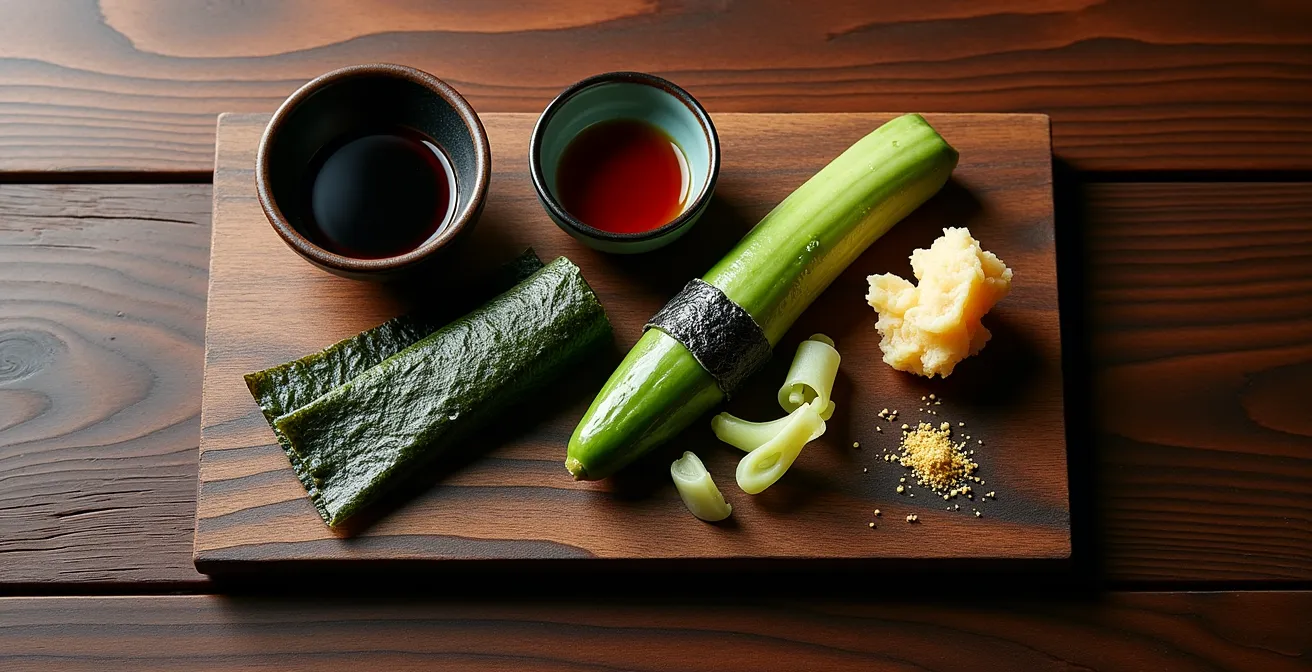
For home sushi, the biggest flavor impact comes not from spending more on everything, but from strategically investing in a few key ingredients that offer the highest sensory return on investment (ROI).
- A small price increase in nori and real wasabi provides an exponential improvement in taste and texture.
- Premium soy sauce and vinegar offer diminishing returns beyond a certain price point, with their value being highly contextual.
Recommendation: Adopt a procurement mindset. Allocate your budget towards high-leverage ingredients like quality nori and skip the ultra-premium items where the cost outweighs the noticeable benefit for a home setting.
Crafting sushi at home often presents a financial dilemma. You want to replicate the sublime experience of a high-end sushiya, but your budget is finite. The common advice is to “buy the best,” but this is an inefficient strategy. As a procurement advisor for restaurants, I can tell you that professionals don’t just buy the most expensive option; they analyze the cost-to-benefit ratio of every single ingredient. They seek out points of leverage—items where a marginal increase in cost yields a massive, disproportionate return in the final dish’s quality.
The secret to elevating your home sushi isn’t a bigger budget, but a smarter one. It’s about understanding which splurges are transformative and which are simply expensive. Many home cooks overspend on impressive-looking fish or brand-name rice, while overlooking the foundational components that truly define the sensory experience. The real key is to think like a buyer: where does each dollar make the most difference? Is it in the rice, or the sheet of seaweed that encases it? Is it in the celebrity-status tuna, or the sharp, clean heat of the condiment beside it?
This guide departs from conventional wisdom. We will dissect the key components of sushi not by their prestige, but by their sensory ROI. You will learn to identify the ingredients that offer exponential flavor leverage and recognize the point of diminishing returns where extra cost no longer translates to a better bite. By adopting a procurement mindset, you can build a sushi experience that tastes luxurious without requiring a luxury budget.
This article provides a strategic breakdown of where your money is best spent when assembling sushi ingredients. It analyzes the cost-versus-impact of nori, wasabi, vinegar, and more to help you make discerning choices.
Contents: A Procurement Analysis of Key Sushi Ingredients
- Why Spending $10 More on Nori Changes the Dish More Than Expensive Rice?
- Tube vs. Root: Is Frozen Real Wasabi Better Than Powdered Horseradish?
- Aged Akazu vs. Supermarket Vinegar: When Can You Taste the Difference?
- The Soy Sauce Trap: Why the Most Expensive Bottle Isn’t Always Best for Sushi?
- Bluefin or Bigeye: Which Tuna Choice Supports Ocean Health Better?
- What Local Ingredients Do NYC Chefs Use to Replace Japanese Rarities?
- Why Does a Single Slice of Oma Tuna Cost More Than a Steak Dinner?
- How to Eat Sushi Responsibly Without Supporting Overfishing?
Why Spending $10 More on Nori Changes the Dish More Than Expensive Rice?
From a procurement perspective, nori is the single most effective “leverage ingredient” in home sushi making. While many focus on the rice, the quality jump from standard to premium nori offers a far greater sensory ROI. Standard nori, often pale green and flimsy, can have a chewy, distracting texture and a flat, sometimes fishy taste. It functions merely as a structural wrapper. In contrast, premium nori, like that from the Ariake Sea, is a flavor component in its own right. It is deep black-green with a glossy sheen, shatters with a crisp snap, and melts on the tongue, imparting a profound, sweet umami finish.
The cost difference is significant, but the impact is transformative. The upgrade from a $5 pack of 50 standard sheets to a $35 pack of 10 premium sheets seems steep on the surface. However, this shift changes the entire character of a sushi roll from a simple rice-and-fish delivery system to a complex, multi-layered experience. Poor quality nori can actively detract from excellent fish, whereas high-quality nori can elevate even simple fillings like cucumber or avocado. For a home cook on a budget, allocating an extra $10-20 towards top-tier nori instead of a marginally better bag of rice is the most efficient use of capital for a noticeable quality improvement.
The following table illustrates the clear distinctions between nori grades, showing how visual and textural cues correlate directly with flavor profile and price. As the data shows, the characteristics of Gold Grade nori are what transform it from a mere wrapper into a key ingredient.
| Nori Grade | Price Range | Visual Characteristics | Texture | Flavor Profile |
|---|---|---|---|---|
| Premium Gold Grade (Ariake Sea) | $30-40/10 sheets | Deep black-green, glossy sheen | Crisp snap, melts in mouth | Deep umami, sweet finish |
| Silver Grade | $15-25/10 sheets | Dark green, moderate shine | Good crispness | Balanced umami |
| Standard Grade | $5-10/50 sheets | Pale green, minimal shine | Can be chewy | Flat, sometimes fishy |
Ultimately, a crispy, flavorful nori sheet provides a textural and taste contrast that no other ingredient can replicate for the same cost, making it the number one priority for a strategic splurge.
Tube vs. Root: Is Frozen Real Wasabi Better Than Powdered Horseradish?
The green paste served with most sushi outside of Japan is not wasabi. It’s a mixture of horseradish, mustard, and green food coloring. From a cost-benefit standpoint, upgrading to real wasabi—even frozen—is another high-ROI decision. While fresh wasabi can cost upwards of $250 per kilogram, frozen rhizomes or pre-grated frozen paste offer a significant quality leap over horseradish tubes for a manageable price. This is not just about authenticity; it’s about fundamentally different flavor chemistry that directly impacts the taste of the fish.
The heat from horseradish is harsh, one-dimensional, and lingers, burning the tongue and overwhelming the delicate flavors of raw fish. Real wasabi provides a completely different experience. Its heat is complex, aromatic, and “clean,” rising through the nasal passages rather than attacking the palate. It dissipates quickly, cleansing the palate and enhancing the fish’s subtle sweetness instead of masking it. This distinction is critical for appreciating high-quality sashimi or nigiri. Using horseradish paste with good fish is like pairing a fine wine with hot sauce—it simply obliterates the nuance.
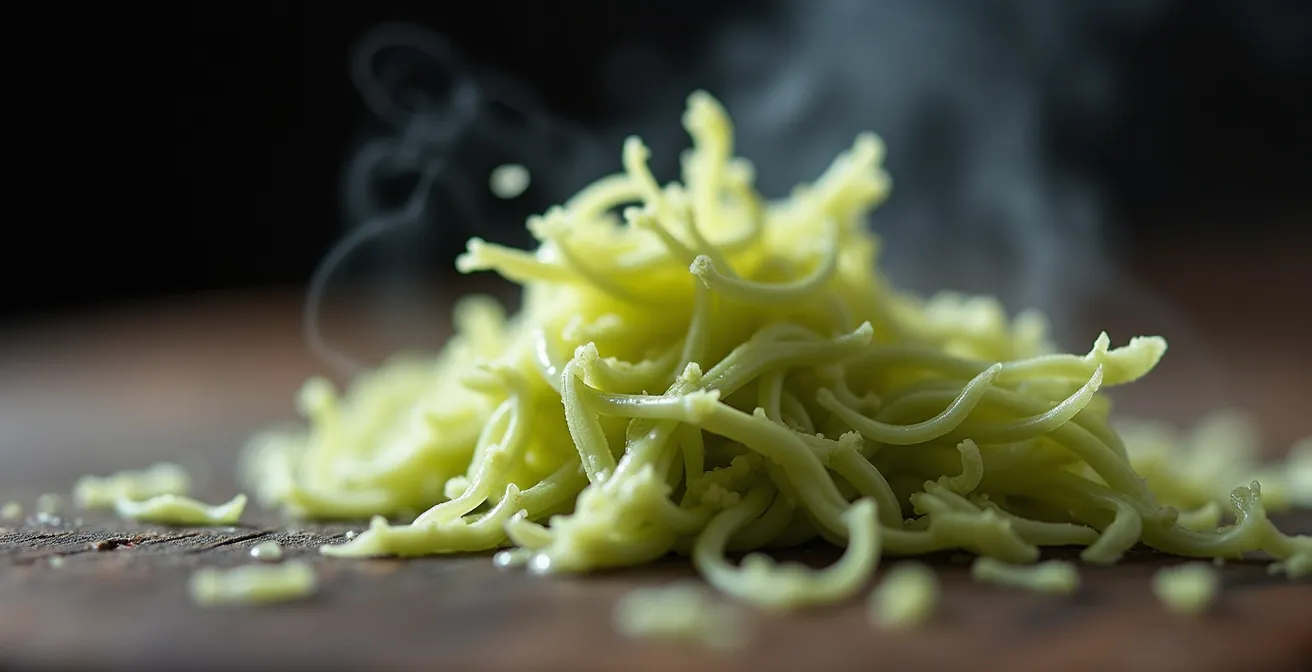
The investment in frozen real wasabi, which can be grated as needed, provides the authentic, complex heat that complements fish. It is a splurge that directly protects and enhances the investment you’ve made in your main protein. For any home cook serious about flavor, this is a non-negotiable upgrade.
Case Study: The Science of Wasabi vs. Horseradish Flavor
Real wasabi’s unique flavor profile is due to a diverse range of compounds called isothiocyanates (ITCs), which create its complex, sweet undertones and a clean heat that dissipates in under 15 minutes. In contrast, horseradish contains a high concentration of a single, aggressive ITC, causing a sharp, lingering burn on the tongue. Scientific analysis confirms that wasabi’s volatile compounds primarily affect the nasal passages, creating an aromatic “effervescent” heat, while horseradish’s compounds target the tongue. This explains why authentic wasabi pairs harmoniously with delicate fish flavors, while horseradish simply overpowers them.
Therefore, allocating part of your budget to frozen real wasabi is a strategic move that elevates the entire meal, making it a far more impactful spend than a slightly more expensive cut of fish.
Aged Akazu vs. Supermarket Vinegar: When Can You Taste the Difference?
Sushi vinegar, or su, is the soul of the rice, but this is where a procurement mindset demands nuance. Not all premium vinegars are a worthwhile splurge for every situation. The primary choice is between standard rice vinegar (komezu) and aged red vinegar (akazu), which is made from sake lees. Akazu is significantly more expensive and prized for its deep, mellow, umami-rich profile. However, its superiority is highly contextual. The key question is not “is akazu better?” but “when can you actually taste the difference?”
The distinct character of akazu shines brightest when paired with specific ingredients. As one traditional sushi chef perspective highlights, its value is most apparent in specific contexts.
The splurge on Akazu (aged red vinegar) is most noticeable with high-fat, oily fish where its mellow, umami-rich profile complements the fat, while standard rice vinegar’s sharpness is often better for cutting through lean white fish.
– Traditional sushi chef perspective, Article analysis based on industry standards
Using expensive akazu with a lean fish like flounder or in a roll with multiple competing flavors is a waste of its potential and your money. Its subtle, complex notes will be lost. Conversely, a high-quality, sharp standard rice vinegar can be more effective at brightening the flavors of lean fish or balancing a rich, creamy avocado roll. The strategic play is to match the vinegar to the main ingredient, not to default to the most expensive bottle. For a home cook making a variety of rolls, a high-quality marukomezu (standard rice vinegar) is the most versatile and cost-effective choice. Reserve the akazu splurge for special occasions when you are showcasing fatty tuna (toro) or mackerel as nigiri.
Action Plan: Auditing Your Vinegar Investment
- Assess Your Main Ingredient: Are you using high-fat, oily fish like toro, mackerel, or salmon belly? If yes, akazu may be a worthwhile investment. If using lean white fish or vegetable rolls, stick to quality standard vinegar.
- Evaluate Your Rice Quality: Premium vinegar cannot fix poorly cooked or low-grade rice. Ensure your rice is perfectly cooked, seasoned, and cooled first; its texture is the canvas for the vinegar’s flavor.
- Perform a Blind Taste Test: Prepare small batches of rice with both standard vinegar and akazu. Taste them plain and with the fish you plan to serve. If you cannot clearly distinguish the difference, you haven’t yet developed the palate to justify the splurge.
- Consider a Blended Alternative: To add complexity without the full cost of akazu, try a cost-effective restaurant trick: gently heat your standard rice vinegar with a small piece of kombu (kelp) and a bit of sugar and salt. This will add a layer of umami.
- Prioritize for Nigiri: The subtle notes of akazu are most perceptible in nigiri, where the seasoned rice is in direct contact with the fish. For complex maki rolls with sauce, its nuance is often lost.
The discerning choice is not always the most expensive one. It is the one that provides the best performance for the specific application, maximizing value without unnecessary cost.
The Soy Sauce Trap: Why the Most Expensive Bottle Isn’t Always Best for Sushi?
Soy sauce is another area where home cooks often fall into a trap, assuming higher price equals higher quality. While you should absolutely avoid cheap, chemically produced soy sauce, the world of premium, artisanal shoyu presents a classic case of diminishing returns for the average user. The quality leap from a $3 bottle of mass-market soy sauce to a $15 bottle of naturally brewed, aged shoyu is immense. The latter offers a round, complex flavor profile rich in umami, with a pleasant aroma and none of the harsh, metallic notes of its cheaper counterpart. This is a high-impact splurge.
However, the jump from that $15 bottle to a $50 bottle of ultra-premium, barrel-aged shoyu offers a much smaller, often imperceptible, return on investment for most sushi applications. These hyper-premium soy sauces have incredibly subtle, nuanced notes—hints of whiskey, smoke, or fruit—that are best appreciated on their own or with pristine, unadorned sashimi. When you dip a piece of nigiri or a roll containing rice, fish, wasabi, and nori into it, these subtleties are completely lost. You are essentially paying a premium for a level of complexity your dining context cannot support.
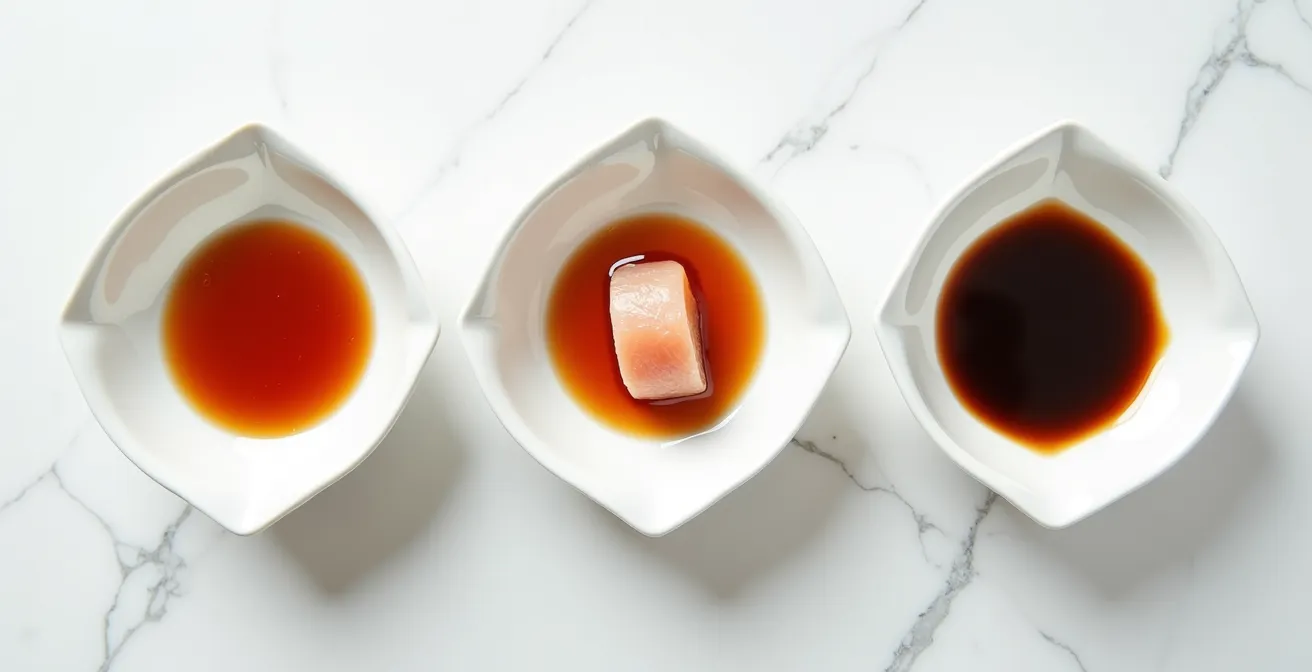
The procurement-savvy approach is to find the sweet spot. A naturally brewed, mid-range soy sauce (like a quality Koikuchi or Marudaizu shoyu) provides all the complexity needed to complement, not overpower, your sushi. As one chef aptly explains, the context of use is everything.
The quality jump from a $3 to $15 soy sauce is massive – you get naturally brewed, complex flavors. But going from $15 to $50? Most home cooks won’t notice the difference when dipping sushi. Save the ultra-premium for sashimi where you’re painting it directly on the fish.
– Sushi Chef, Chowhound
Don’t fall for the soy sauce trap. Invest in a good, naturally brewed bottle in the $10-$20 range. It will dramatically improve your sushi experience over the cheap alternative, and your wallet will thank you for skipping the ultra-artisanal options that are better suited for a tasting menu than a home dinner.
Bluefin or Bigeye: Which Tuna Choice Supports Ocean Health Better?
When selecting tuna, the concept of “value” extends beyond flavor and price to include a critical third metric: sustainability. From a responsible procurement standpoint, choosing tuna is an ethical decision as much as a culinary one. For years, species like Bluefin tuna were symbols of overfishing, pushing them to the brink. While the situation is improving for some stocks, the choice of tuna remains a complex issue. The most impactful decision a home cook can make is to prioritize fish from healthy, well-managed populations.
Fortunately, global conservation efforts are showing positive results. According to the International Seafood Sustainability Foundation, 88% of the global tuna catch in 2024 comes from stocks at healthy levels of abundance. This demonstrates that consumer and industry pressure for sustainable practices works. However, this doesn’t mean all tuna is equal. Species like Skipjack and Albacore, especially when pole-and-line caught, are generally considered the most sustainable choices. They reproduce faster and are caught using methods with lower bycatch.
Bigeye tuna is often a better choice than many Bluefin populations, but it can still be subject to overfishing. The most remarkable story is that of Pacific Bluefin, which shows that even critically endangered species can recover with proper management.
Case Study: The Remarkable Recovery of Pacific Bluefin Tuna
Once on the verge of collapse, Pacific bluefin tuna has made a dramatic comeback. Thanks to strong international cooperation, strict quotas, and measures to reduce the catch of juvenile fish, the species has exceeded its rebuilding targets a full decade ahead of schedule. A report by NOAA Fisheries confirms that by 2022, the spawning stock biomass had surpassed the 20% target set for 2034. This success proves that sustainable management is not just a theoretical goal but an achievable reality that can restore even severely depleted ocean resources. While consumption should still be mindful, it provides a model for how to manage other at-risk species.
The discerning choice is to look for certifications like the Marine Stewardship Council (MSC) blue label or refer to guides like the Monterey Bay Aquarium Seafood Watch. Choosing a sustainable option like pole-caught Albacore or certified Skipjack is the highest-value decision you can make, ensuring the health of our oceans for future generations.
What Local Ingredients Do NYC Chefs Use to Replace Japanese Rarities?
The ultimate expression of a procurement mindset is ingenuity: achieving a premium result without the premium cost of imported goods. Top sushi chefs, even those in world-class cities like New York, are masters of this, using their creativity to find local, cost-effective alternatives to rare and expensive Japanese ingredients. Home cooks can adopt this strategy to create exciting, high-impact flavors while keeping their budget in check. This approach isn’t about creating “fake” sushi, but about applying Japanese techniques and flavor principles to local ingredients.
This strategic substitution allows for both fiscal responsibility and culinary creativity. For example, instead of splurging on imported ikura (salmon roe), many chefs turn to local trout roe. It provides a similar “pop” and briny finish at a fraction of the price. The notoriously expensive yuzu citrus can be convincingly mimicked by a blend of zest from Meyer lemons and a squeeze of lime juice, capturing its unique floral and tart notes. This kind of resourcefulness is key to running a profitable restaurant and a smart home kitchen.
This philosophy extends to textures and garnishes as well. A meaty king oyster mushroom, when scored, torched, and marinated in soy sauce and mirin, can develop a surprisingly scallop-like texture and umami depth. Instead of sourcing expensive imported shiso leaves, chefs often use readily available local microgreens to add a fresh, peppery note. Here are some practical, high-impact substitutions:
- Replace Ikura with Trout Roe: Offers a similar textural pop and saline flavor for significantly less cost.
- Mimic Scallop with King Oyster Mushroom: Torched and marinated, it develops a firm, savory, and satisfyingly chewy texture.
- Substitute Yuzu with Meyer Lemon & Lime: The zest of a Meyer lemon combined with fresh lime juice replicates yuzu’s distinctive floral-citrus profile.
- Use Local Microgreens instead of Shiso: Provides a fresh, peppery, and visually appealing garnish without the import costs.
- Finish with Flaky Sea Salt: A high-quality finishing salt like Maldon can provide the textural crunch and clean salinity of specialty Japanese salts for a much lower price.
By thinking about the desired flavor profile rather than the specific ingredient name, you unlock a world of possibilities that are both delicious and economically sound.
Why Does a Single Slice of Oma Tuna Cost More Than a Steak Dinner?
At the extreme end of the spectrum lies the world of ultra-premium ingredients like Oma tuna. A single piece of otoro (fatty belly) from a fish caught off the coast of Oma can indeed cost more than a full steak dinner. Understanding why is a lesson in supply, demand, and unique biological properties, but from a home-cook procurement standpoint, it represents the ultimate example of diminishing returns. This is a Veblen good, an item whose demand increases with its price due to its exclusive and luxurious reputation.
The price is driven by a confluence of factors that have more to do with prestige and scarcity than a flavor profile that a non-expert could fully appreciate. A Tokyo fish market insider explains the complex supply chain that creates this extreme value.
Oma tuna commands premium prices due to specific winter harvest from Tsugaru Strait waters, single-pole fishing methods preserving quality, ikejime technique preventing lactic acid buildup, and fierce Toyosu auction competition. One fish can sell for over $3 million, making each slice worth hundreds of dollars.
– Tokyo Fish Market Insider, Chowhound
While the rich, marbled fat of Oma tuna, full of low-melting-point omega-3s, does literally melt in your mouth at body temperature, this is an experience you pay a staggering premium for. For a home cook, the sensory difference between a $100 slice of Oma tuna and a $25 slice of excellent quality, sustainably sourced Bluefin or Bigeye toro is marginal. You are paying for the story, the brand, and the auction price as much as the fish itself. This is the antithesis of a high-ROI ingredient. It’s a luxury spend, not a strategic one.
For the home cook, the lesson is clear: admire the legend of Oma tuna, but invest your money in other areas. The funds required for one bite of this fish could finance dozens of spectacular, high-ROI sushi nights at home using the other principles outlined in this guide.
Key takeaways
- Adopt a Procurement Mindset: Evaluate every ingredient based on its sensory Return on Investment (ROI), not just its price tag or prestige.
- Identify Leverage Ingredients: Prioritize spending on items like high-quality nori and real wasabi, where a small cost increase yields a disproportionately large improvement in the final dish.
- Recognize Diminishing Returns: Understand that for ingredients like soy sauce and vinegar, there is a price point beyond which extra cost provides little noticeable benefit for most home applications.
How to Eat Sushi Responsibly Without Supporting Overfishing?
A truly discerning procurement strategy must account for long-term viability. Eating sushi responsibly is the ultimate value proposition, ensuring that the ingredients we love are available for generations to come. The most critical action a consumer can take is to actively choose seafood from sustainable sources and ask questions that hold suppliers accountable. Supporting sustainable fisheries is not just an ethical choice; it’s an economic one that invests in the future health of our oceans and the entire seafood industry.
The power of the consumer is real. The recovery of species like Pacific Bluefin tuna is direct evidence that demand for sustainable products, coupled with effective international management, can reverse the trend of overfishing. Your role in this is simple but vital: be an informed and inquisitive customer. Don’t be afraid to ask your fishmonger or sushi chef about the origin and catch method of their fish. A reputable seller will be knowledgeable and transparent about their sourcing. Look for certifications like the Marine Stewardship Council (MSC) blue label, which indicates that the fish comes from a wild-catch fishery that has been independently certified to the MSC’s standard for sustainability.
Beyond certifications, broaden your palate. Many delicious and sustainable species are underutilized. Instead of defaulting to tuna or salmon, try alternatives like Arctic char (a great salmon substitute), mackerel (saba), or pole-caught albacore. These choices not only have a lower environmental impact but also often offer better financial value. A responsible approach is a holistic one: it combines choosing sustainable species, asking the right questions, and being open to delicious alternatives. This ensures that your enjoyment of sushi today doesn’t compromise the ocean’s health for tomorrow.
Frequently Asked Questions about Making Smart Sushi Choices
Which tuna species are most sustainable in 2024?
Skipjack and pole-caught albacore are generally the most sustainable and abundant choices. While Pacific bluefin has shown significant recovery, it should still be consumed mindfully and infrequently. Always look for an MSC certification label to be sure.
What questions should I ask my fishmonger?
To be an informed consumer, ask these three key questions: 1. “How was this fish caught?” (Pole-and-line is better than longline or purse seine). 2. “Where does it come from?” (This helps you track it against sustainability guides). 3. “Do you have a great sustainable alternative to bluefin or unagi today?”
What are the best sustainable alternatives to popular sushi fish?
Instead of conventional tuna, try mackerel (saba) or pole-caught albacore for a rich, flavorful experience. Arctic char is an excellent and more sustainable alternative to farmed salmon. For a creamy texture, consider US-farmed sturgeon instead of endangered eel (unagi).
Start today by applying this procurement mindset to your next sushi night. By making a few strategic splurges and embracing sustainable alternatives, you can create an experience that is both exceptionally delicious and deeply responsible.